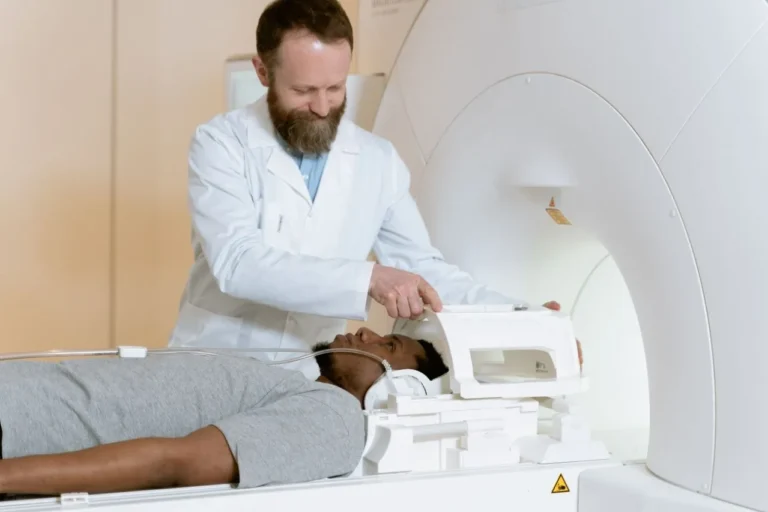

New robotic platform combines image guidance, real-time motion tracking, and automated coil positioning to enhance the accuracy and consistency of TMS treatments
ZETA SURGICAL today announced that the U.S. Food and Drug Administration (FDA) has granted 510(k) clearance for its Zeta TMS Robotic System, a next-generation platform designed to improve the precision, consistency, and efficiency of transcranial magnetic stimulation (TMS) therapy. The clearance marks an important milestone for the company as it expands its portfolio of image-guided neurosurgical technologies into the rapidly growing field of non-invasive brain stimulation.
The newly cleared system is classified as a Class II stereotaxic instrument under 21 CFR 882.4560 and is regulated under FDA product codes SGE and QFF. With this regulatory milestone, healthcare providers across the United States can begin integrating the robotic platform into clinical practice to support accurate and repeatable TMS treatment delivery.
Transcranial magnetic stimulation has become an increasingly important therapeutic option for patients living with treatment-resistant depression, a condition that affects approximately one-third of individuals diagnosed with major depressive disorder who do not achieve adequate symptom relief with antidepressant medications. By using magnetic pulses to stimulate targeted areas of the brain involved in mood regulation, TMS offers a non-invasive alternative for patients seeking additional treatment options without surgery or systemic medications.
Beyond depression, TMS has gained broader clinical acceptance for a growing range of neuropsychiatric conditions. The therapy is now being used for patients with obsessive-compulsive disorder (OCD), post-traumatic stress disorder (PTSD), and addiction-related disorders, while researchers continue investigating its potential in neurological diseases, chronic pain, anxiety disorders, and cognitive rehabilitation. As these applications expand, ensuring accurate and reproducible stimulation of specific brain regions has become increasingly important for maximizing therapeutic outcomes.
Unlike conventional TMS systems that often rely on manual positioning of the stimulation coil, the Zeta TMS Robotic System introduces robotic automation and advanced image guidance to improve treatment precision throughout every therapy session.
The platform provides real-time robotic positioning of the TMS coil with submillimeter-level accuracy, enabling clinicians to consistently target patient-specific brain regions identified during treatment planning. Throughout each therapy session, the system continuously monitors patient movement and automatically adjusts the position of the stimulation coil in real time, helping maintain accurate alignment even if the patient shifts during treatment.
This dynamic motion compensation reduces the need for repeated manual adjustments while supporting more consistent stimulation delivery across multiple treatment sessions. Because therapeutic outcomes in TMS depend heavily on accurately stimulating predefined neural circuits, maintaining precise coil placement may help improve treatment consistency and operational efficiency in busy clinical environments.
The system has also been designed with ease of implementation in mind. According to ZETA SURGICAL, the robotic platform can be deployed in less than one minute, allowing clinics to incorporate advanced robotic navigation into existing workflows without extensive installation or infrastructure modifications. Its compact design enables use in a wide variety of healthcare settings, including outpatient psychiatric practices, hospitals, academic medical centers, specialty neuroscience clinics, and other point-of-care environments.
The company believes minimizing setup time and workflow disruption will help lower barriers to adoption for providers seeking to introduce robotic guidance into routine TMS treatments.
To validate the system’s performance, ZETA collaborated with leading academic institutions, including Harvard Medical School and the University of Cambridge, to conduct extensive accuracy and usability testing. These evaluations examined the platform’s robotic positioning capabilities, image-guided navigation performance, and user experience under realistic clinical conditions.
The collaborative testing helped ensure the platform met rigorous standards for precision while remaining practical for everyday clinical use.
Benjamin Lee, Chief Product Officer at ZETA SURGICAL, said the new robotic system builds upon the company’s existing expertise in image-guided navigation technologies that are already being used in TMS procedures.
“The Zeta TMS Robotic System builds on the real-time image guidance already trusted in our TMS deployments,” Lee said. “It uses that same guidance to dynamically adjust position throughout a session, without asking clinics to change how they already work. We designed this to make accurate care easier to deliver, session after session.”
According to Lee, maintaining familiar clinical workflows was a central design objective during development. Rather than requiring providers to adopt entirely new treatment protocols, the robotic system integrates advanced automation into existing TMS practices, allowing clinicians to benefit from enhanced precision while minimizing operational disruption.
Company leaders believe this combination of automation and workflow compatibility could accelerate adoption as demand for TMS therapy continues to grow.
William Gormley, MD, MBA, MPH, Co-Founder of ZETA SURGICAL and a neurosurgeon at Mass General Brigham, emphasized the significance of bringing surgical-grade navigation technology into outpatient brain stimulation settings.
“This clearance brings operating-room-level navigation and robotic accuracy into a platform that can be rapidly deployed in virtually any clinic,” Gormley said. “By making precise and repeatable TMS delivery easier to integrate into routine clinical care, we believe the system can help expand access to advanced, targeted brain therapies for patients across the country.”
The FDA clearance reflects broader trends within neurotechnology, where advances in robotics, artificial intelligence, image guidance, and real-time tracking are increasingly being incorporated into both surgical and non-surgical neurological treatments.
Historically, robotic navigation has been associated primarily with complex neurosurgical procedures requiring exceptional precision. The Zeta TMS Robotic System extends similar principles of stereotactic guidance into non-invasive brain stimulation, enabling clinicians to maintain highly accurate targeting throughout treatment without invasive procedures.
This evolution is particularly relevant as TMS becomes more widely available. The number of clinics offering TMS therapy has grown substantially over the past decade as evidence supporting its effectiveness continues to expand. Healthcare providers are increasingly seeking technologies that improve treatment standardization while reducing variability between operators and clinical sites.
Automated robotic positioning may also contribute to greater consistency across multi-session treatment protocols. Patients receiving TMS typically undergo multiple sessions over several weeks, making accurate reproduction of stimulation targets an important aspect of maintaining consistent therapy delivery from one appointment to the next.
The ability to automatically compensate for patient movement represents another potential operational advantage. Even subtle changes in head position during treatment can alter coil placement relative to the intended brain target. Continuous robotic adjustments may reduce interruptions while helping clinicians maintain therapeutic accuracy without repeated manual repositioning.
As precision medicine continues to influence neuroscience, technologies capable of delivering individualized treatments based on patient-specific anatomy are expected to play an increasingly important role. Image-guided robotic systems may help support these personalized approaches by ensuring stimulation is delivered consistently to the intended neural circuits identified during treatment planning.
Industry observers also note growing interest in combining TMS with advanced neuroimaging, functional brain mapping, and digital treatment planning to further personalize brain stimulation therapies. Platforms capable of integrating these technologies may become increasingly valuable as clinical applications continue to expand beyond psychiatric disorders.
With FDA 510(k) clearance now secured, ZETA SURGICAL plans to make the Zeta TMS Robotic System available to healthcare providers seeking advanced navigation capabilities for transcranial magnetic stimulation. The company believes the technology has the potential to improve treatment accuracy, streamline clinical workflows, and support broader adoption of precision-guided brain stimulation across diverse care settings.
As demand for non-invasive neurological therapies continues to rise, innovations such as robotic coil positioning, real-time motion tracking, and image-guided navigation are expected to play an increasingly important role in enhancing treatment delivery and improving patient care. By combining robotic automation with clinically validated navigation technology, the Zeta TMS Robotic System represents another step toward making advanced, targeted brain therapies more precise, more efficient, and more accessible for patients and clinicians alike.
If you’re publishing on a healthcare news website, this version is optimized for readability, journalistic tone, and SEO while remaining suitable for syndication or newsroom use.
Source link: https://www.businesswire.com/