Siemens Healthineers Molecular Imaging has completed a major $43.6 million construction and renovation project at its PET Detector Center in Rockford, Tennessee, strengthening the company’s manufacturing and research capabilities for positron emission tomography (PET) technology. The investment expands the company’s footprint at the Rockford campus, increases dedicated manufacturing capacity and supports the development and production of PET detectors used in Siemens Healthineers’ PET/computed tomography (PET/CT) systems.
The completed project adds approximately 40,000 square feet to the existing 97,000-square-foot Rockford campus while also renovating 7,500 square feet of existing facilities. The expansion is designed to help Siemens Healthineers respond to growing global demand for PET/CT imaging, as healthcare providers increasingly use molecular imaging in cancer care, neurology and cardiovascular medicine.
The Rockford facility holds a particularly important position within Siemens Healthineers’ global molecular imaging operations. It is the company’s sole manufacturing site worldwide for the PET detectors that form a critical component of its PET/CT scanners. By expanding production capabilities at the location, Siemens Healthineers aims to increase its ability to manufacture these detectors and support customers in the United States and international markets.
PET imaging has become an increasingly important technology in modern medical diagnostics because it can provide clinicians with information about biological and metabolic processes occurring inside the body. Unlike imaging technologies that primarily show anatomical structures, PET can help visualize metabolic activity, allowing physicians to identify and evaluate abnormalities associated with a range of diseases.
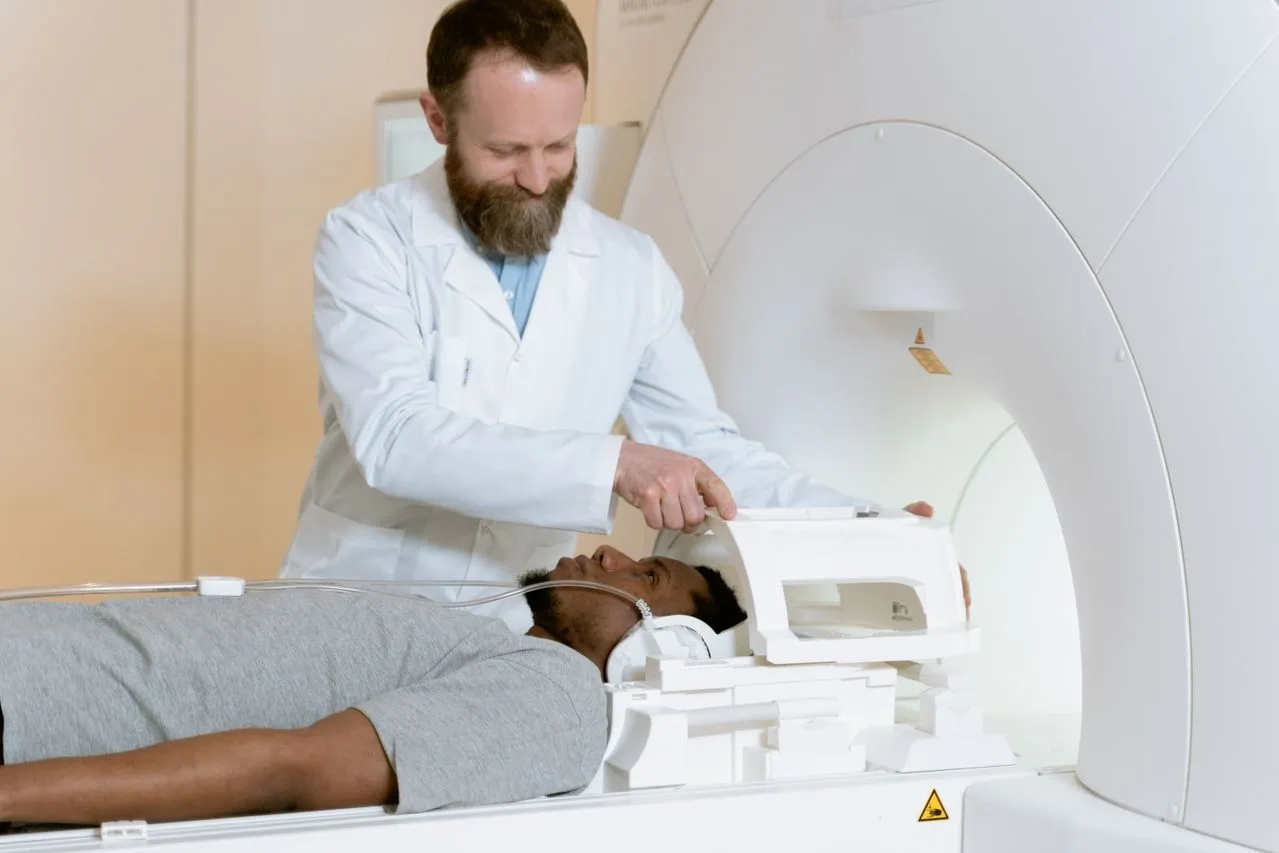
Siemens Healthineers’ PET detectors play a central role in this process. During a PET examination, a patient receives a radiopharmaceutical that emits gamma rays as the substance undergoes radioactive decay. The PET detector captures these signals, and the resulting information is processed by the imaging system to generate detailed images that can help clinicians understand disease activity.
The expanding use of radiopharmaceuticals is one of the factors contributing to increased demand for PET/CT technology. In oncology, PET imaging can support the detection, characterization and monitoring of many cancers. In neurology, molecular imaging is being used in applications such as the evaluation of Alzheimer’s disease. PET also has applications in cardiac imaging, where metabolic and functional information can complement other diagnostic techniques.
Another important area of growth is theranostics, an approach that combines diagnostic imaging with targeted therapeutic strategies. As the clinical use of radiopharmaceuticals continues to develop, demand for imaging systems capable of detecting and characterizing molecular activity may increase further.
The Rockford expansion is intended to position Siemens Healthineers to respond to these trends by increasing the company’s ability to produce PET detectors at scale.
The Rockford PET Detector Center encompasses multiple facilities located on Dunavant Drive and Stock Creek Boulevard. The recently completed construction and renovation project focused on the Dunavant Drive portion of the campus.
One of the largest components of the investment was the creation of approximately 36,000 square feet of additional dedicated manufacturing space. The new area provides Siemens Healthineers with additional room to expand PET detector production and improve its ability to meet customer requirements.
The project also included the renovation of approximately 7,500 square feet within the existing 26,000-square-foot PET detector manufacturing and engineering facility. The upgraded space is intended to support increased manufacturing capacity and strengthen the operational capabilities of the facility.
In addition, Siemens Healthineers expanded its research and development infrastructure by approximately 4,000 square feet. The expansion involves the company’s existing 21,000-square-foot R&D facility and provides additional capacity for research and engineering activities related to molecular imaging technologies.
The company’s 50,000-square-foot crystal manufacturing facility on Stock Creek Boulevard was not included in the construction and renovation project.
Together, the new construction and renovations provide a substantial increase in the operational footprint of the Rockford campus. The improvements are expected to support manufacturing, engineering, research and management activities as Siemens Healthineers continues to develop and commercialize molecular imaging technologies.
The increased production capacity is expected to play a role in the launch of new PET/CT product lines in both the United States and international markets.
PET/CT combines two imaging modalities. PET provides functional and metabolic information, while computed tomography (CT) produces detailed anatomical images. Combining these capabilities allows clinicians to correlate areas of increased biological activity with specific anatomical structures.
The technology has become an important tool in numerous clinical settings, particularly oncology. Physicians can use PET/CT imaging to assess disease activity, help determine the extent of disease and monitor how a patient responds to treatment.
The technology is also increasingly relevant as new radiopharmaceutical applications emerge. As the number of molecular imaging applications grows, manufacturers must be able to supply imaging systems and components capable of supporting expanding clinical demand.
For Siemens Healthineers, increasing PET detector production is therefore not simply a manufacturing expansion. It is also intended to support the company’s broader molecular imaging strategy and enable customers to access PET/CT technology as clinical applications continue to develop.
James Williams, PhD, head of Siemens Healthineers Molecular Imaging, described the project as an important investment in the company’s position in PET/CT technology. He said the expansion demonstrates Siemens Healthineers’ continued commitment to global leadership in the field while significantly increasing production capacity and customer access to PET/CT scanners.
Williams also recognized the role of the state of Tennessee in supporting the investment through its economic development program.
Beyond its impact on manufacturing capacity, the project is expected to generate economic benefits for the Rockford area.
Siemens Healthineers currently employs more than 200 people at the Rockford campus. The completed construction and renovations are expected to contribute to the creation of more than 90 additional manufacturing, research and development, and management positions over a five-year period.
The anticipated job growth reflects the expanding operational needs of the facility. Additional manufacturing capacity requires skilled employees to operate production processes, while increased research and engineering activities can create opportunities for technical and scientific professionals.
The expansion may also contribute indirectly to the local economy through increased demand for services, suppliers and other business activities associated with the growing campus.
For the Rockford community, the investment represents a significant long-term commitment from a global medical technology company. The expansion connects local employment and economic development with the growing international market for molecular imaging and PET/CT technology.
The state of Tennessee also contributed to the project through a $930,000 FastTrack Economic Development Grant from the Tennessee Department of Economic and Community Development.
The FastTrack funding can be used to offset eligible expenses associated with economic development projects, including property acquisition, new construction and building retrofits.
The grant helped support Siemens Healthineers’ investment in the Rockford campus and reinforces the relationship between the company’s expansion plans and Tennessee’s economic development objectives.
State incentives of this type are intended to encourage companies to expand existing operations and create new employment opportunities. In the case of Siemens Healthineers, the project combines capital investment, advanced manufacturing and expected job creation within the state.
The collaboration also demonstrates the importance of public-private partnerships in attracting and retaining high-value manufacturing operations. By supporting the project, Tennessee is helping strengthen a local site that has an important role in Siemens Healthineers’ global PET detector supply chain.
Environmental sustainability was another important consideration in the construction and renovation project.
Siemens Healthineers incorporated several energy-efficient and environmentally focused measures into the upgraded facilities. Among the initiatives are the installation of carbon-neutral equipment powered by electricity instead of natural gas.
The project also includes interior LED lighting, which can improve energy efficiency compared with traditional lighting systems. LED technology can reduce electricity consumption while providing efficient illumination throughout manufacturing and operational areas.
The expanded campus also features 12 electric vehicle charging stations. The charging infrastructure provides support for employees and visitors who use electric automobiles and reflects the company’s effort to incorporate sustainability into the redevelopment of its facilities.
Siemens Healthineers also worked closely with the Tennessee Valley Authority (TVA), the largest public power provider in the United States, as part of efforts to improve the energy efficiency of the campus.
The collaboration with TVA was intended to help ensure that energy considerations were incorporated into the project’s design and operation. This focus on energy efficiency adds an environmental dimension to the broader economic and technological objectives of the expansion.
The completion of the Rockford project comes as molecular imaging continues to evolve across healthcare. Advances in radiopharmaceuticals, targeted therapies and precision medicine are creating new opportunities for imaging technologies that can provide information about biological processes.
PET/CT has an important role in this changing healthcare environment because it combines metabolic imaging with detailed anatomical information. As clinicians increasingly use molecular imaging to guide diagnosis, treatment planning and disease monitoring, demand for sophisticated PET systems and their underlying detector technologies may continue to grow.
Siemens Healthineers’ investment in Rockford provides additional manufacturing and R&D capacity that can support these developments. By expanding the facility where its PET detectors are manufactured, the company is strengthening an important part of its global molecular imaging supply chain.
The project also creates greater capacity for innovation. The additional R&D space can support engineering and technology development, while expanded manufacturing facilities can help translate new technologies into commercially available products.
The $43.6 million investment underscores the strategic importance of PET/CT technology to Siemens Healthineers Molecular Imaging. The company is responding to increasing customer demand while preparing its manufacturing infrastructure for future product launches and evolving clinical applications.
The Rockford campus is uniquely positioned within Siemens Healthineers’ global operations because it is the company’s only worldwide manufacturing location for its PET detectors. Expanding this facility therefore has implications that extend beyond the local market.
The increased capacity is expected to help Siemens Healthineers serve customers in the United States and internationally while supporting the introduction of new PET/CT systems.
At the same time, the expected creation of more than 90 positions over five years demonstrates the project’s potential to contribute to the regional workforce. The combination of manufacturing, R&D and management roles could further strengthen Rockford’s position as a location for advanced medical technology operations.
The project’s sustainability measures add another element to the investment, with electric-powered equipment, LED lighting and EV charging infrastructure incorporated into the upgraded campus.
Overall, the completion of the Rockford PET Detector Center expansion represents a significant investment in medical imaging manufacturing, research and economic development. By adding approximately 40,000 square feet and renovating existing space, Siemens Healthineers is increasing its capacity to manufacture the PET detectors that support its PET/CT systems.
As PET imaging expands across oncology, neurology and cardiac care, and as radiopharmaceutical-based theranostic approaches gain momentum, the expanded Rockford facility is positioned to support the next phase of molecular imaging innovation. The project combines increased production capacity, expanded research capabilities, new employment opportunities and sustainability initiatives, reinforcing Siemens Healthineers’ long-term commitment to PET/CT technology and to the Rockford community.
Source link: https://www.siemens-healthineers.com/