HistoSonics has reached a significant milestone in the global expansion of its innovative medical technology after receiving CE Mark approval for the Edison® Histotripsy System. The certification authorizes the commercialization of the company’s non-invasive histotripsy platform across Europe and in additional international markets that recognize the CE Mark, paving the way for broader patient access to an emerging treatment approach for liver tumors.
The regulatory achievement represents an important step in HistoSonics’ mission to transform the treatment of solid tumors through focused ultrasound technology. By introducing a non-invasive alternative to conventional surgical and thermal procedures, the company aims to offer physicians and patients a new therapeutic option that can destroy targeted tissue without incisions, radiation exposure, or many of the risks associated with traditional interventions.
The approval follows years of research, product development, and clinical evaluation demonstrating the safety and performance of the Edison System. Supported by growing clinical evidence and international multicenter studies, the platform has attracted increasing attention within the medical community as one of the first technologies capable of mechanically destroying tumors using focused ultrasound.
Receiving the CE Mark is a significant accomplishment for any medical device manufacturer seeking access to European healthcare markets.
The certification confirms that the Edison Histotripsy System meets applicable European safety, performance, and quality requirements for commercialization. Beyond enabling sales throughout the European Union, the CE Mark also facilitates market entry into several countries outside Europe that recognize European regulatory approvals.
For HistoSonics, this milestone represents the beginning of a broader international commercialization strategy aimed at expanding availability of histotripsy technology beyond the United States.
The company intends to introduce the Edison System through a phased rollout beginning with leading hospitals and specialized treatment centers that focus on liver tumor management. These centers are expected to serve as early adopters, helping establish clinical expertise while generating additional real-world evidence supporting wider implementation.
The Edison System is built around histotripsy, an innovative therapeutic technology that differs fundamentally from conventional tumor treatment methods.
Traditional liver tumor treatments frequently rely on surgery, radiofrequency ablation, microwave ablation, cryotherapy, chemotherapy, or radiation therapy. While these options have improved outcomes for many patients, they can also involve invasive procedures, extended recovery periods, or damage to surrounding healthy tissue.
Histotripsy introduces a different approach.
Instead of using heat, radiation, or surgical instruments, histotripsy employs precisely focused ultrasound energy to generate controlled mechanical forces within targeted tissue.
These mechanical forces create microscopic acoustic cavitation bubbles that rapidly expand and collapse, breaking apart unwanted tissue at the cellular level. The targeted tissue is liquefied and subsequently removed naturally by the body’s biological processes.
Because the treatment relies on mechanical rather than thermal energy, surrounding healthy tissues may experience less collateral damage compared with certain conventional therapies.
One of the defining advantages of the Edison System is its completely non-invasive design.
Unlike surgery, the procedure requires no incisions.
Unlike radiation therapy, patients are not exposed to ionizing radiation.
Unlike thermal ablation, histotripsy does not depend on high temperatures to destroy tumors.
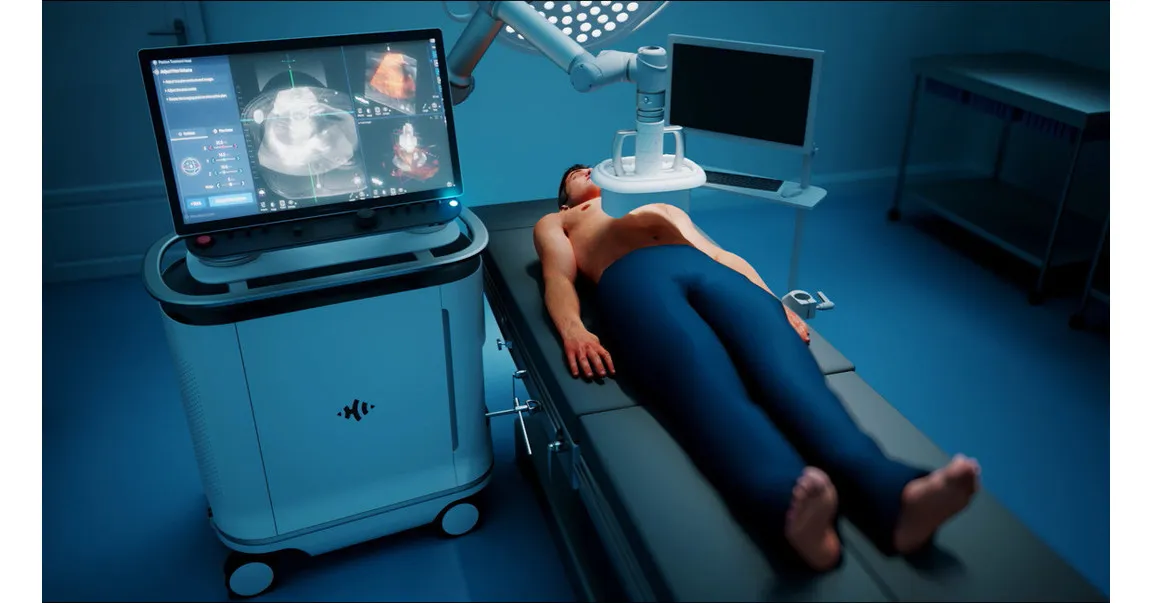
Instead, physicians use advanced imaging guidance to accurately identify the treatment area while directing focused ultrasound energy toward the targeted liver lesion.
The ability to visualize treatment in real time allows clinicians to monitor therapy throughout the procedure, improving precision while minimizing unintended injury to nearby structures.
This combination of image guidance and non-invasive tissue destruction represents a major technological advancement in interventional oncology.
The Edison Histotripsy System is intended for the destruction of liver tumors, including the partial or complete destruction of unresectable liver tumors.
Many patients diagnosed with liver tumors are not candidates for surgery because of tumor location, multiple lesions, underlying liver disease, or other medical conditions that increase surgical risk.
For these individuals, treatment options can be limited.
Histotripsy may offer an alternative approach capable of targeting tumors that would otherwise be difficult to remove surgically.
The technology has been developed to selectively destroy diseased tissue while preserving surrounding healthy liver structures whenever possible.
Maintaining healthy liver tissue is particularly important because many patients already have compromised liver function due to cirrhosis, chronic hepatitis, or metastatic disease.
The CE Mark approval was supported by an expanding body of clinical evidence demonstrating the safety and effectiveness of histotripsy technology in treating liver tumors.
Multiple clinical investigations have evaluated the Edison System across diverse patient populations and tumor types.
These studies consistently demonstrated the platform’s ability to accurately target liver tumors while maintaining a favorable safety profile.
Investigators also observed that the procedure avoided many complications commonly associated with invasive surgery or thermal ablation techniques.
The availability of increasing clinical data has strengthened confidence among physicians evaluating the role of histotripsy within modern liver cancer treatment strategies.
As additional research continues, clinicians hope to better understand the technology’s long-term clinical benefits across broader patient populations.
A major component supporting European approval came from data generated through the international HOPE4LIVER pivotal clinical trial.
The study enrolled patients across multiple countries, including both the United States and several European nations such as Germany, Italy, Spain, and the United Kingdom.
The multinational trial evaluated the safety and performance of the Edison Histotripsy System in treating liver tumors across different healthcare environments.
Among its most notable findings, investigators reported a 90 percent local tumor control rate at 12 months across the tumor types included in the study.
Equally important, researchers observed a low complication rate, reinforcing the procedure’s favorable safety profile.
These findings provide encouraging evidence that histotripsy may effectively control targeted liver tumors while minimizing treatment-related risks.
Researchers continue collecting longer-term follow-up data to further evaluate patient outcomes and validate the technology’s performance in broader real-world clinical settings.
Mike Blue, Chairman and Chief Executive Officer of HistoSonics, described the CE Mark approval as another historic milestone for both the company and patients throughout Europe.
According to Blue, histotripsy represents an entirely new method of treating tumors by using focused ultrasound to mechanically destroy targeted tissue without the invasiveness or toxicity associated with many conventional treatment approaches.
He emphasized that European approval creates opportunities to collaborate with leading hospitals and physicians across the European Union and the United Kingdom while expanding access to patients who currently have limited treatment options for liver tumors.
The company believes broader clinical adoption will further demonstrate the potential benefits of histotripsy while supporting continued technological innovation.
Liver tumors remain one of the most challenging conditions in oncology.
Primary liver cancer and metastatic liver disease affect hundreds of thousands of patients worldwide each year.
Although surgery remains the preferred treatment for many localized tumors, only a relatively small proportion of patients qualify for surgical resection.
Reasons patients may be considered ineligible include:
Many patients therefore require alternative therapies capable of controlling disease while preserving liver function.
Histotripsy has emerged as a promising option because it offers precise tissue destruction without requiring open surgery.
While additional long-term studies continue, histotripsy offers several potential advantages compared with traditional treatment approaches.
These include:
These characteristics may make the technology particularly attractive for patients who have limited therapeutic options.
The European CE Mark follows another important regulatory milestone achieved by HistoSonics in October 2023.
At that time, the Edison Histotripsy System received FDA De Novo clearance in the United States.
The FDA’s De Novo pathway is reserved for novel medical technologies that represent new device classifications while demonstrating reasonable assurance of safety and effectiveness.
Receiving both U.S. and European regulatory authorization strengthens HistoSonics’ position as a pioneer in histotripsy technology and supports broader global commercialization efforts.
Following CE Mark approval, HistoSonics plans to begin commercial deployment through a phased expansion strategy.
Initially, the company will collaborate with carefully selected centers of excellence specializing in liver tumor treatment.
These institutions are expected to play an important role in physician education, procedural training, clinical research, and patient access.
As physician experience grows and additional evidence becomes available, HistoSonics anticipates expanding availability across more hospitals throughout Europe.
The phased approach allows the company to ensure consistent clinical training while supporting safe implementation of the technology.
Although the Edison System simplifies certain aspects of tumor treatment by eliminating surgery, successful implementation requires specialized physician education.
HistoSonics emphasizes that the device should only be operated by physicians who have successfully completed company-provided training.
Appropriate patient selection, procedural planning, image guidance, and clinical judgment remain essential for achieving optimal treatment outcomes.
The company continues investing in physician education programs designed to support safe and effective adoption as commercialization expands internationally.
While the Edison System has received regulatory authorization for the mechanical destruction of liver tumors, HistoSonics notes several important considerations regarding its approved use.
The device is intended for the partial or complete destruction of liver tumors using histotripsy technology.
However, regulatory agencies have not approved the system as a treatment for any specific disease, including cancer itself.
Similarly, agencies have not evaluated long-term oncologic outcomes such as overall survival, five-year survival, or disease-specific survival.
Instead, approval focuses on the device’s intended use and demonstrated ability to mechanically destroy targeted liver tissue safely.
Patients and physicians should therefore consider treatment decisions within the broader context of comprehensive oncology care.
The CE Mark approval of the Edison Histotripsy System represents an important advancement for both HistoSonics and the field of non-invasive therapeutic ultrasound. By enabling commercialization across Europe and additional CE-recognizing markets, the certification significantly expands access to an innovative technology designed to mechanically destroy liver tumors without surgery, radiation, or thermal ablation.
Supported by encouraging clinical evidence, including results from the international HOPE4LIVER trial, HistoSonics is well positioned to advance global adoption of histotripsy as physicians seek less invasive treatment options for patients with complex liver tumors.
As the company begins its phased European rollout, continued clinical research, physician training, and real-world experience will help define the future role of histotripsy within interventional oncology. If ongoing studies continue to demonstrate favorable safety and effectiveness, the Edison Histotripsy System may become an increasingly important addition to the expanding range of technologies available for treating liver tumors while preserving healthy tissue and improving patient care.
Source link: https://www.businesswire.com/