The Heart Center of the Central Clinic has introduced a novel minimally invasive procedure for the treatment of atrial fibrillation, marking an important development in cardiac care in Thuringia. The center has used the new surgical approach over approximately two weeks, treating three patients with persistent atrial fibrillation and significantly enlarged left atria.
The procedure combines completely thoracoscopic surgical ablation with closure of the left atrial appendage. Importantly, the intervention is performed without the use of a heart-lung machine, allowing physicians to carry out the treatment on the patient’s beating heart through several small incisions in the side of the chest.
With the introduction of this technique, the Heart Center of the Central Clinic in Bad Berka has become one of the few centers in Germany to perform the novel procedure. The approach is intended to address a challenging group of patients for whom existing treatment options may not provide sufficient results, while conventional open-heart surgery may represent a more extensive intervention than necessary.
The introduction of the procedure also highlights the growing importance of interdisciplinary cooperation between cardiac surgeons, cardiologists and electrophysiologists in treating complex cardiac rhythm disorders.
Atrial fibrillation is one of the most common cardiac arrhythmias and represents a significant healthcare challenge in Germany and worldwide. The condition occurs when the heart’s upper chambers, known as the atria, beat irregularly rather than maintaining a normal rhythm.
For some patients, atrial fibrillation may occur intermittently, while others develop persistent forms of the condition. Symptoms can vary considerably and may include palpitations, fatigue, reduced physical capacity, shortness of breath or dizziness. In some cases, however, patients may experience few or no obvious symptoms.
Despite the variation in symptoms, atrial fibrillation can have serious consequences. The irregular rhythm can contribute to the formation of blood clots, particularly in the left atrial appendage. If a clot travels through the bloodstream to the brain, it can cause a stroke.
According to figures cited by the Heart Center, approximately 1.8 million people in Germany are affected by atrial fibrillation. The condition is also among the most common reasons for hospital admission in the country. The Heart Report recorded approximately 360,000 patients admitted in 2024 in connection with the condition.
These figures underline the importance of continuing to develop effective treatment approaches, particularly for patients with more complex or advanced forms of atrial fibrillation.
The management of atrial fibrillation has changed significantly over the past several years.
Historically, treatment has often involved medication designed to control the heart rate or restore and maintain a normal rhythm. Antiarrhythmic medications remain an important component of treatment for many patients, but advances in cardiac procedures have expanded the options available to people whose arrhythmia cannot be adequately controlled with medication.
One major development has been the use of ablation procedures.
Ablation aims to eliminate or isolate areas of cardiac tissue responsible for initiating or maintaining abnormal electrical activity. By creating carefully targeted areas of scar tissue, physicians can prevent abnormal electrical signals from continuing to trigger or sustain atrial fibrillation.
Catheter-based ablation has become an established treatment option, particularly for patients with episodic or paroxysmal atrial fibrillation. In these procedures, physicians guide specialized catheters through the blood vessels to the heart and use energy to treat targeted areas.
For many patients, catheter ablation can provide effective control of the arrhythmia. However, the procedure can become more challenging when atrial fibrillation is persistent or when structural changes to the heart have already developed.
Persistent atrial fibrillation can be more difficult to treat than intermittent forms of the condition. Over time, continued irregular electrical activity can be associated with changes in the structure and function of the atria.
One of the challenges is enlargement of the left atrium. Structural changes can make it more difficult to identify and eliminate all of the electrical pathways responsible for maintaining the arrhythmia.
For these patients, catheter-based treatment may not always provide sufficient results.
At the other end of the treatment spectrum, surgical ablation can be performed as part of open-heart surgery. While such procedures can be effective, they generally require a substantially more invasive approach, including the use of a heart-lung machine.
The newly introduced technique at the Heart Center of the Central Clinic is intended to occupy an important space between these approaches.
It provides a surgical method for treating persistent atrial fibrillation and advanced structural disease while avoiding the need for conventional open-heart surgery and a heart-lung machine.
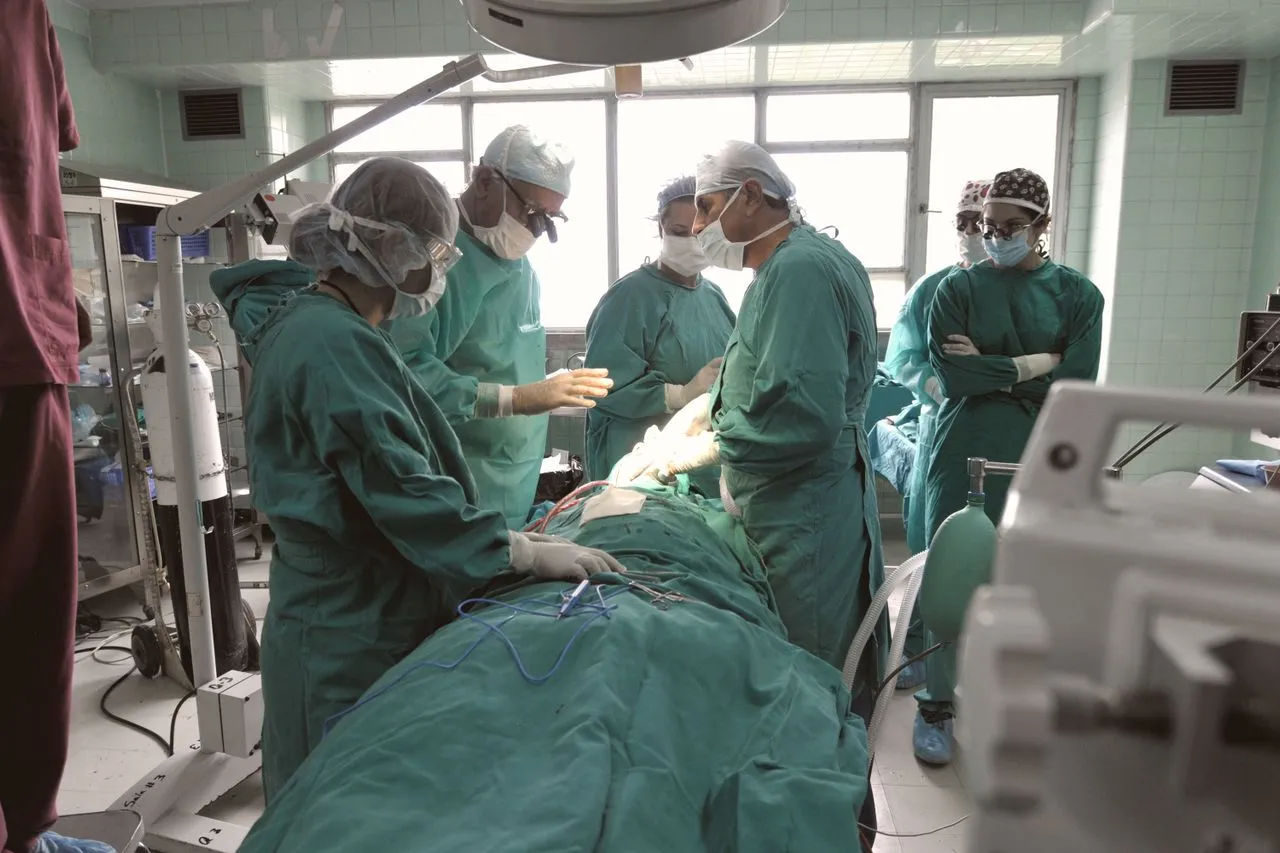
The new procedure is performed through several small incisions made in the side of the patient’s chest.
Instead of opening the chest through a conventional surgical approach, cardiac surgeons use thoracoscopic techniques to access the heart. A small optical camera provides visualization of the surgical area, allowing the medical team to work through the limited access points.
The procedure is performed externally on the beating heart.
Using specialized surgical instruments, the physicians isolate the posterior wall of the left atrium and the pulmonary veins. These structures play an important role in the electrical activity associated with atrial fibrillation.
By creating carefully positioned areas of ablation around the relevant tissue, the surgical team aims to interrupt abnormal electrical pathways and reduce the likelihood that atrial fibrillation will return.
The thoracoscopic approach is designed to minimize the physical impact associated with traditional open-heart surgery while still allowing surgeons to address areas that may be difficult to treat effectively through catheter techniques alone.
An additional part of the procedure is closure of the left atrial appendage.
The left atrial appendage is a small pouch connected to the left atrium. In patients with atrial fibrillation, blood can become stagnant in this area, increasing the possibility of clot formation.
A clot can potentially enter the bloodstream and travel to the brain, resulting in a stroke.
During the new minimally invasive procedure, the surgical team closes the left atrial appendage during the same operation as the ablation.
This combined approach allows physicians to address two important aspects of atrial fibrillation in a single intervention: the abnormal electrical activity responsible for the arrhythmia and the left atrial appendage, which is an important location for clot formation associated with atrial fibrillation.
By combining these procedures, the Heart Center aims to provide a comprehensive treatment strategy for selected patients with persistent disease.
The Heart Center of the Central Clinic has performed the procedure on three patients during the initial approximately two-week period following its introduction.
All three patients had persistent atrial fibrillation and significantly enlarged left atria, placing them within a patient population for whom treatment can be particularly challenging.
The early use of the procedure represents an important milestone for the center and demonstrates its ability to introduce advanced minimally invasive cardiac techniques into clinical practice.
As with any new medical procedure, continued experience and evaluation will be important in determining its longer-term role and effectiveness for appropriate patients.
The center’s introduction of the procedure nevertheless represents an expansion of its treatment capabilities and provides another option for patients whose clinical circumstances make standard catheter ablation less suitable or insufficient.
The complexity of treating persistent atrial fibrillation means that successful care often requires collaboration among multiple medical specialties.
At the Heart Center of the Central Clinic, cardiac surgeons, cardiologists and electrophysiologists work together to evaluate patients and determine appropriate treatment strategies.
Dr. Marco Mierzwa, Senior Consultant at the Department of Cardiac Surgery of the Heart Center at the Central Clinic, emphasized the importance of this cooperation.
According to Mierzwa, the new procedure requires close collaboration between cardiac surgeons, cardiologists and electrophysiologists. He highlighted the interdisciplinary and interprofessional cooperation already established at the center in Bad Berka.
Mierzwa described the ability to offer the specialized ablation as an important achievement and said the technique helps address a therapeutic gap.
For patients in whom catheter ablation may not be effective enough, but who do not yet require open-heart ablation using a heart-lung machine, the minimally invasive surgical approach could provide a valuable alternative.
The introduction of the procedure reflects an effort to expand treatment options along the spectrum of atrial fibrillation.
Patients with episodic atrial fibrillation may often be suitable candidates for catheter-based ablation. At the other end of the spectrum, patients requiring complex surgical intervention may undergo open-heart procedures.
However, there is a group of patients between these categories who can present significant challenges.
They may have persistent atrial fibrillation and structural changes such as a significantly enlarged left atrium, making catheter treatment less effective. At the same time, they may not require or be suitable for a traditional open-heart procedure.
The thoracoscopic technique provides another potential pathway for this group.
By accessing the heart through small chest incisions and treating the relevant areas externally on the beating heart, the procedure seeks to provide the benefits of surgical ablation while avoiding the use of a heart-lung machine.
The Heart Center’s adoption of the procedure is particularly notable because it places the Central Clinic among a limited number of centers in Germany using the technique.
Becoming the first center in Thuringia to perform the novel procedure demonstrates the institution’s focus on expanding advanced cardiac treatment capabilities.
The development also provides evidence of the growing role of minimally invasive techniques in cardiac surgery.
Modern cardiac care increasingly seeks to achieve effective clinical outcomes while reducing the invasiveness of procedures wherever appropriate. Thoracoscopic approaches can support this goal by allowing surgeons to access and treat cardiac structures through smaller surgical openings.
For carefully selected patients, this can represent an alternative to more extensive surgical procedures.
The growing number of people affected by atrial fibrillation also emphasizes the importance of appropriate diagnosis, monitoring and treatment.
Because the condition can present differently from one patient to another, treatment decisions must be tailored to individual circumstances. Factors such as the type and duration of atrial fibrillation, structural changes in the heart and previous treatment outcomes can influence which approach is considered appropriate.
Patients with persistent atrial fibrillation and significant structural changes may require evaluation by specialized cardiac teams with expertise in rhythm management and surgical treatment.
The availability of multiple treatment approaches allows specialists to consider the most appropriate strategy for each patient rather than relying on a single method.
The new procedure at the Heart Center adds another option to that treatment spectrum.
The introduction of the completely thoracoscopic minimally invasive ablation and left atrial appendage closure procedure marks an important step for the Heart Center of the Central Clinic and for cardiac treatment in Thuringia.
The first three patients treated through the new approach had persistent atrial fibrillation and significantly enlarged left atria, representing a patient group that can be particularly challenging to manage.
The procedure combines several important elements of modern cardiac care: minimally invasive surgery, treatment of abnormal electrical activity and closure of the left atrial appendage. Its ability to be performed without a heart-lung machine distinguishes it from conventional open-heart surgical approaches.
The development also reinforces the importance of close cooperation among cardiac surgeons, cardiologists and electrophysiologists. Such interdisciplinary collaboration can help ensure that patients with complex heart rhythm disorders are assessed from multiple clinical perspectives and receive treatment suited to their individual needs.
With approximately 1.8 million people in Germany living with atrial fibrillation and hundreds of thousands of related hospital admissions, continued progress in the treatment of the condition remains important.
The Heart Center of the Central Clinic’s adoption of this novel procedure provides another tool for addressing persistent atrial fibrillation, particularly for patients who may fall into the treatment gap between catheter ablation and traditional open-heart surgery.
As the center gains further experience with the technique, its role within the broader treatment strategy for atrial fibrillation can continue to develop. For now, the procedure represents a notable advancement in minimally invasive cardiac care and an important milestone for the Central Clinic as it expands its specialized treatment options for patients with complex atrial fibrillation.
Source link: https://www.rhoen-klinikum-ag.com/