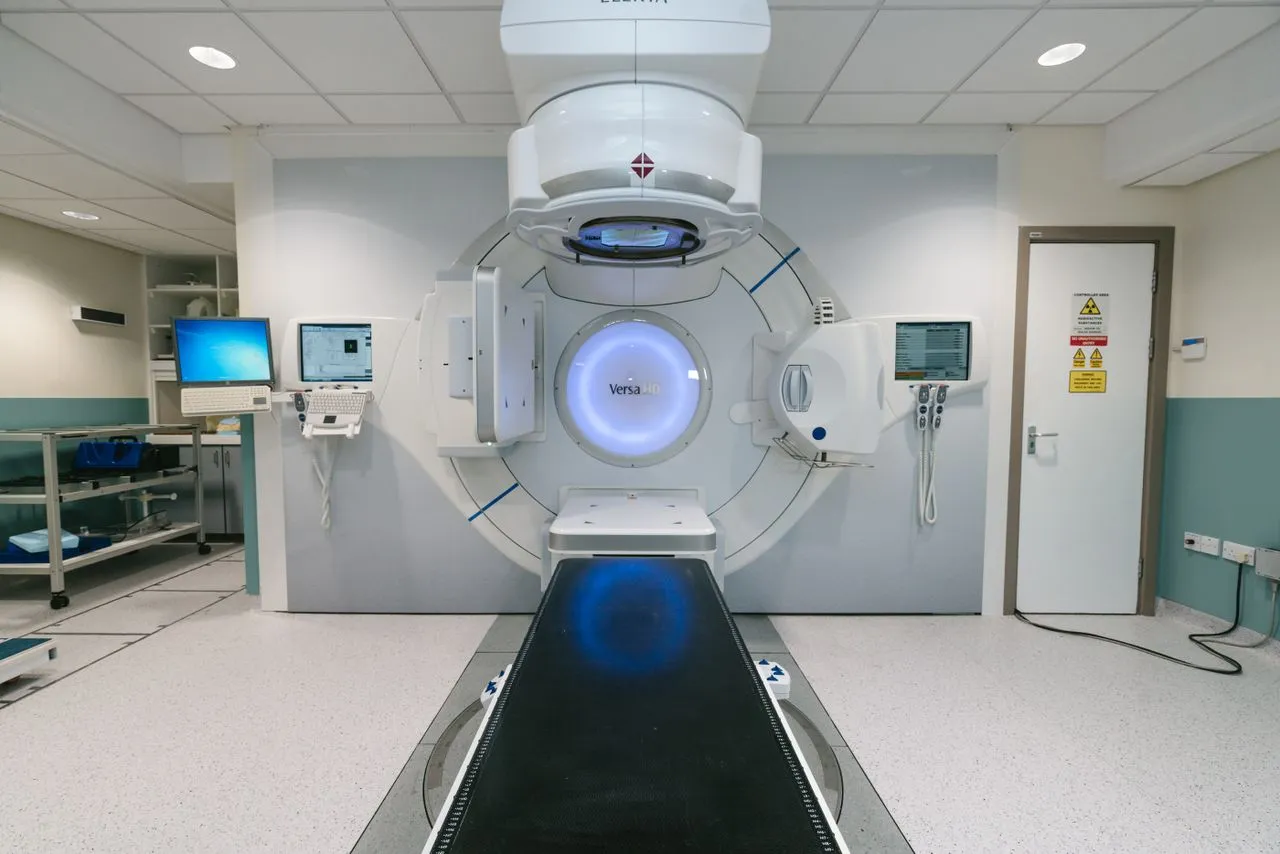
Siemens Healthineers has introduced Accela, a new radiotherapy solution designed to bring greater speed, precision and scalability to cancer treatment. Built around the company’s NeoArc architecture, Accela combines advanced imaging, treatment planning, artificial intelligence and high-performance linear accelerator technology to support a broad range of radiotherapy cases.
The launch comes at a time when healthcare systems are managing a growing cancer burden while also facing increasing treatment complexity and workforce pressures. By focusing on faster treatment delivery and streamlined clinical workflows, Accela is designed to help radiation oncology teams expand their treatment capabilities while reducing the amount of time patients spend on the treatment table.
For patients undergoing radiotherapy, time spent in treatment can be an important consideration. Accela has been engineered to support faster treatment delivery, including single breath-hold stereotactic treatments and multi-site stereotactic body radiation therapy, or SBRT, in as little as 60 seconds.
The company says this approach could help shorten patient treatment time while giving clinicians access to a technology platform designed to support increasingly complex radiation treatments.
At the center of Accela is NeoArc, the architecture around which the new radiotherapy solution has been engineered. The system brings together treatment delivery, imaging and planning technologies to create a platform focused on both precision and speed.
Radiotherapy continues to play an important role in cancer care, but modern radiation oncology increasingly involves complex treatment plans that require accurate imaging, sophisticated planning and precise radiation delivery.As treatment techniques evolve, clinicians are looking for technologies that can support more sophisticated therapies without adding unnecessary complexity to clinical workflows.
Accela has been designed with that challenge in mind.The system combines advanced planning software with a high-performance linear accelerator, enabling clinicians to optimize treatment plans while also considering how quickly those plans can be delivered.This balance between treatment quality and delivery speed is one of the central elements of the new platform.
One of the most notable features of Accela is its ability to support rapid stereotactic treatments.The solution enables single breath-hold stereotactic treatments and can deliver multi-site SBRT treatments in as little as 60 seconds.
SBRT is a highly precise form of radiation therapy that delivers concentrated doses of radiation to targeted areas. Because of the precision involved, treatment planning and delivery can be highly complex.Accela is designed to address that complexity while reducing the amount of time patients need to remain on the treatment table.
For patients, shorter treatment times could contribute to a more streamlined treatment experience. For healthcare providers, faster treatment delivery could also create opportunities to improve workflow efficiency and manage treatment capacity.This is particularly relevant for cancer centers dealing with increasing demand for radiation oncology services.
Another important part of Accela is its treatment planning software.The planning platform uses advanced artificial intelligence and algorithms to help clinicians balance treatment plan quality with delivery speed.
Radiotherapy planning can involve multiple clinical considerations. Radiation oncologists and medical physicists need to develop plans that accurately target tumors while managing exposure to surrounding healthy tissue.As treatment techniques become more advanced, planning can also become more demanding.
Accela’s software is designed to help clinicians navigate this process by using advanced computational capabilities to support treatment optimization.The objective is not simply to create a highly optimized treatment plan, but also to consider how efficiently that plan can ultimately be delivered.
This combination of plan quality and delivery speed represents an important part of Siemens Healthineers’ approach to modern radiotherapy.
Accela also introduces several hardware capabilities designed to support imaging and radiation delivery.The system features a large HyperSight cone-beam CT imaging panel, providing imaging capabilities that can support treatment positioning and verification.
Accurate imaging is essential in modern radiotherapy because clinicians need to understand the patient’s anatomy and treatment target before radiation is delivered.The system also includes a newly designed multi-leaf collimator.
Multi-leaf collimators are an important component of modern linear accelerators because they shape the radiation beam according to the treatment plan. By adjusting the position of individual leaves, clinicians can create radiation fields that conform more closely to the intended treatment target.
Accela combines this technology with high-speed gantry rotation of up to 2.5 revolutions per minute.The platform also offers dose rates of up to 40 Gy per minute, along with a new eight-megavolt flattening filter-free energy setting.Together, these technologies are intended to support faster and more flexible radiation treatment delivery.
According to Dee Khuntia, MD, chief medical officer at Varian, the Siemens Healthineers cancer-care business, Accela represents a significant change in the way radiotherapy systems can be designed.“Accela is the kind of leap our field doesn’t see often,” Khuntia said.
He highlighted the system’s speed, modern architecture and new approach to treatment planning as important aspects of the platform.Khuntia also pointed to the potential biological implications of faster and differently delivered radiotherapy.
His comments reflect the broader objective behind the development of Accela: not simply improving individual components of a radiotherapy system, but creating a platform that could support new approaches to cancer treatment.The company views this as a significant step forward for radiation oncology.
Healthcare systems around the world are facing a growing need for cancer services.As cancer incidence increases and treatment options become more sophisticated, radiation oncology departments must manage a combination of rising patient demand, increasingly complex treatment plans and workforce constraints.
These pressures can make treatment capacity an important consideration for cancer centers.Accela has been developed with these challenges in mind.
By enabling faster treatment delivery and supporting sophisticated planning and imaging, the platform is intended to help healthcare systems expand their radiotherapy capabilities.The potential benefit extends beyond treatment speed. A system that supports streamlined workflows may also help clinical teams manage their resources more effectively.
For patients, a shorter time on the treatment table may make individual treatment sessions less demanding.For clinicians, integrated imaging, planning and treatment technologies may provide additional tools for managing complex cases.
Arthur Kaindl, head of Varian, said the Accela announcement reflects the company’s long-term investment in radiotherapy and healthcare technology.“Today’s announcement shows a level of innovation in radiotherapy only Siemens Healthineers can deliver,” Kaindl said.
He pointed to the company’s global imaging business, radiation oncology installed base, artificial intelligence and software capabilities, as well as its long-standing clinical relationships, as foundations supporting the development of the new technology.The development of a new radiotherapy platform requires expertise across multiple disciplines.
Imaging technology, radiation delivery, treatment planning, artificial intelligence and clinical workflow all have to work together to provide a system that can meet the demands of modern cancer care.Accela represents Siemens Healthineers’ effort to bring these capabilities together within a new radiotherapy architecture.
The development of Accela and NeoArc was informed by years of collaboration between Siemens Healthineers and an advisory group of leading cancer research institutions.
The participating organizations included Mayo Clinic, Washington University School of Medicine Siteman Cancer Center, University Hospital Zurich, Seidman Cancer Center at University Hospitals Cleveland Medical Center, Maastro – Maastricht Radiation Oncology Institute, Mass General Brigham Cancer Center and Memorial Sloan Kettering Cancer Center.
These institutions contributed clinical input, research collaboration and product evaluation during the development process.Such collaboration can be particularly important when developing technologies intended for complex clinical environments.
Radiotherapy systems must operate within real-world clinical workflows, where patient safety, treatment accuracy, usability and efficiency are all important considerations.Input from cancer centers and radiation oncology experts can help identify the needs of clinicians and patients and guide the development of technologies that can be incorporated into everyday treatment environments.
For Accela, the collaboration provided an opportunity to evaluate the platform and its capabilities through the perspective of leading cancer research and treatment institutions.
Stereotactic treatments have become an increasingly important component of modern radiation oncology.These treatments require a high degree of accuracy because radiation is concentrated on specific targets.
The ability to deliver stereotactic treatments quickly while maintaining precision can therefore have implications for both clinical workflow and patient experience.Accela’s ability to support multi-site SBRT treatment in as little as 60 seconds is one of the ways Siemens Healthineers is addressing this need.
The platform’s combination of high-speed gantry rotation, high dose rates, advanced imaging and treatment planning is intended to provide clinicians with the tools required for these increasingly sophisticated treatment approaches.
Although much of the technology behind Accela is designed for clinicians and healthcare systems, the patient experience is also an important part of the platform.Radiotherapy can involve repeated treatment sessions, and patients may spend significant amounts of time positioning themselves and remaining still during treatment.
Reducing treatment delivery time can potentially make individual sessions more efficient.The ability to perform certain stereotactic treatments quickly may be particularly relevant for patients who have difficulty remaining in a treatment position for extended periods.
At the same time, faster treatment does not remove the need for precision. The objective is to combine speed with accurate radiation delivery and advanced imaging.This is where the combination of NeoArc, AI-supported planning and Accela’s linac technology becomes particularly important.
The launch of Accela represents more than the introduction of another linear accelerator.Siemens Healthineers is positioning the system as part of a broader vision for the future of radiation oncology, where advanced imaging, artificial intelligence, treatment planning and radiation delivery work together.
As cancer treatment continues to evolve, radiation oncology is likely to require systems that can accommodate increasingly complex clinical needs.Healthcare providers are also looking for ways to improve efficiency while maintaining high standards of care.
Accela has been designed to address both sides of that equation.Its combination of high-speed treatment delivery, AI-supported planning, advanced imaging and modern accelerator technology is intended to give cancer centers a platform capable of supporting a broad range of treatments.
The launch of Accela marks a significant development in Siemens Healthineers’ radiotherapy portfolio and reflects the company’s focus on combining imaging, software and radiation oncology technologies.With cancer care demand continuing to grow, innovations that can help healthcare systems manage treatment complexity and capacity will remain important.
Accela’s focus on faster stereotactic treatments, advanced planning and high-performance radiation delivery demonstrates how radiotherapy technology is continuing to evolve.The involvement of leading cancer institutions during the development of Accela and NeoArc also highlights the role of clinical collaboration in shaping the next generation of radiation oncology systems.
For patients, the goal is ultimately straightforward: access to precise cancer treatment with a more efficient treatment experience.For clinicians and healthcare systems, the challenge is to deliver that care while managing growing demand and increasingly complex treatment requirements.
With Accela, Siemens Healthineers is bringing together its imaging, software, artificial intelligence and radiation oncology capabilities in an effort to address those challenges.The company describes the platform as a major step forward in radiotherapy, combining speed and precision while supporting a broader range of treatment possibilities.
As radiation oncology continues moving toward more personalized, precise and efficient cancer care, technologies such as Accela could play an important role in shaping how treatment is planned and delivered in the years ahead.
Source link: https://www.siemens-healthineers.com/