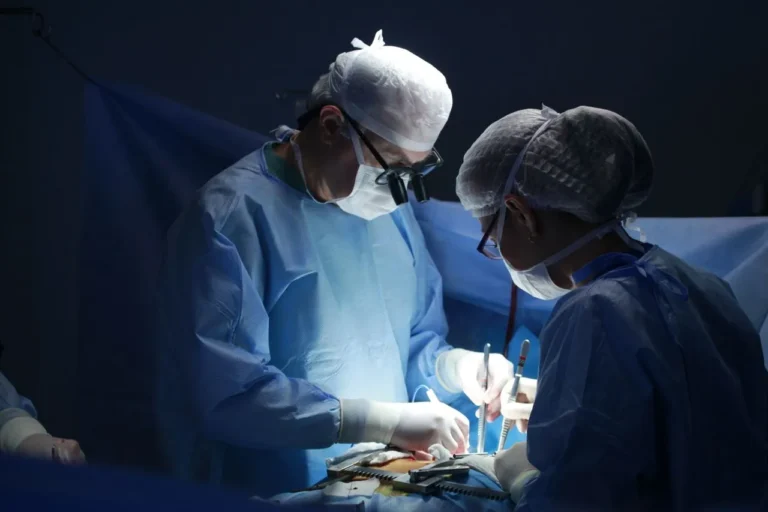
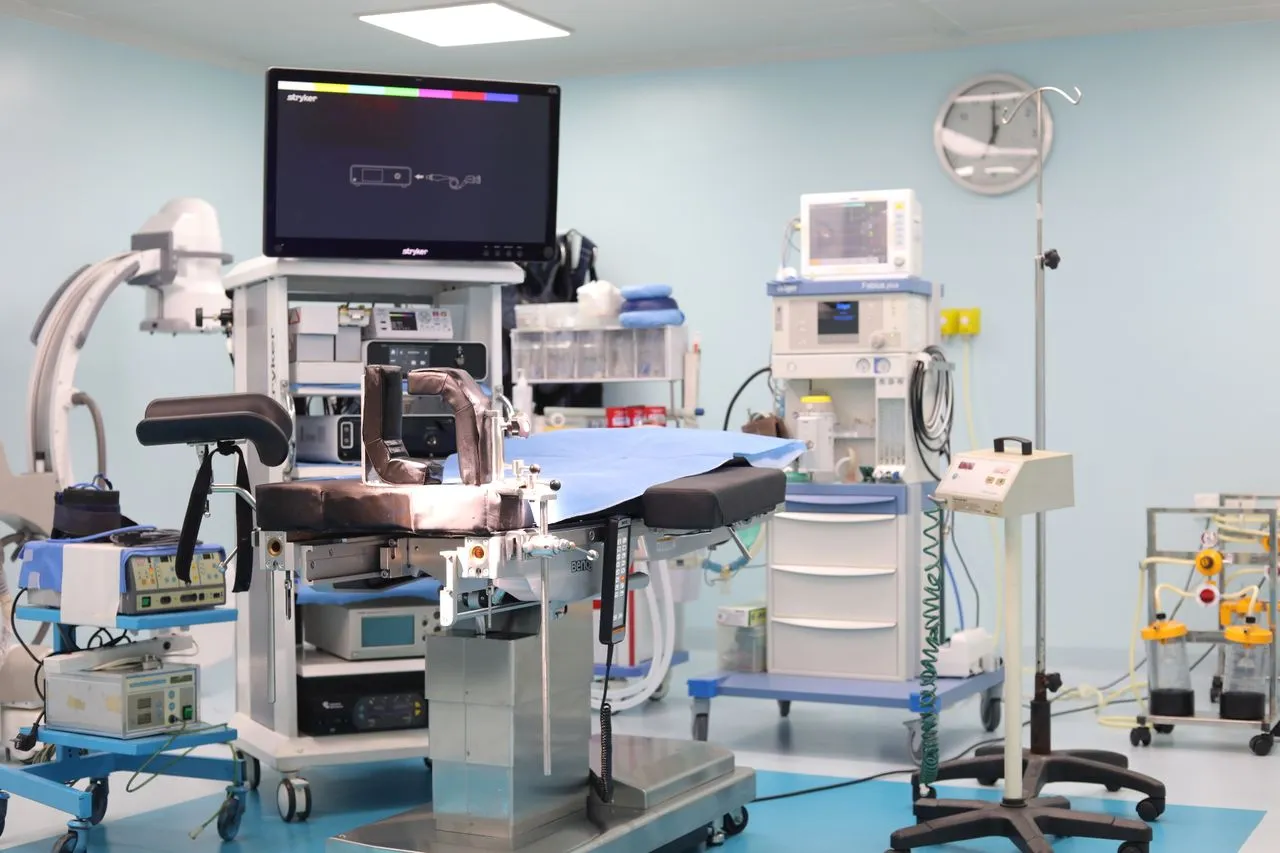
Siemens Healthineers is showcasing its latest mobile C-arm imaging platform, Cios Go, including the Cios Go and Cios Go ID systems, at this year’s German Congress of Orthopedics and Traumatology. Designed to support imaging directly at the point of care, the platform combines advanced imaging capabilities, flexible configurations and intuitive controls to help surgical teams manage intraoperative imaging more efficiently.
The Cios Go ID features an integrated display and a compact design intended to support routine imaging across a broad range of surgical environments. The system is designed to accommodate the requirements of modern operating rooms, where space limitations, procedural complexity and the need for rapid access to diagnostic images can influence the efficiency of surgical workflows.
Mobile C-arm systems play an important role in orthopedic surgery, spine procedures, vascular interventions and other minimally invasive treatments. These systems provide real-time X-ray imaging during procedures, allowing surgeons to assess anatomical structures, evaluate implant positioning and make informed decisions while an operation is underway.
As surgical procedures become increasingly specialized, health care providers need imaging equipment that can deliver useful image quality without creating unnecessary operational complexity. Siemens Healthineers aims to address these requirements through the Cios Go platform, which combines imaging technologies with features intended to simplify positioning, image evaluation and system movement.
The company says the systems are designed to provide flexibility for multidisciplinary surgical applications while supporting efficient operating room workflows. The integrated display of the Cios Go ID is intended to make image viewing more convenient by allowing medical teams to position the monitor according to the needs of the surgeon and the specific procedure.
Operating rooms are complex clinical environments in which surgical teams must coordinate imaging equipment, instruments, patient positioning and multiple clinical responsibilities. The layout of an operating room can vary depending on the procedure, the number of professionals involved and the equipment required.
Mobile C-arm systems help address these challenges by providing imaging at the point of care. However, the usefulness of such systems depends not only on image quality but also on how easily the equipment can be positioned, operated and integrated into the surgical workflow.
Traditional operating room arrangements may require teams to adjust equipment placement repeatedly to maintain access to images while allowing surgeons to work comfortably. In procedures involving multiple surgeons, maintaining a clear view of imaging information can become particularly important.
The Cios Go ID addresses these considerations with a compact footprint and an integrated display designed for flexible positioning. These features are intended to help teams adapt the imaging system to different operating room layouts and procedural requirements.
Niclas Riege, a technologist in the Department of Trauma Surgery and Orthopedic Surgery at University Hospital Erlangen in Germany, highlighted the importance of system readiness in daily surgical practice.
“Readiness is essential in our everyday work. We do not have time to keep operating rooms waiting, because every second in surgery comes at a high cost,” Riege said.
He added that the Cios Go ID combines a compact design with modern touch technology and allows the integrated display to be positioned according to where the surgeon needs to look.
These design considerations are particularly relevant in busy surgical departments, where equipment must be prepared and moved efficiently between procedures. By making imaging information easier to access, the system is intended to support communication among surgical team members and help reduce avoidable workflow interruptions.
Siemens Healthineers has designed the Cios Go and Cios Go ID systems to combine imaging performance with intuitive operation. According to the company, the platform incorporates intelligent imaging tools that support the evaluation of anatomical details and surgical hardware during procedures.
Peter Seitz, head of Image-Guided Surgery and Robotics at Siemens Healthineers, said the development of the systems focused on combining powerful imaging with straightforward usability.
“With Cios Go and Cios Go ID, we set out to redefine expectations for mobile C-arms by combining powerful imaging with intuitive usability,” Seitz said.
He explained that the systems are intended to bring clarity, flexibility and streamlined workflows into the operating room, supporting surgical teams as they make timely decisions and deliver patient care.
One of the platform’s features is Live Zoom, which allows users to enlarge selected image details through intuitive touch gestures. This capability is designed to help surgeons examine smaller anatomical structures and assess implant positioning without relying solely on the original image view.
The ability to magnify relevant details can be useful during orthopedic and trauma procedures, where the placement of implants, screws and other surgical hardware may require careful visual assessment. By enabling users to zoom into selected regions, the system supports a more focused review of imaging information during an operation.
Another feature, SpotAdapt, automatically optimizes brightness and contrast within a defined region of interest. The technology is intended to help users evaluate relevant image areas while adapting image presentation to the clinical task.
Brightness and contrast are important elements of intraoperative imaging because anatomical structures and surgical devices may need to be distinguished under different imaging conditions. Tools that help optimize these parameters can support image evaluation without requiring users to adjust every setting manually.
Together, Live Zoom and SpotAdapt are intended to provide surgical teams with practical options for examining images during procedures.
The Cios Go platform offers generator performance options of 3.5 kilowatts or 5 kilowatts, alongside detector sizes of 20 cm by 20 cm and 31 cm by 31 cm.
These options allow the platform to accommodate different clinical requirements and operating room configurations. The choice of generator performance and detector size can influence the imaging setup available for a particular procedure, depending on the clinical application and system configuration.
The different detector sizes provide flexibility for surgical teams working across a range of procedures. Imaging requirements can vary significantly between examinations that focus on smaller anatomical regions and procedures that require a broader field of view.
The platform also incorporates the Retina Imaging Chain, which Siemens Healthineers says is designed to deliver consistent image quality across a wide range of clinical applications.
The imaging approach is intended to align with the ALARA principle, which stands for “as low as reasonably achievable.” This principle guides the optimization of radiation exposure by encouraging the use of the lowest reasonably achievable dose that can provide the information needed for the clinical task.
Radiation management is an important consideration in procedures involving fluoroscopic imaging, particularly when imaging is performed repeatedly during an operation. Appropriate exposure depends on the procedure, patient characteristics, imaging settings and clinical requirements.
The ALARA principle does not mean eliminating necessary imaging. Instead, it emphasizes balancing the need for useful diagnostic information with efforts to minimize unnecessary radiation exposure.
A large 4K display is another feature of the Cios Go platform. The high-resolution screen is intended to support detailed image evaluation, allowing surgical teams to review relevant anatomical structures and other imaging information during procedures.
Combined with the integrated display on the Cios Go ID, the system’s display technology is designed to make imaging information more accessible within the operating room.
In addition to imaging technologies, the Cios Go and Cios Go ID incorporate tools designed to assist with equipment positioning and surgical workflow tasks.
A green laser-light localizer helps users position the system and patient. Accurate positioning is an important part of preparing for intraoperative imaging because the equipment must be aligned appropriately with the anatomical region being examined.
The laser-light feature is designed to provide a visible reference that supports positioning and helps teams prepare the system for imaging.
The platform also includes a Target Pointer intended to assist with the placement of screws and Kirschner wires, commonly known as K-wires. These wires are used in various orthopedic procedures to help stabilize bones or guide other surgical instruments and implants.
The Target Pointer is designed to support the positioning process by helping clinicians align their work with the relevant imaging information. Its practical value depends on the procedure being performed and how the surgical team incorporates the feature into its established techniques.
Another feature, Live Graphical Overlay, enables users to make freehand annotations directly on the touchscreen. These annotations can help teams highlight relevant areas of an image or add visual references during procedural work.
Touchscreen-based annotations provide an additional way to interact with imaging information. Rather than relying exclusively on separate documentation or external controls, users can make graphical markings directly within the system’s interface.
The platform’s user interface also incorporates single-touch and multitouch controls, along with guided examination selection. These functions are designed to make common operations easier to navigate and support confident system use with minimal training.
An intuitive interface can be particularly valuable in environments where medical professionals must operate equipment while coordinating with other members of the surgical team. Simplifying access to commonly used functions may help reduce the effort required to navigate system controls during routine procedures.
The Cios Go platform is designed to support different clinical setups, workflow requirements and multidisciplinary applications. Its flexible configurations are intended to accommodate everyday surgical practice, including environments where operating room space is limited.
The Cios Go ID combines a compact footprint with a lightweight design and modular flexibility. These characteristics are intended to make the system easier to move between locations and adapt to different clinical settings.
Mobility is an important consideration for imaging equipment used across multiple operating rooms or clinical departments. A system that can be transferred efficiently may provide teams with greater flexibility when organizing equipment and preparing for upcoming procedures.
The Cios Go ID includes a built-in monitor arm lock designed to stabilize the display during transport. Securing the monitor helps keep the integrated display in a controlled position while the system is being moved.
The platform also offers a standby mode that allows the system to be disconnected, moved between locations and quickly resumed. Siemens Healthineers says this feature is designed to reduce downtime between procedures.
In clinical environments with frequent patient turnover, equipment preparation and movement can affect scheduling and workflow efficiency. Features that simplify these transitions may help teams prepare imaging systems for their next use more conveniently.
The system’s compact design may also expand the range of environments in which it can be considered. Beyond conventional operating rooms, mobile imaging systems may be useful in emergency departments and outpatient settings when the relevant clinical requirements, infrastructure and operational arrangements are met.
Johannes M. M. Groh, MD, a consultant trauma and orthopedic surgeon in the Department of Trauma Surgery and Orthopedic Surgery at University Hospital Erlangen, described the system’s potential across different clinical environments.
“With its small footprint, Cios Go ID can fit not only in a small OR, but also in the emergency department or an outpatient setting,” Groh said.
He also highlighted the system’s range of potential applications and the flexibility of its integrated monitor.
According to Groh, the monitor can be positioned where it is needed, providing a clear view even during complex procedures involving multiple surgeons. He described the system in three words: intuitive, compact and fully capable of providing the functions he expects from a mobile C-arm.
His comments underscore the importance of equipment that can adapt to different working conditions while maintaining access to imaging information.
Orthopedic and trauma departments perform a wide range of procedures that require different imaging approaches. Spine surgery, fracture management, implant placement and minimally invasive interventions can involve distinct positioning requirements and clinical workflows.
Mobile C-arm systems are used across these specialties because they allow clinicians to obtain real-time imaging without moving the patient to a separate imaging department for every assessment.
The Cios Go platform is designed to serve multidisciplinary applications through its configurable detector sizes, generator options and imaging tools. These capabilities give health care facilities options when evaluating equipment for their clinical requirements.
The ability to position the display flexibly is another consideration for teams working in confined spaces or during procedures involving several clinicians. Keeping imaging information visible to the appropriate team members may support coordination during surgery.
However, the selection of a mobile C-arm system remains dependent on factors such as the procedures performed, the hospital’s imaging requirements, room dimensions, equipment compatibility and staff training.
Health care facilities must also consider radiation safety practices, equipment maintenance and clinical protocols when incorporating imaging technology into surgical services.
Siemens Healthineers’ presentation of the Cios Go and Cios Go ID at the German Congress of Orthopedics and Traumatology provides an opportunity to highlight how manufacturers are addressing these operational considerations through equipment design and imaging technology.
The introduction of the Cios Go and Cios Go ID platform reflects continued development in mobile intraoperative imaging, with attention to image quality, ease of use, equipment mobility and operating room integration.
The Cios Go ID’s integrated display and compact footprint are intended to provide flexibility for clinical teams, while features such as Live Zoom, SpotAdapt, the Retina Imaging Chain and the 4K display support intraoperative image evaluation.
Additional tools, including the green laser-light localizer, Target Pointer and Live Graphical Overlay, are designed to assist with positioning and interaction with imaging information. The monitor arm lock and standby mode further address the practical requirements of moving equipment between procedures and clinical locations.
By combining these features within a mobile imaging platform, Siemens Healthineers aims to support surgical teams working across orthopedic, trauma and other relevant clinical applications.
The company’s showcase at the German Congress of Orthopedics and Traumatology highlights the continuing importance of imaging systems that can adapt to the demands of modern surgical environments. As health care providers seek to balance imaging requirements with efficient workflows and responsible radiation practices, mobile C-arm technologies remain an important component of intraoperative care.
While the ultimate benefits depend on clinical use, system configuration and local workflow requirements, the Cios Go platform is designed to give hospitals and surgical teams additional flexibility in how they access and use imaging information during procedures.
Source link: https://www.siemens-healthineers.com/