A serious eye injury can become a medical emergency within a very short period of time. Damage to critical structures inside the eye can threaten vision and may lead to permanent complications if treatment is delayed. At Mouwasat Hospital Qatif, the ophthalmology team recently managed a complex eye injury and successfully preserved the patient’s vision through urgent medical care and precise surgical intervention.
The case involved a patient who sustained a deep injury to the eye caused by a sharp object. The injury affected the cornea and lens and was further complicated by an intraocular microbial infection. Because both the structural damage and infection presented significant risks to the eye, the patient required immediate assessment and specialized treatment.
The ophthalmology team at Mouwasat Hospital Qatif responded quickly, first focusing on controlling the infection and stabilizing the patient’s condition before proceeding with definitive surgical treatment.Following the intervention, the patient experienced a noticeable improvement in visual acuity within the first 48 hours. Two weeks after surgery, the patient had fully regained his vision.
The successful outcome highlights the importance of rapid diagnosis, infection control, specialized ophthalmic surgery and coordinated emergency care when dealing with serious eye trauma.
The patient arrived at the Emergency Department at Mouwasat Hospital Qatif after suffering a deep laceration to the eye caused by a sharp object.The injury was not limited to the outer surface of the eye. Medical assessment revealed damage involving the cornea and lens, two structures that play important roles in vision.
The patient also had an intraocular microbial infection associated with the injury. The presence of infection added another layer of complexity to an already serious traumatic injury.In cases involving penetrating or deep eye trauma, rapid medical evaluation is particularly important because damage can involve multiple internal structures. Infection can also increase the risk of further complications.
Recognizing the seriousness of the situation, the hospital’s ophthalmology team immediately began managing the patient.The initial priority was to control the infection and prevent further deterioration of the eye.
Under the supervision of Dr. Mohamed Nasr, Consultant and Head of the Ophthalmology Department, the medical team initiated intensive antibiotic therapy.The treatment was aimed at controlling the intraocular infection and protecting the eye from additional damage while the patient was being prepared for further treatment.
Managing infection was an important step before definitive surgery could be carried out.The team closely monitored the patient’s condition and worked to stabilize the eye. Once the patient’s condition had improved sufficiently, the ophthalmology specialists carried out a detailed assessment of the extent of the injury.
The assessment helped the medical team determine the appropriate surgical approach.The patient was also informed about the nature of the injury and the planned treatment.
One of the major challenges in this case was the extent of damage to the eye’s lens.The trauma had resulted in a traumatic cataract, meaning the natural lens had become damaged as a result of the injury.The posterior lens capsule, which normally helps support the lens, had also been ruptured during the accident.
This made the surgical procedure more complex because the usual anatomical support for lens implantation had been compromised.Despite the complexity of the injury, the ophthalmology team proceeded with emergency surgical treatment after the patient’s condition had been stabilized.
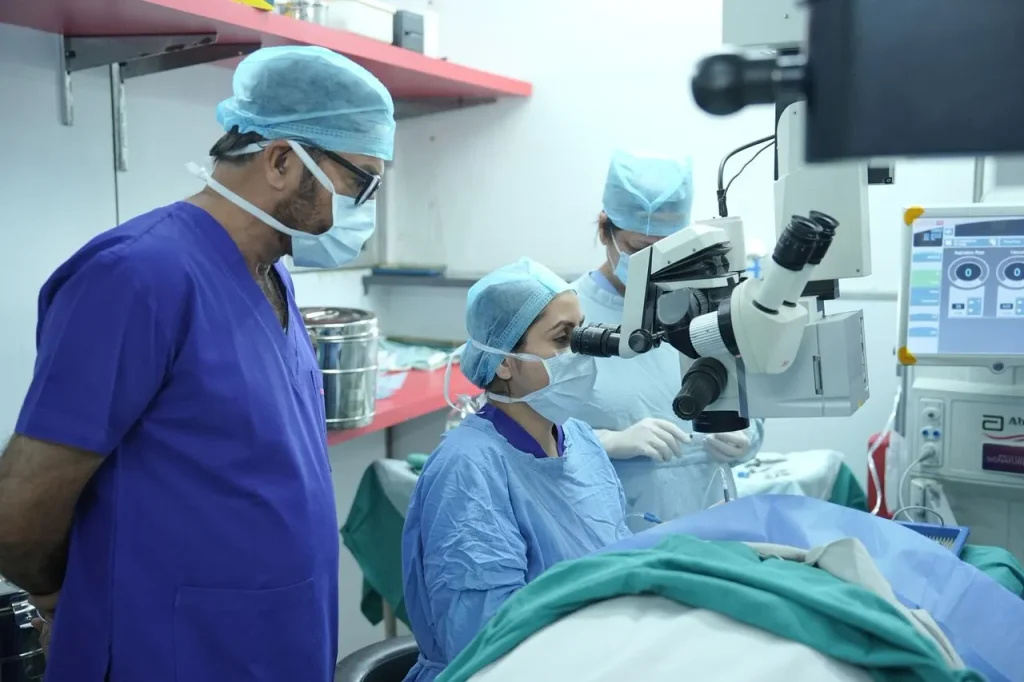
The surgical procedure involved several important steps designed to address the damage caused by the injury.The team first removed the traumatic cataract.
The procedure also included a vitrectomy behind the lens. Vitrectomy is a surgical technique involving the removal of the vitreous gel from inside the eye when necessary to manage certain serious eye conditions or injuries.The surgeons then implanted a new lens despite the rupture of the posterior lens capsule caused by the original trauma.
Each component of the operation required careful surgical planning and precise execution.The combination of corneal injury, lens damage, infection and rupture of the posterior lens capsule made this a particularly challenging case.The objective was not only to treat the immediate damage but also to preserve the patient’s ability to see.
Following the procedure, the patient’s recovery progressed positively.A noticeable improvement in visual acuity was observed within the first 48 hours after surgery.
This early improvement was an important indication that the surgical intervention had achieved its intended objective and that the patient’s eye was responding positively to treatment.The medical team continued to monitor the patient’s recovery following the procedure.
Because serious eye trauma can involve risks that continue beyond the initial surgery, follow-up care remains an important part of treatment.In this case, the patient’s vision continued to improve during the recovery period.
Two weeks after the surgical procedure, the patient had fully regained his vision.The outcome meant that the patient avoided the serious consequences that could potentially have followed such a severe eye injury, including permanent damage and loss of sight.
The successful recovery demonstrates the importance of providing specialized ophthalmic treatment as quickly as possible when an eye injury threatens vision.While every traumatic eye injury is different, the case shows how emergency intervention, infection management and advanced surgical techniques can work together to achieve a positive outcome.
The successful treatment reflects the capabilities of the Ophthalmology Department at Mouwasat Hospital Qatif in managing complex and emergency eye conditions.Eye injuries involving the cornea, lens and internal structures can require highly specialized care. In this case, the medical team had to address multiple problems simultaneously.
The presence of an intraocular infection made infection control an immediate priority, while the traumatic cataract and damaged posterior lens capsule required complex surgical management.The team’s approach involved stabilizing the patient, controlling the infection, carefully evaluating the injury and then performing the required surgical procedures.
This sequence of care helped create the conditions for successful recovery.
The case also demonstrates why patients with serious eye injuries should receive urgent medical attention.A deep injury involving the eye can potentially damage structures that are essential for vision. In addition to the physical trauma itself, contamination from the object causing the injury can introduce microorganisms into the eye.
When infection develops inside the eye, the situation can become even more serious.For this reason, timely assessment and treatment are essential in managing severe ocular trauma.In the Mouwasat Hospital Qatif case, the patient received immediate medical attention after arriving at the Emergency Department.
The ophthalmology team was able to quickly identify the extent of the injury and begin treatment.The early use of intensive antibiotic therapy helped address the infection, while subsequent surgical intervention focused on repairing the damage and restoring the patient’s visual function.
Preserving vision in a complex injury often requires more than a single procedure.The patient’s treatment at Mouwasat Hospital Qatif involved multiple stages, beginning with emergency assessment and infection management.
The medical team then carried out a detailed evaluation before developing the surgical plan.The operation addressed the traumatic cataract, the vitreous component of the injury and the damaged lens capsule. A new lens was implanted as part of the procedure.
The successful outcome shows how different areas of ophthalmic expertise can come together when treating a complicated eye injury.The patient’s recovery also required continued observation after surgery to ensure that the eye continued to improve.
Mouwasat Hospital Qatif’s ophthalmology team regularly provides specialized care for patients with eye-related conditions, and this case highlights the importance of having appropriate expertise available when emergency situations arise.Eye emergencies can occur unexpectedly and may require immediate assessment.
Having emergency services, ophthalmology specialists and surgical capabilities available can help healthcare providers respond rapidly to patients with potentially sight-threatening injuries.In this case, the availability of specialized ophthalmic expertise allowed the team to manage the patient’s infection and structural eye damage within a coordinated treatment pathway.
The successful outcome also reflects Mouwasat Medical Services Company’s broader commitment to providing integrated medical care around the clock.According to the hospital, this commitment is supported by advanced medical technologies and specialized healthcare professionals who are prepared to respond to critical situations.
For patients experiencing medical emergencies, timely access to the right specialist can have an important impact on treatment.In complex ophthalmology cases, this can be particularly significant because certain injuries can threaten vision if they are not addressed quickly.
The Mouwasat Hospital Qatif case demonstrates how emergency services and specialized ophthalmology care can work together to manage a serious injury.
For the patient involved in this case, the outcome was ultimately positive.After arriving at the hospital with a deep eye injury, corneal and lens damage and an intraocular microbial infection, the patient underwent intensive medical management followed by complex eye surgery.
Within 48 hours of the operation, his visual acuity had noticeably improved.Two weeks later, he had fully regained his vision.The recovery represents an important clinical achievement for the ophthalmology team and, most importantly, a significant outcome for the patient.Instead of progressing to permanent visual impairment, the patient was able to recover his vision following timely treatment.
Cases such as this demonstrate the important role specialized ophthalmology teams play in emergency medicine.Serious eye injuries require careful evaluation because the visible injury may represent only part of the damage occurring inside the eye.Treatment may involve multiple specialists, medications, imaging or diagnostic assessments and surgical procedures depending on the circumstances.In this case, the medical team had to manage both infection and significant structural damage.
The ability to provide treatment in a coordinated manner helped the team address the immediate threat to the eye and move toward visual recovery.The successful treatment of this patient represents another example of how timely intervention and specialized surgical expertise can make a difference in complex ophthalmic emergencies.
Mouwasat Hospital Qatif’s ophthalmology team responded to a serious eye injury involving multiple structures and an intraocular infection. Through intensive antibiotic treatment, careful assessment and emergency surgery, the team was able to preserve the patient’s vision.The operation included removal of the traumatic cataract, vitrectomy behind the lens and implantation of a new lens despite the rupture of the posterior lens capsule.
The patient’s early recovery was encouraging, with noticeable improvement in visual acuity within the first 48 hours. By the two-week follow-up point, the patient had fully regained his vision.For Mouwasat Hospital Qatif, the case highlights the readiness of its Ophthalmology Department to manage emergency and complex eye injuries. It also demonstrates the importance of combining rapid response, infection control, surgical precision and continued follow-up when treating potentially sight-threatening trauma.
Ultimately, the case is a reminder that serious eye injuries require immediate medical attention. Rapid access to specialized care can be critical when vision is at risk. Through its emergency services, ophthalmology expertise, advanced technologies and specialized professionals, Mouwasat Hospital Qatif continues to provide care aimed at achieving the best possible outcomes for patients facing complex medical emergencies.
Source link: https://www.mouwasat.com/