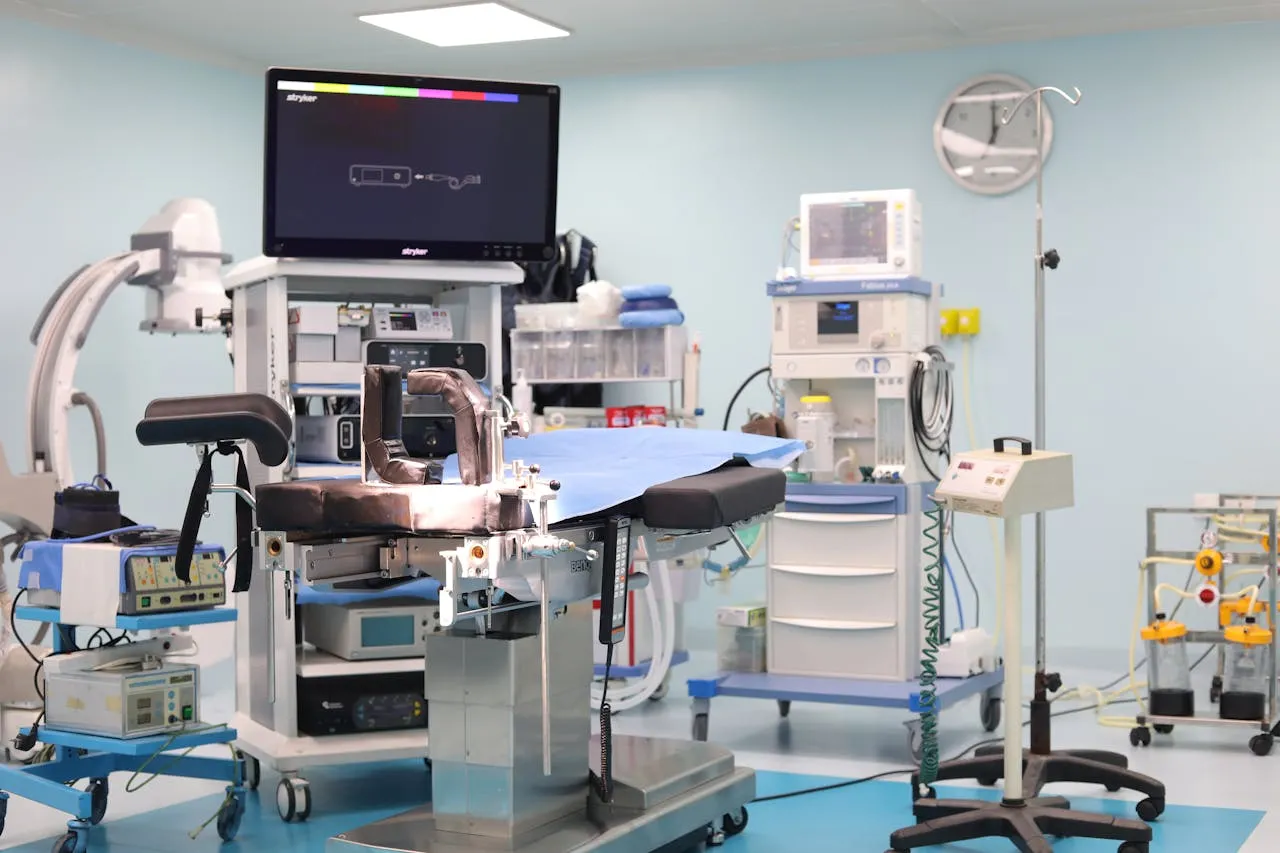
Global health technology company Proximie is advancing its vision of the intelligent operating room (OR) through a strategic collaboration with NVIDIA. This initiative focuses on integrating real-time, agentic artificial intelligence into surgical environments, laying the foundation for a new generation of AI-powered healthcare systems.
At the core of this collaboration is a shared ambition: to transform the operating room into a fully intelligent, data-driven ecosystem capable of learning, adapting, and assisting clinical teams in real time. By combining Proximie’s extensive surgical data infrastructure with NVIDIA’s advanced AI platforms, the partnership aims to redefine how surgeries are performed, analyzed, and optimized.
The collaboration is part of Project Rheo, a newly launched NVIDIA initiative designed to accelerate innovation in healthcare robotics and intelligent clinical environments. This initiative focuses on developing “physical AI” systems—technologies that not only interpret data but also take meaningful action in real-world clinical settings.
Project Rheo builds upon Proximie’s existing data and intelligence platform, enabling the large-scale deployment of AI in operating rooms. The initiative emphasizes the importance of real-world surgical data in training next-generation AI models, ensuring that these systems are grounded in actual clinical practice rather than purely theoretical datasets.
By contributing its vast repository of surgical insights, Proximie plays a crucial role in shaping how these AI systems understand and interact with complex medical environments.
Central to this transformation is Proximie’s Intelligence Suite, an ambient AI infrastructure layer designed specifically for operating rooms. This platform continuously captures and processes a wide range of surgical data from live procedures across hundreds of healthcare facilities worldwide.
The data collected includes:
This comprehensive data capture allows for a detailed understanding of surgical workflows, enabling real-time analysis and long-term performance optimization. Unlike traditional systems that rely on limited or fragmented data, Proximie’s platform provides a holistic view of the surgical environment.
The captured data is seamlessly integrated into NVIDIA’s AI ecosystem, where it is used to train and refine advanced models. This integration ensures that the intelligence derived from the operating room can be scaled and applied across multiple healthcare settings.
NVIDIA provides the foundational AI infrastructure that enables Proximie’s data to become “AI-ready” at scale. Using its accelerated computing platforms and advanced AI frameworks, NVIDIA transforms raw surgical data into structured datasets suitable for machine learning applications.
A key component of this process is the NVIDIA Cosmos platform, which supports synthetic data generation and augmentation. Synthetic data plays a critical role in AI development, especially in healthcare, where real-world data can be limited or sensitive. By generating realistic simulated datasets, NVIDIA enhances the robustness and accuracy of AI models.
Additionally, NVIDIA’s Cosmos-H foundation model is specifically designed for surgical environments. It enables the creation of detailed simulations of operating room scenarios, which are used to train AI systems in recognizing patterns, predicting outcomes, and supporting clinical decision-making.
One of the most significant outcomes of this collaboration is the development of advanced vision-language models capable of monitoring operating room activity in real time. These models combine visual data (such as surgical video) with contextual understanding (such as procedural steps) to create a comprehensive awareness of ongoing surgeries.
These AI systems can:
This level of intelligence enables a shift from reactive to proactive healthcare, where the operating room can anticipate needs and optimize workflows dynamically.
Beyond data analysis, the collaboration introduces the concept of physical AI—systems that can take direct action within the operating room. This includes the development of robotic assistants capable of supporting surgical teams in real time.
Potential applications include:
These robotic systems work in tandem with ambient AI, creating a dual-layer environment: one that observes and understands, and another that acts. This synergy represents a major step forward in the evolution of surgical technology.
The integration of Proximie’s platform has already demonstrated significant benefits for healthcare providers. Hospitals using the system have reported:
These improvements are driven by increased visibility into surgical workflows and more efficient utilization of resources. By optimizing how operating rooms are managed, hospitals can deliver better patient outcomes while maximizing capacity.
Project Rheo builds on these achievements by introducing continuous learning capabilities, allowing the operating room to improve with every procedure performed.
Nadine Hachach-Haram, Founder and CEO of Proximie, emphasized the significance of this collaboration in unlocking the full potential of surgical data. She highlighted that operating rooms generate some of the richest and most complex datasets in healthcare, yet much of this information has historically remained underutilized.
Through years of development, Proximie has created the infrastructure needed to capture and structure this data effectively. The collaboration with NVIDIA takes this a step further by transforming raw data into actionable intelligence that can drive real-world improvements in surgical care.
According to Hachach-Haram, the combination of Proximie’s ambient intelligence and NVIDIA’s AI technologies enables operating rooms to:
Proximie distinguishes itself as the only platform capable of capturing both intraoperative and wide-field operating room video simultaneously. This capability extends across various procedural environments, including:
By aggregating data from these diverse settings, Proximie has built one of the largest and most clinically diverse repositories of surgical intelligence in the world.
This extensive dataset provides AI systems with the context needed to understand complex surgical workflows and adapt to different clinical scenarios. Over time, this continuous learning process contributes to raising the global standard of care.
The collaboration between Proximie and NVIDIA represents a significant خطوة toward the realization of fully intelligent operating rooms. By combining real-time data capture, advanced AI models, and robotic systems, the initiative sets the stage for a new era in healthcare.
In this future, operating rooms will not only execute procedures but also:
Ultimately, this transformation aims to improve patient outcomes, enhance efficiency, and redefine the role of technology in surgical care.
· Proximie is the operating system for intelligent operating rooms. It is a global health technology platform that captures, structures, and activates surgical data across hospitals worldwide.
· Proximie’s mission is to solve global healthcare’s most pressing challenges: from access to safe surgery to increasing patient demand and subsequent workforce pressures.
· Proximie’s Intelligence Suite transforms OR performance through real-time surgical intelligence. Its computer vision and AI capabilities capture ambient intraoperative data, detect surgical events, and power AI-driven insights that improve OR efficiency, workflow coordination, and clinical data quality.
· This enables a new level of OR optimization with real-time intelligence, automated workflows, and AI-powered insights ensuring the right outcomes for patients, clinical teams, and hospital operations.
· Proximie’s customers gain an average of one additional surgical case per OR per day, delivering measurable improvements in throughput, patient access, and hospital productivity.
· Proximie’s Surgical Suite provides OR practitioners with real-time remote access and creates a secure video record of every procedure, improving training and collaboration.
· Proximie has built one of the largest and most diverse repositories of surgical intelligence, capturing intraoperative data and wide-field OR videos across hundreds of healthcare facilities, multiple surgical specialties, and procedural environments worldwide.
· Founded by Dr. Nadine Hachach-Haram, Proximie has now been deployed in over 500 hospitals across 50 countries and five continents.
· Proximie partners with leading medical device companies and healthcare systems globally and has been featured in more than 20 peer-reviewed publications.