
DeepHealth Receives FDA Clearance for AI-Powered Mammo Risk Technology to Predict Breast Cancer Risk Up to Five Years in Advance
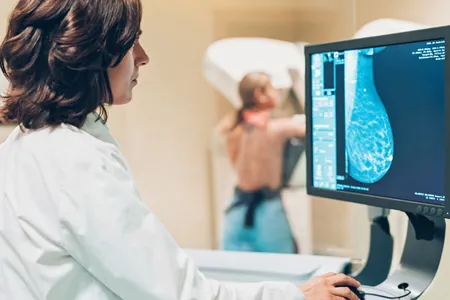
DeepHealth, Inc., a global healthcare technology company specialising in artificial intelligence (AI)-powered health informatics, has received U.S. Food and Drug Administration (FDA) 510(k) clearance for its Mammo Risk technology, an innovative solution designed to predict a woman’s risk of developing breast cancer over the next three, four and five years using existing 3D mammography images.
The FDA clearance represents an important development in the use of artificial intelligence for breast cancer screening and risk assessment. The technology is designed to help healthcare providers identify women who may have an increased likelihood of developing breast cancer, even when their current mammograms show no apparent signs of the disease.
DeepHealth is a wholly owned subsidiary of RadNet, Inc. (Nasdaq: RDNT), and focuses on developing AI-powered solutions that support medical imaging, clinical decision-making and healthcare operations.
Mammo Risk is the first FDA-cleared image-based breast cancer risk prediction solution for 3D mammography, including workflows that combine 3D and 2D imaging. The technology is compatible with supported mammography systems from multiple manufacturers, allowing healthcare providers to incorporate AI-based risk assessment into existing screening workflows.
The introduction of this technology comes at a time when 3D mammography has become a widely adopted screening method across the United States. According to the company, 3D mammography technology is now available at more than 90% of mammography facilities nationwide.
By using images from routine mammography examinations, Mammo Risk aims to provide additional information about a patient’s future breast cancer risk without requiring additional scans or separate imaging appointments.
Growing Need for Early Breast Cancer Detection and Risk Assessment
Breast cancer continues to represent a significant public health challenge in the United States, making early detection and effective screening strategies essential components of women’s healthcare.
An estimated 321,910 women in the United States will be diagnosed with invasive breast cancer in 2026. The disease can have substantially different outcomes depending on the stage at which it is diagnosed.
When breast cancer is identified at an early stage, the five-year relative survival rate approaches 100%. However, when the disease has spread to distant parts of the body, the five-year relative survival rate falls to approximately 34%.
These differences demonstrate the importance of identifying women who may be at increased risk before cancer develops or becomes clinically detectable.
Traditional breast cancer risk assessment methods often depend on patient questionnaires, family medical history, reproductive history and other clinical information. While these approaches provide important information, collecting and analysing all the necessary details can make the assessment process more complicated.
Mammo Risk introduces another approach by analysing information contained within existing mammography images.
The AI-powered solution is designed to identify imaging patterns associated with future breast cancer risk and provide healthcare professionals with additional information that may support personalised screening decisions.
Importantly, the technology is intended to assess future risk rather than simply identify an existing cancer. This distinction could help providers consider additional screening or preventive strategies for women whose routine mammograms do not show apparent cancer but whose estimated future risk may be elevated.
Mammo Risk Uses Existing 3D Mammograms to Predict Future Risk
One of the key features of DeepHealth’s Mammo Risk technology is its ability to generate breast cancer risk estimates using images already collected during routine screening examinations.
The solution analyses completed mammograms and produces personalised risk assessments covering three-, four- and five-year periods.
Unlike approaches that require additional imaging examinations, Mammo Risk uses existing mammography images, meaning patients do not need to undergo separate scans specifically for this assessment.
The technology has been developed to support both 3D mammography and combined 3D/2D imaging workflows. Its compatibility with supported systems from multiple vendors is intended to make integration easier for healthcare providers operating different imaging platforms.
By incorporating risk prediction into existing screening processes, DeepHealth aims to help radiologists and other healthcare professionals gain a broader understanding of individual patient risk.
The availability of three-, four- and five-year predictions also provides a longer-term perspective that could help healthcare providers consider how screening strategies should change according to a patient’s estimated risk.
For example, women identified as having elevated risk may benefit from further clinical evaluation and consideration of additional screening approaches, depending on their individual circumstances and applicable clinical guidelines.
The technology does not replace professional medical judgement or establish a breast cancer diagnosis. Instead, it provides additional information that healthcare professionals can consider when developing screening and follow-up plans.
DeepHealth Highlights the Role of AI in Preventive Women’s Healthcare
DeepHealth believes that artificial intelligence can play an increasingly important role in moving medical imaging beyond disease detection towards more predictive and personalised healthcare.
Niccolò Stefani, M.D., Business and Product Leader, Clinical AI at DeepHealth, said the company aims to provide women with clearer and more predictive information about their future health.
He explained that Mammo Risk represents an important step towards preventive healthcare by using information available in routine mammography examinations to identify potential breast cancer risk years before a diagnosis might occur.
Stefani highlighted that the technology can provide insights without requiring additional scans, helping healthcare providers and patients better understand individual risk profiles.
The company’s broader objective is to support a more personalised approach to breast cancer screening rather than relying exclusively on uniform screening strategies.
Every woman has a different medical history, biological profile and combination of risk factors. As a result, screening approaches that consider individual differences may help healthcare professionals make more informed decisions about appropriate follow-up care.
By providing longer-term risk predictions, Mammo Risk is designed to support this shift towards more individualised breast cancer management.
Susan G. Komen Emphasises the Importance of Personalised Breast Cancer Care
The introduction of AI-powered breast cancer risk assessment also received support from Susan G. Komen, a leading organisation focused on breast cancer research, education and patient support.
Victoria Smart, Senior Vice President of Mission at Susan G. Komen, highlighted the importance of recognising that breast cancer risk differs between individuals.
She noted that healthcare systems have historically relied on approaches that do not always adequately reflect the differences in women’s individual risk profiles.
Smart emphasised that personalised approaches can help people better understand their breast cancer risk, make informed healthcare decisions and access appropriate care as early as possible.
She also highlighted the importance of continued innovation in supporting efforts to reduce breast cancer deaths.
The development of technologies that provide additional information about individual risk could contribute to more informed conversations between patients and healthcare professionals.
However, the benefits of these technologies will also depend on how effectively risk information is incorporated into clinical practice and whether patients can access appropriate follow-up services.
Clinical Research Supports Mammo Risk’s Predictive Capabilities
DeepHealth’s Mammo Risk technology is supported by clinical validation and real-world evidence developed through research involving large screening populations.
The AI system was trained using approximately 220,000 studies to identify imaging characteristics associated with future breast cancer risk.
This training approach enables the technology to derive personalised risk insights directly from routine mammography images rather than relying exclusively on extensive patient questionnaires or manually collected clinical information.
The company also conducted an independent, multicentre pivotal study involving more than 65,000 screening mammograms across 10 clinical sites in the United States.
According to DeepHealth, the study demonstrated strong predictive performance for future breast cancer risk.
The research included a diverse patient population and examined performance across different patient subgroups.
Importantly, the company reported consistent performance among Black women and women with dense breasts.
These populations have historically experienced poorer breast cancer outcomes, while some traditional risk assessment models have demonstrated limitations in accurately evaluating their individual risk.
Dense breast tissue can make breast cancer detection more challenging because both dense tissue and tumours may appear white on mammograms. This can reduce the visibility of abnormalities during image interpretation.
Similarly, differences in population representation and the information used to develop traditional risk models can affect how accurately those models perform across different demographic groups.
The reported findings suggest that image-based AI risk assessment may offer an additional approach to evaluating patients across diverse populations.
Nevertheless, the results of clinical validation studies should be interpreted within the context of their study populations and methodologies. Continued evaluation in routine clinical settings will remain important as the technology becomes more widely used.
Earlier DeepHealth Technology Established the Foundation for Mammo Risk
The latest FDA-cleared Mammo Risk solution builds on earlier generations of DeepHealth’s image-based breast cancer risk assessment technology.
Previous versions were designed to predict breast cancer risk up to two years in advance, with CE-marked technology commercially available in Europe.
Earlier research also included clinical validation involving both European and U.S. screening populations using 2D and 3D mammography.
One notable study was conducted by researchers at the Karolinska Institute and published in the peer-reviewed journal Science Translational Medicine.
The research analysed a U.S. screening population of more than 154,000 women who underwent 3D mammography.
According to the study findings reported by DeepHealth, the earlier technology demonstrated an estimated 2.4-fold sensitivity compared with the Tyrer-Cuzick risk model when identifying the 12% of women at highest risk for consideration of supplemental screening.
The Tyrer-Cuzick model is a widely used breast cancer risk assessment approach that incorporates information such as family history and other clinical factors.
The latest FDA-cleared Mammo Risk technology extends the prediction period to three, four and five years.
This longer assessment horizon is intended to provide healthcare providers with additional information that can support more forward-looking breast cancer screening strategies.
The development reflects DeepHealth’s continued investment in AI-powered medical imaging and its efforts to expand the clinical applications of image-based risk assessment.
New CPT Code Could Support Tracking and Future Reimbursement Discussions
Another important development surrounding image-based breast cancer risk assessment is the introduction of a Category III Current Procedural Terminology (CPT) code by the American Medical Association.
The code is effective January 1, 2027, and is intended to support the tracking of utilisation of image-based breast cancer risk assessment technologies.
Category III CPT codes are designed to identify emerging technologies, procedures and services. Their use can help collect information about how frequently these services are performed and provide evidence that may support future reimbursement considerations.
For technologies such as Mammo Risk, the availability of a dedicated code represents an important step towards documenting adoption and gathering additional information about clinical utilisation.
Although the introduction of a Category III code does not guarantee insurance coverage or reimbursement, it provides a mechanism for tracking the use of these emerging technologies.
As healthcare providers increasingly explore personalised screening approaches, reimbursement considerations may become an important factor influencing adoption.
Mammo Risk Joins DeepHealth’s Radiology AI Suite
Following the FDA clearance, Mammo Risk has become part of DeepHealth’s Radiology AI Suite.
The platform brings together clinical AI technologies, workflow tools and performance analytics to support healthcare organisations across medical imaging operations.
The addition of Mammo Risk strengthens the company’s breast imaging portfolio by combining technologies focused on cancer detection and future risk prediction.
It also complements DeepHealth’s recently introduced Mammo Dx technology, which represents another component of its AI-powered breast imaging solutions.
Together, these technologies reflect the company’s strategy of developing solutions that support different stages of the breast cancer screening process.
While detection technologies focus on identifying potential signs of cancer in medical images, risk assessment solutions aim to provide additional information about the likelihood of developing the disease in the future.
Integrating these capabilities within a broader radiology platform could help healthcare providers incorporate AI into existing clinical and operational workflows.
Mammo Risk is now commercially available to healthcare providers across the United States.
DeepHealth is targeting healthcare organisations seeking to strengthen breast cancer screening services, introduce more personalised assessment approaches and expand their use of AI-supported imaging technologies.
Integration into RadNet’s Breast Cancer Screening Initiatives
The FDA clearance is also expected to support the integration of Mammo Risk into RadNet’s broader mammography screening initiatives.
In the coming months, the technology is expected to become part of RadNet’s Enhanced Breast Cancer Detection (EBCD) program.
The programme focuses on incorporating advanced technologies into breast cancer screening services to support earlier detection and improved patient care.
Integrating Mammo Risk into these initiatives could provide an opportunity to use AI-generated risk insights alongside existing mammography services.
For healthcare providers, this may support the development of screening pathways that consider both current imaging findings and a patient’s estimated future risk.
The integration also reflects the broader relationship between DeepHealth’s AI development capabilities and RadNet’s imaging network.
As a wholly owned subsidiary of RadNet, DeepHealth is positioned to develop and deploy AI-powered technologies within a wider medical imaging environment.
DeepHealth to Showcase AI Innovations at RSNA 2026
DeepHealth plans to showcase Mammo Risk and its wider portfolio of healthcare technology solutions at the Radiological Society of North America’s (RSNA) 2026 annual meeting.
The company will exhibit at Booth 1329 in the South Hall of McCormick Place in Chicago.
Its presentation will include solutions across three major areas: Clinical AI, Enterprise Imaging and Imaging Operations.
DeepHealth will also present recent evidence examining the clinical and workflow impacts of its AI-powered technologies.
One of the planned presentations will explore how artificial intelligence can support more equitable and personalised prediction of invasive breast cancer risk.
The event will provide an opportunity for radiologists, healthcare executives, medical imaging specialists and other industry professionals to learn more about the company’s latest developments.
The broader showcase is expected to highlight how AI can contribute to improving medical imaging workflows while supporting more informed clinical decisions.
AI-Powered Risk Prediction Could Shape the Future of Breast Cancer Screening
DeepHealth’s FDA clearance for Mammo Risk represents a significant development in the application of artificial intelligence to breast cancer risk assessment.
By analysing existing 3D mammography images, the technology aims to provide healthcare professionals with additional insights into a patient’s potential breast cancer risk over three, four and five years.
The ability to generate these assessments without requiring additional scans could make image-based risk evaluation easier to incorporate into routine screening workflows.
The reported clinical validation findings, including performance across different patient populations, also highlight the potential role of AI in supporting more personalised approaches to women’s healthcare.
As healthcare providers continue exploring preventive and precision-based screening strategies, technologies that combine medical imaging with predictive analytics may become increasingly relevant.
However, their long-term impact will depend on clinical adoption, continued validation, appropriate patient follow-up and access to suitable screening and diagnostic services.
With Mammo Risk now FDA-cleared and commercially available in the United States, DeepHealth is expanding its efforts to move breast imaging beyond identifying existing abnormalities towards providing information that can help healthcare professionals assess future risk.
The company’s integration plans with RadNet and its broader Radiology AI Suite further demonstrate its strategy of bringing predictive AI capabilities into everyday medical imaging.
Ultimately, the objective is to help healthcare providers make more informed screening decisions, support personalised care pathways and improve opportunities for early breast cancer intervention.
Source link: https://www.radnet.com/