DeepHealth, a leader in artificial intelligence (AI)-powered health informatics and a wholly owned subsidiary of RadNet, has received two new U.S. Food and Drug Administration (FDA) 510(k) clearances that significantly expand the capabilities of its AI-driven Breast Suite. The newly cleared technologies introduce cardiovascular risk assessment and longitudinal breast imaging analysis into routine mammography workflows, reinforcing the company’s commitment to improving early disease detection through artificial intelligence.
The FDA clearances cover Breast Arterial Calcification (BAC) Assessment, an AI tool that automatically detects arterial calcifications visible on routine screening mammograms, and Mammo Dx, a new version of the company’s ProFound Pro platform that incorporates prior mammography examinations into AI-assisted image analysis. Together, these enhancements are designed to provide radiologists with more comprehensive clinical insights, improve diagnostic confidence, and support earlier identification of both breast cancer and cardiovascular disease.
Both technologies are now commercially available throughout the United States, marking another milestone in DeepHealth’s strategy to develop an integrated, end-to-end breast imaging platform that addresses multiple aspects of women’s health.
Artificial intelligence has become an increasingly valuable component of breast imaging, assisting radiologists in detecting subtle abnormalities, improving workflow efficiency, and reducing variability in image interpretation. DeepHealth has steadily expanded its Breast Suite to include AI-powered applications that support cancer detection, breast density evaluation, future cancer risk assessment, and workflow optimization.
The addition of BAC Assessment and Mammo Dx extends the platform beyond traditional cancer screening by enabling radiologists to identify cardiovascular risk indicators and compare current mammograms with historical imaging studies using AI-assisted analysis.
These enhancements reflect a broader trend in medical imaging toward extracting additional clinical information from existing diagnostic exams without requiring patients to undergo extra testing.
Rather than focusing solely on breast cancer detection, DeepHealth’s expanded Breast Suite aims to provide clinicians with a more complete picture of patient health from a single mammography examination.
The two FDA 510(k) clearances reinforce Breast Suite’s position as one of the industry’s most comprehensive AI-powered breast imaging platforms.
The newly cleared functionalities include:
Together, these capabilities complement DeepHealth’s existing AI applications for breast cancer detection and diagnostic support while expanding the platform’s clinical value across the entire breast imaging pathway.
One of the most significant additions to Breast Suite is the BAC Assessment application.
Breast arterial calcifications are deposits of calcium that develop within the walls of arteries inside breast tissue. Although they are generally unrelated to breast cancer, numerous clinical studies have demonstrated an association between the presence of breast arterial calcifications and an increased risk of future cardiovascular disease.
Historically, these calcifications have often been visible on mammograms but were not consistently evaluated or reported because mammography has traditionally focused on breast cancer screening.
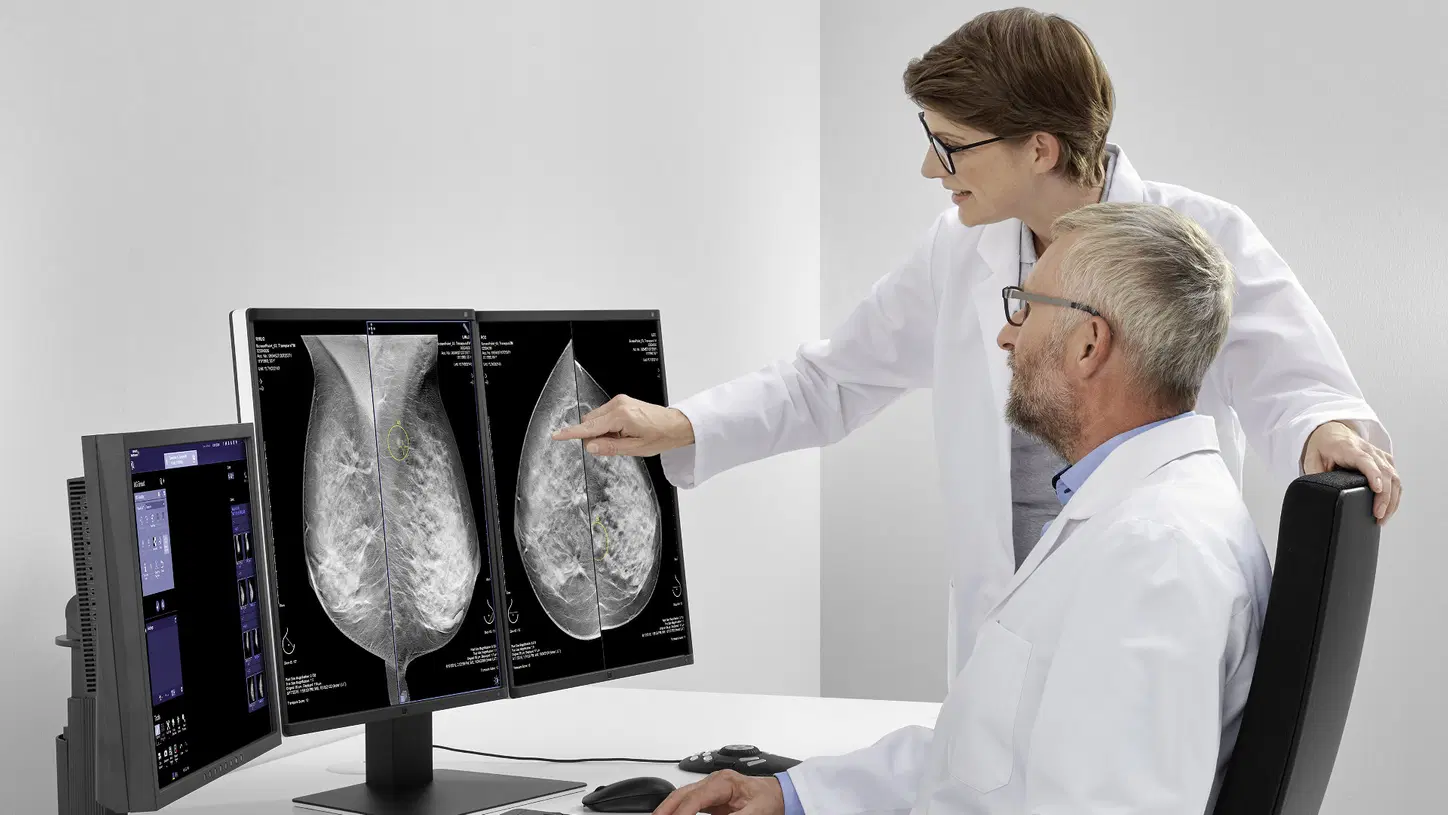
DeepHealth’s AI solution automatically analyzes standard mammograms and identifies arterial calcifications during routine image interpretation, allowing radiologists to recognize potential cardiovascular risk factors without requiring additional imaging or radiation exposure.
The software works with both:
Importantly, patients do not need to undergo any extra examinations, appointments, or imaging procedures. The cardiovascular assessment is generated directly from images already obtained during standard breast cancer screening.
Cardiovascular disease remains the leading cause of death among women worldwide, yet many women remain unaware of their personal risk.
Routine mammography presents an opportunity to identify imaging biomarkers that may warrant additional cardiovascular evaluation.
DeepHealth’s BAC Assessment is intended to support—not replace—clinical cardiovascular assessment by automatically flagging arterial calcifications visible on screening mammograms.
When radiologists identify these findings, patients may be referred for further evaluation by their primary care physician or cardiologist.
Earlier identification of cardiovascular risk factors may allow clinicians to recommend preventive interventions, including lifestyle modifications, cholesterol management, blood pressure control, or additional diagnostic testing before serious cardiovascular events occur.
By integrating cardiovascular insights into breast cancer screening, DeepHealth seeks to maximize the clinical value of one of the most widely performed preventive imaging examinations for women.
According to DeepHealth, BAC Assessment demonstrated strong diagnostic performance during clinical validation testing.
The company reported:
High sensitivity indicates that the software successfully identifies most patients with arterial calcifications, while strong specificity helps minimize unnecessary false-positive findings.
Importantly, performance remained consistent regardless of breast density, an important consideration because dense breast tissue can complicate interpretation of mammography images.
DeepHealth plans to deploy BAC Assessment across RadNet’s nationwide imaging network, allowing the company to gather additional real-world clinical experience while expanding access to the technology for patients throughout the United States.
The second FDA clearance expands DeepHealth’s AI cancer detection capabilities through the introduction of Mammo Dx, which incorporates prior mammography examinations into AI-assisted image analysis.
Radiologists have long relied on comparing current mammograms with previous studies when evaluating patients.
Subtle changes in breast tissue over time often provide valuable clues that help distinguish benign findings from suspicious abnormalities.
Until now, many AI systems primarily focused on analyzing individual mammography studies independently.
Mammo Dx enhances this process by automatically processing both historical and current mammograms, enabling AI to evaluate changes across multiple imaging exams.
This longitudinal analysis provides radiologists with additional information regarding lesion stability, growth, or newly appearing abnormalities.
Comparing mammograms over time plays an important role in early breast cancer detection.
Some cancers develop gradually and may produce only subtle imaging changes during their earliest stages.
These small differences can sometimes be difficult to recognize during interpretation of a single examination.
Mammo Dx assists radiologists by highlighting interval changes between prior and current studies, helping clinicians identify suspicious findings that may otherwise remain unnoticed.
The software also tracks previously identified lesions, allowing radiologists to determine whether abnormalities have remained stable or demonstrate concerning progression.
By incorporating historical imaging information into AI analysis, DeepHealth hopes to improve overall cancer detection rates while supporting more informed clinical decision-making.
One of the major challenges in breast cancer screening is balancing early cancer detection with minimizing unnecessary follow-up testing.
False-positive findings can result in additional imaging, biopsies, increased healthcare costs, and patient anxiety.
Mammo Dx has been developed to support more accurate interpretation by providing AI-assisted comparisons across multiple mammography studies.
When radiologists have greater confidence that a finding has remained unchanged over several years, unnecessary recalls may be reduced.
Conversely, identifying subtle new abnormalities that were absent on previous examinations may prompt timely diagnostic evaluation.
The ultimate goal is to improve diagnostic accuracy while reducing both false-positive interpretations and unnecessary procedures.
DeepHealth emphasizes that its AI applications are intended to assist radiologists rather than replace physician expertise.
Artificial intelligence functions as a clinical decision-support tool that analyzes imaging data, highlights potentially significant findings, and provides additional information for physician review.
Radiologists remain responsible for interpreting images, integrating patient history, and making final diagnostic decisions.
By automating repetitive image analysis tasks, AI may allow radiologists to focus greater attention on complex clinical decision-making while improving workflow efficiency.
Following the latest FDA clearances, DeepHealth’s Breast Suite now includes a broad portfolio of AI-powered imaging applications covering multiple aspects of breast care.
Current capabilities include:
The modular architecture allows healthcare organizations to implement individual applications or deploy the complete platform depending on their clinical requirements.
This flexibility supports integration into existing imaging environments while minimizing workflow disruption.
DeepHealth reports that components of Breast Suite currently support interpretation of more than 10 million mammograms annually across healthcare systems worldwide.
The platform has been designed to improve diagnostic consistency while helping standardize breast imaging practices across diverse clinical settings.
As breast imaging volumes continue increasing globally, AI-assisted interpretation is expected to play an increasingly important role in addressing workforce shortages, improving efficiency, and enhancing diagnostic quality.
Healthcare providers are also placing greater emphasis on integrated diagnostic platforms capable of supporting population health initiatives by identifying multiple disease risks during routine preventive imaging.
The FDA clearance of BAC Assessment and Mammo Dx represents another important step in DeepHealth’s mission to use artificial intelligence for earlier disease detection and more comprehensive patient care.
By adding cardiovascular risk assessment and longitudinal mammography analysis to its Breast Suite, the company is expanding the clinical value of routine breast cancer screening while supporting radiologists with more advanced decision-support tools.
These innovations reflect an evolving vision for AI in medical imaging—one that extends beyond detecting a single disease to providing broader insights into overall patient health. As the technologies become available across the United States, DeepHealth and RadNet are positioned to further validate their clinical impact through widespread real-world use, potentially helping healthcare providers improve early diagnosis, optimize screening programs, reduce unnecessary recalls, and deliver more personalized care for millions of women undergoing mammography each year.
Source link: https://www.radnet.com/