
Microbot Medical’s LIBERTY Endovascular Robotic System Demonstrates 100% Technical Success in Independent Clinical Study
Microbot Medical, a medical technology company developing innovative robotic solutions for minimally invasive vascular procedures, has announced the publication of independent clinical study findings evaluating its LIBERTY Endovascular Robotic System. The findings were published in CVIR Endovascular, a peer-reviewed medical journal specialising in endovascular interventions.
The publication highlights the technical feasibility and safety of using LIBERTY in a range of peripheral endovascular procedures. According to the study, the robotic system achieved 100% procedural technical success across all 20 procedures reviewed, with no device-related serious adverse events or complications reported.
The study was conducted by a team of physicians led by Dr. Joseph Khoury, a board-certified vascular and interventional radiologist at Emory University School of Medicine in Atlanta, Georgia.
The research article, titled “Portable endovascular disposable robotic assistant (PEDRA) for image-guided peripheral endovascular interventions: technical feasibility, safety, and future implications,” examines the use of a portable, disposable robotic assistance system in different interventional radiology procedures.
The findings provide additional clinical evidence supporting the potential role of robotic assistance in endovascular interventions and highlight how portable robotic technology could help healthcare providers perform complex vascular procedures with greater flexibility.
For Microbot Medical, the publication represents an important development in the clinical evaluation of its LIBERTY platform and reflects growing interest in robotic technologies designed to support minimally invasive medical procedures.
Independent Study Evaluates LIBERTY Across Multiple Procedures
The independent research was designed as a single-centre, retrospective review involving 20 consecutive outpatient procedures performed using the LIBERTY Endovascular Robotic System.
Five operators participated in the procedures, including Dr. Joseph Khoury and Dr. Zachary Bercu, MD, RPVI, FSIR.
Dr. Bercu is an interventional radiologist, professor in the Department of Radiology and Imaging Sciences and program director at Emory Healthcare.
The research examined the technical feasibility and safety of integrating the robotic assistance system into an established interventional radiology practice.
Peripheral endovascular procedures involve navigating specialised medical instruments through blood vessels to diagnose or treat different conditions. These procedures are commonly performed using image guidance, allowing physicians to monitor instruments as they move through the vascular system.
Although traditional endovascular interventions are generally performed manually by physicians, robotic assistance systems are being developed to support more controlled instrument navigation and potentially improve procedural workflows.
The LIBERTY system was evaluated across a diverse selection of procedures, providing researchers with an opportunity to assess its use in different clinical applications.
The study’s findings indicated that the system could be successfully incorporated into the participating medical practice without device-related serious adverse events or complications during the reviewed procedures.
Study Reports 100% Procedural Technical Success
One of the most important findings from the independent study was the achievement of 100% technical success across all 20 procedures.
The researchers reported that procedural technical success was achieved in 20 out of 20 cases.
Additionally, the study reported no device-related serious adverse events or complications.
These findings provide early clinical evidence regarding the system’s feasibility and safety in the procedures examined.
Technical success is an important measure in evaluating medical devices used for minimally invasive interventions because it helps determine whether the technology can perform its intended procedural function.
For robotic-assisted endovascular systems, this includes the ability to support physicians in navigating vascular instruments during image-guided procedures.
The reported results suggest that LIBERTY could be integrated into different procedural workflows while maintaining the technical performance required for the interventions included in the study.
However, the research involved a relatively small sample of 20 procedures at a single centre. Further studies involving larger patient populations, multiple healthcare institutions and different clinical environments will be important to establish the system’s broader clinical performance.
LIBERTY Supports a Diverse Range of Endovascular Interventions
Another significant aspect of the publication is the variety of procedures performed using the LIBERTY robotic assistance system.
According to the study authors, the research documented several procedures performed using a portable, disposable robotic-assisted platform for the first time.
These included:
- Prostate artery embolization: A minimally invasive procedure used to treat certain symptoms associated with an enlarged prostate by reducing blood supply to targeted prostate tissue.
- Uterine fibroid embolization: A procedure designed to reduce the blood supply to uterine fibroids, helping manage symptoms associated with these non-cancerous growths.
- Renal and gonadal venography: Imaging procedures used to examine veins associated with the kidneys and reproductive organs.
- Geniculate artery embolization: A minimally invasive intervention targeting arteries around the knee.
- Y90 procedures: Radioembolization procedures that use radioactive Yttrium-90 microspheres as part of treatment for selected liver conditions, including certain cancers.
The authors also reported the first robotic-assisted endovascular procedures performed through radial access using this type of portable robotic assistance system.
Radial access involves entering the vascular system through an artery in the wrist rather than using the more traditional femoral artery access route in the groin.
This approach is used in selected endovascular procedures and can provide an alternative access pathway depending on the patient’s condition and the intervention being performed.
The ability to support different procedures and access routes is important because it demonstrates the potential versatility of the robotic platform.
Rather than being restricted to one specific intervention, LIBERTY was evaluated across multiple clinical applications, offering insights into its possible use within a broader interventional radiology environment.
Portable and Disposable Design Could Improve Access to Robotic Technology
The study authors also highlighted the potential advantages of LIBERTY’s portable and disposable design.
Robotic systems used in healthcare can involve substantial equipment costs, infrastructure requirements, maintenance arrangements and specialised training.
These factors can create challenges for smaller hospitals, rural healthcare facilities and medical institutions that may not have the financial or operational resources required to adopt larger robotic platforms.
A portable, single-use system could offer a different approach to introducing robotic assistance into endovascular procedures.
According to the researchers, LIBERTY’s design may help lower economic and institutional barriers associated with adopting robotic-assisted interventions.
This could potentially expand access to robotic technology beyond large academic medical centres and major specialised hospitals.
Rural healthcare facilities and smaller institutions may particularly benefit from technologies that require less extensive infrastructure and can be incorporated into existing procedural environments.
However, the actual impact on adoption will depend on factors such as device pricing, training requirements, clinical suitability, procurement decisions and the availability of supporting healthcare infrastructure.
The researchers believe that the system’s design could create opportunities for robotic-assisted endovascular procedures in a wider range of healthcare settings.
Microbot Medical Highlights Independent Clinical Evidence
Microbot Medical welcomed the publication, noting that the findings provide additional evidence supporting the safety and performance of the LIBERTY platform.
Dr. Juan Diaz Cartelle, Chief Medical Officer of Microbot Medical, said the company was pleased with the results reported by Dr. Khoury and his colleagues following their initial experience using LIBERTY across different procedures.
He noted that the findings were consistent with safety and performance data previously reported in the ACCESS-PVI study.
The company also highlighted the importance of having independent clinical research published in a peer-reviewed interventional radiology journal.
According to Diaz Cartelle, the publication in CVIR Endovascular reflects increasing interest within the medical community in robotic technologies for endovascular procedures.
Independent clinical publications can play an important role in evaluating medical technologies because they allow researchers and healthcare professionals to examine findings outside the company’s own product development and marketing activities.
For medical device manufacturers, such publications can also help build awareness of new technologies and provide additional information to clinicians considering their potential use.
The latest study adds to the available clinical evidence surrounding LIBERTY and its application across different endovascular interventions.
LIBERTY Designed to Support Precision and Reduce Physical Strain
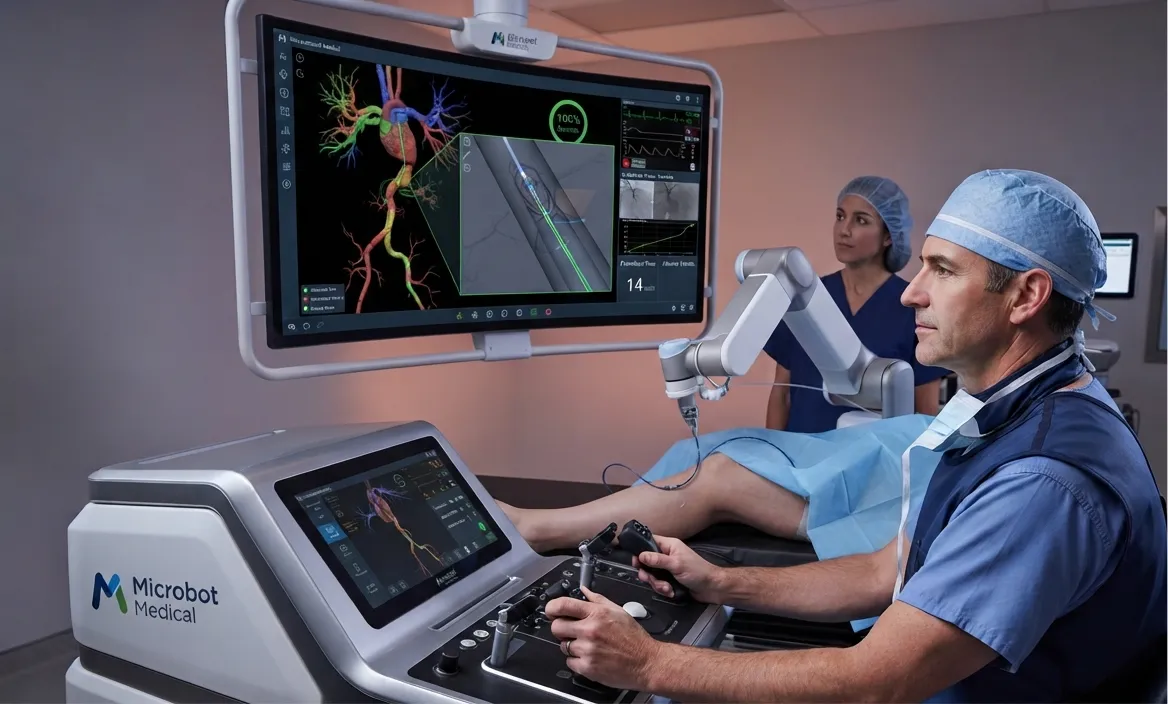
LIBERTY is described by Microbot Medical as the only FDA-cleared, single-use, remotely operated robotic system for peripheral endovascular procedures.
The platform has been developed to support physicians performing minimally invasive vascular interventions through robotic assistance.
Endovascular procedures require physicians to guide specialised instruments through blood vessels using medical imaging systems. These interventions can involve complex navigation through the vascular network and require significant concentration and precision.
Traditional procedures may also expose medical professionals to occupational radiation during image-guided interventions.
In addition, physicians can experience physical strain from maintaining procedural positions while manually controlling instruments and working with protective equipment.
Robotic assistance systems aim to address some of these challenges by allowing physicians to control instruments remotely through a dedicated robotic platform.
LIBERTY is designed to support precise vascular navigation while aiming to reduce radiation exposure and physical strain for medical professionals.
Its remotely operated configuration also represents an alternative approach to performing endovascular procedures compared with conventional manual techniques.
The system’s single-use design distinguishes it from reusable robotic platforms and may offer operational advantages in certain healthcare environments.
Nevertheless, the benefits of robotic assistance need to be assessed across different procedures, clinical settings and patient populations to understand its full potential.
Growing Role of Robotics in Interventional Radiology
The publication comes amid growing interest in the use of robotics across different areas of healthcare.
Medical robotics has developed beyond traditional surgical applications and is increasingly being explored in diagnostic imaging, minimally invasive interventions and specialised treatment procedures.
In interventional radiology, robotic systems are being developed to support physicians in performing image-guided procedures that require precise instrument control.
These technologies may help standardise certain procedural movements, provide remote operation capabilities and support more efficient clinical workflows.
For hospitals and healthcare providers, robotic-assisted systems may also offer opportunities to improve procedural consistency and address some of the physical demands associated with complex interventions.
However, the wider adoption of medical robotics depends on demonstrating clinical benefits, operational efficiency, cost-effectiveness and suitability for different types of procedures.
Independent studies such as the research published in CVIR Endovascular contribute to this evaluation by providing information about how robotic technologies perform in real clinical environments.
The LIBERTY study is particularly relevant because it examines the use of a portable robotic platform across multiple endovascular applications rather than focusing on a single procedure.
Further Clinical Evaluation Could Support Wider Adoption
The findings from the 20-procedure study provide an encouraging initial assessment of LIBERTY’s technical feasibility and safety.
The reported 100% technical success rate and absence of device-related serious adverse events or complications demonstrate the outcomes observed in the reviewed cases.
The research also highlights the potential versatility of the platform, including its use in prostate artery embolization, uterine fibroid embolization, venography, geniculate artery embolization and Y90 procedures.
However, the study’s retrospective, single-centre design and relatively small sample size mean that additional research will be necessary to establish whether similar results can be consistently achieved across larger and more diverse clinical populations.
Future investigations involving multiple hospitals and additional operators could provide further information about procedural performance, learning requirements, patient outcomes and the system’s economic value.
For Microbot Medical, the publication represents another step in building clinical awareness and supporting the evaluation of its robotic technology.
As healthcare providers continue exploring new approaches to minimally invasive interventions, portable robotic systems may become an increasingly important part of the medical technology landscape.
The independent publication of LIBERTY study findings reinforces the growing interest in robotic-assisted endovascular care and highlights the potential for more accessible robotic solutions across different healthcare environments.
Overall, the study adds to the clinical evidence supporting Microbot Medical’s LIBERTY Endovascular Robotic System, demonstrating successful integration across a range of procedures while opening further opportunities to evaluate the role of portable robotic assistance in modern interventional radiology.
Source link: https://ir.microbotmedical.com/