
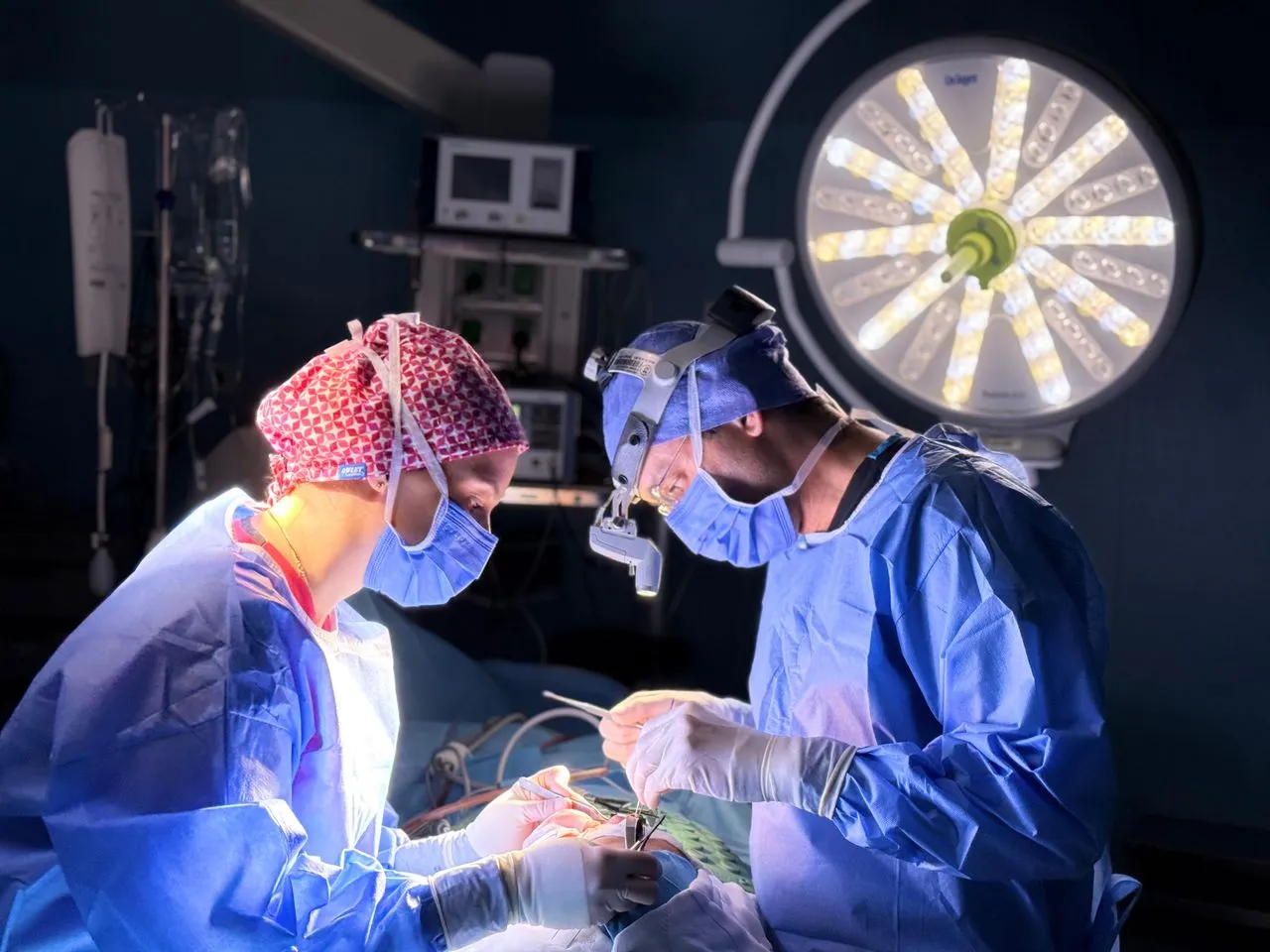
Mouwasat Hospital in Yanbu has achieved a significant milestone in advanced cardiac care with the successful completion of its first open-heart surgery. The procedure, a coronary artery bypass graft (CABG) surgery, was performed by the hospital’s Cardiac Surgery team on a patient in his sixties who arrived at the Emergency Department in critical condition.
The case presented a particularly complex medical challenge. The patient was experiencing severe shortness of breath and chest pain and was subsequently found to have extensive coronary artery disease, severely impaired left ventricular function and additional health conditions that increased the risks associated with major cardiac surgery. His medical history also included chronic obstructive pulmonary disease (COPD), recently diagnosed uncontrolled diabetes and significantly elevated blood glucose levels.
Despite these challenges, the multidisciplinary medical teams at Mouwasat Hospital in Yanbu assessed the patient urgently, coordinated treatment planning and proceeded with surgery within 24 hours. The operation was completed successfully, and the patient recovered without reported complications. He was discharged from the hospital in stable condition after five days.
The achievement marks an important step in the hospital’s efforts to expand its ability to provide advanced cardiac and surgical services for patients with complex and potentially life-threatening conditions.
The patient initially presented to the Emergency Department with two serious symptoms: severe shortness of breath and chest pain. Such symptoms can indicate a potentially serious cardiac condition and require immediate medical assessment, particularly when accompanied by other risk factors.
Following detailed diagnostic examinations, physicians identified severe narrowing of the left main coronary artery, together with multiple blockages affecting other coronary arteries. The examinations also showed a significant decline in the function of the heart muscle.
The combination of extensive coronary artery disease and severely impaired ventricular function made the patient’s condition particularly high risk.
The coronary arteries are responsible for supplying oxygen-rich blood to the heart muscle. Significant narrowing or blockage can restrict blood flow and, if severe, can place the heart at considerable risk. Disease involving the left main coronary artery can be especially concerning because this vessel supplies blood to a large portion of the heart muscle.
Given the severity of the findings, the patient required rapid evaluation and a carefully coordinated treatment strategy.
Because of the complexity of the case, the patient was urgently evaluated by several specialized departments at Mouwasat Hospital in Yanbu.The Cardiac Surgery Department, Cardiology Department and Interventional Catheterization Department worked together to assess the patient’s condition and determine the most appropriate course of treatment.
The multidisciplinary approach was particularly important because the patient had multiple medical factors that increased the complexity of any intervention.
In addition to severe coronary artery disease and reduced heart function, the patient had compromised lung function and chronic obstructive pulmonary disease. COPD can create additional challenges during major surgery because impaired lung function may affect a patient’s ability to tolerate anesthesia, ventilation and the postoperative recovery process.
The patient had also recently been diagnosed with uncontrolled diabetes, with markedly elevated blood glucose levels. Poorly controlled blood glucose can introduce additional concerns around surgical recovery and requires careful medical management.The hospital’s medical teams therefore had to consider not only the coronary blockages but also the patient’s cardiac, respiratory and metabolic condition before proceeding.
Following a comprehensive assessment, the medical teams determined that urgent surgical intervention was necessary.The decision was made to perform the procedure within a period of no more than 24 hours, making the patient the first person to undergo open-heart surgery at Mouwasat Hospital in Yanbu.
Before the procedure, the medical team explained the patient’s condition, the nature of the proposed intervention, the risks associated with surgery and the available treatment options.After discussing the situation with the patient, he agreed to undergo the urgent procedure.
The decision to move forward with surgery represented an important moment for the hospital, not only because of the severity of the patient’s condition but also because it marked the beginning of open-heart surgical services at the Yanbu facility.
The procedure performed was coronary artery bypass graft surgery, commonly known as CABG.CABG is a surgical procedure used to improve blood flow to the heart when coronary arteries have become significantly narrowed or blocked. During the operation, surgeons create new pathways for blood to reach the heart muscle, allowing blood to bypass diseased sections of the coronary arteries.
The objective is to improve circulation to areas of the heart affected by restricted blood flow.In this case, the procedure was undertaken despite several significant risk factors, including severe impairment of heart muscle function, reduced lung function and chronic obstructive pulmonary disease.
The patient’s uncontrolled diabetes and substantially elevated blood glucose levels added another layer of complexity to the medical management surrounding the operation.Performing major cardiac surgery under such circumstances requires careful coordination among surgeons, cardiologists, anesthesiology professionals, critical-care specialists, nursing teams and other healthcare professionals.
The patient’s condition made the procedure considerably more challenging than a routine cardiac intervention.Severely impaired left ventricular function means the heart’s main pumping chamber is not functioning normally. When a patient has significant coronary artery disease at the same time, restoring adequate blood supply can become an important part of the overall treatment strategy.
At the same time, chronic lung disease can increase the risks associated with anesthesia and postoperative respiratory management.The presence of uncontrolled diabetes also requires close attention during and after surgery. Blood glucose levels can be affected by illness, surgery, medications and changes in normal eating patterns, making metabolic management an important component of perioperative care.
The hospital’s ability to coordinate the management of these different conditions was therefore central to the successful outcome.Rather than treating the cardiovascular problem in isolation, the multidisciplinary teams considered the patient’s overall medical status and worked together to prepare him for surgery and recovery.
Despite the patient’s high-risk condition, the surgical procedure was successfully completed.Mouwasat Hospital reported that the patient recovered following surgery without complications. His postoperative progress allowed the medical team to discharge him after only five days in stable condition.
The reported recovery represents an important outcome given the patient’s condition at admission and the complexity of the procedure.The patient was able to leave the hospital in stable condition and return to his normal life following the successful intervention.
For the hospital, the outcome also demonstrates the capability of its cardiac and supporting medical teams to manage complex surgical cases.
The successful procedure represents more than an individual patient achievement. It is also a significant milestone in the development of Mouwasat Hospital in Yanbu’s cardiac services.The introduction of open-heart surgery allows the hospital to expand the range of advanced cardiac procedures available to patients.
For patients with complex coronary artery disease, access to cardiac surgery can be an important component of comprehensive cardiovascular care. Having surgical capabilities available within the hospital can also support coordination between cardiology, interventional cardiology and cardiac surgery teams.
The successful completion of the hospital’s first open-heart procedure demonstrates the integration of these specialties in managing a highly complex patient.It also reflects the importance of having appropriate infrastructure, equipment and specialized expertise available to support major cardiac interventions.
One of the central elements of the achievement was the cooperation between different medical departments.Cardiology specialists played an important role in evaluating the patient’s cardiovascular condition and identifying the severity and distribution of the coronary blockages. The Interventional Catheterization team contributed to the assessment and consideration of available treatment approaches, while the Cardiac Surgery team evaluated the feasibility and requirements of surgical intervention.
This multidisciplinary model is particularly important for complex cardiac cases because patients may require different forms of expertise at various stages of diagnosis, treatment and recovery.The hospital emphasized the integration of its Cardiology, Cardiac Surgery and Interventional Catheterization departments in successfully managing the case.Such coordination can help medical teams make timely decisions when patients present with severe or rapidly evolving conditions.
The achievement comes as healthcare providers increasingly focus on expanding access to specialized services for patients with complex conditions.Cardiovascular disease remains a major healthcare concern globally, and severe coronary artery disease can require advanced interventions when medication or less invasive approaches are insufficient.
Hospitals capable of providing both diagnostic and surgical cardiac services can offer patients a broader continuum of care.For Mouwasat Hospital in Yanbu, the successful completion of its first open-heart surgery strengthens its capacity to provide advanced cardiac treatment locally.
The achievement also demonstrates the importance of investing in specialized medical personnel and modern healthcare infrastructure.According to the hospital, the procedure was supported by specialized medical expertise as well as modern medical capabilities and equipment.
The successful outcome also highlights the hospital’s focus on medical quality and patient safety.Major cardiac surgery requires extensive preparation, highly trained teams and appropriate facilities. Patients must be carefully evaluated before surgery, closely monitored during the procedure and supported throughout the postoperative recovery period.
These requirements become even more important when treating patients with multiple comorbidities.In this case, the medical teams had to account for the patient’s cardiac impairment, respiratory disease and uncontrolled diabetes while planning the intervention.
The hospital’s ability to bring together the necessary specialties and resources enabled the teams to proceed with the surgery and support the patient through recovery.The hospital said the achievement strengthens its ability to manage critical and complex cases according to high standards of medical quality and safety.
The first open-heart surgery represents an important milestone for Mouwasat Hospital in Yanbu and its cardiac care program.The successful CABG procedure demonstrates the hospital’s ability to provide advanced surgical treatment for patients with serious coronary artery disease.
It also reflects the value of multidisciplinary healthcare, particularly when patients present with multiple conditions that can increase surgical risk.
The case required rapid assessment, coordination among specialized departments and careful preparation before the decision to proceed with surgery.The successful recovery and five-day hospital stay further underline the significance of the achievement.
Mouwasat Hospital in Yanbu’s first successful open-heart surgery marks a major development in the hospital’s healthcare capabilities.
The procedure involved a high-risk patient with severe coronary artery disease, significant impairment of heart muscle function, chronic obstructive pulmonary disease, compromised lung function and uncontrolled diabetes. Despite these challenges, the medical teams successfully performed coronary artery bypass graft surgery and reported an uncomplicated recovery.
The achievement was made possible through collaboration among the hospital’s Cardiology, Cardiac Surgery and Interventional Catheterization departments, supported by specialized expertise, modern medical equipment and coordinated patient care.
The milestone also reflects the broader importance of expanding access to advanced cardiac services. As hospitals continue to develop specialized capabilities, multidisciplinary teams and technology-supported care can help address increasingly complex medical needs.
For Mouwasat Hospital in Yanbu, the successful first open-heart surgery establishes an important foundation for its cardiac surgery services and reinforces its capacity to manage critical cardiovascular cases. The outcome represents a significant accomplishment for the hospital, its medical teams and, most importantly, the patient who was able to recover and return to normal life after undergoing a complex and urgent cardiac procedure.
Source link: https://www.mouwasat.com/