
Mouwasat Hospital in Riyadh has reported a significant cardiac surgery achievement after successfully treating and stabilizing a patient who arrived at the hospital in critical condition following an acute heart attack accompanied by several life-threatening complications.
The patient developed a ventricular septal defect following the myocardial infarction, along with cardiogenic shock and severe pulmonary congestion. These complications can place substantial stress on the heart and circulatory system and require rapid diagnosis, intensive monitoring, and coordinated intervention by multiple medical specialties.
The successful outcome involved close collaboration between the hospital’s cardiac catheterization, intensive care, cardiac surgery, and cardiac anesthesia teams. The multidisciplinary approach allowed physicians to first restore blood flow to the heart, provide circulatory support, stabilize the patient, and subsequently perform complex surgery to repair structural damage caused by the heart attack.
The case highlights the importance of advanced cardiac care capabilities in managing patients whose conditions deteriorate rapidly following an acute myocardial infarction.
The patient’s treatment began with an urgent assessment and intervention by Mouwasat Hospital’s cardiac catheterization team under the supervision of Dr. Saleh Alghofaili, Consultant Interventional Cardiologist.
Following evaluation, the medical team performed a therapeutic cardiac catheterization procedure. During the intervention, stents were placed in the affected coronary arteries to restore blood flow and improve circulation to the heart muscle.
Restoring coronary blood flow was an important first step in managing the patient’s condition. An acute heart attack occurs when blood flow to part of the heart muscle becomes blocked, potentially causing significant damage to cardiac tissue. In severe cases, the resulting damage can lead to complications affecting the heart’s pumping ability and its structural integrity.
In this case, the heart attack had resulted in a ventricular septal defect, creating an abnormal opening between the heart’s ventricles. The patient also experienced cardiogenic shock, a serious condition in which the heart is unable to pump enough blood to meet the body’s needs.
The combination of structural heart damage and impaired circulation made the patient’s condition particularly complex and required continued support after the initial catheterization procedure.
Because the patient experienced severe circulatory deterioration, the medical team used an Intra-Aortic Balloon Pump (IABP) to provide temporary circulatory support.
An IABP is a mechanical device used in certain critical cardiac situations to assist the heart in maintaining adequate circulation. The device works in coordination with the cardiac cycle to support blood flow and reduce the workload placed on the heart.
For a patient experiencing cardiogenic shock following a major heart attack, mechanical circulatory support can provide physicians with additional time to stabilize the patient and determine the most appropriate definitive treatment.
In this case, the use of the intra-aortic balloon pump helped support cardiac function and improve perfusion while the medical teams continued to manage the patient’s complex condition.
The intervention was followed by intensive monitoring in the hospital’s Intensive Care Department.
The Intensive Care team, led by Dr. Haitham Othman, Consultant and Head of the Intensive Care Department, closely monitored the patient for approximately two weeks.
During this period, the medical team focused on stabilizing the patient’s cardiovascular condition and preparing the patient for the next stage of treatment.
The extended period of intensive care was important because the patient had experienced multiple serious complications associated with the heart attack. Before undertaking high-risk cardiac surgery, the medical team needed to ensure that the patient was sufficiently stable to tolerate the procedure.
Continuous observation allowed physicians and critical care specialists to assess the patient’s response to treatment and determine when surgical repair could be performed safely.
Once the patient’s condition had improved and stabilized, the case proceeded to the cardiac surgery team for definitive treatment of the structural damage.
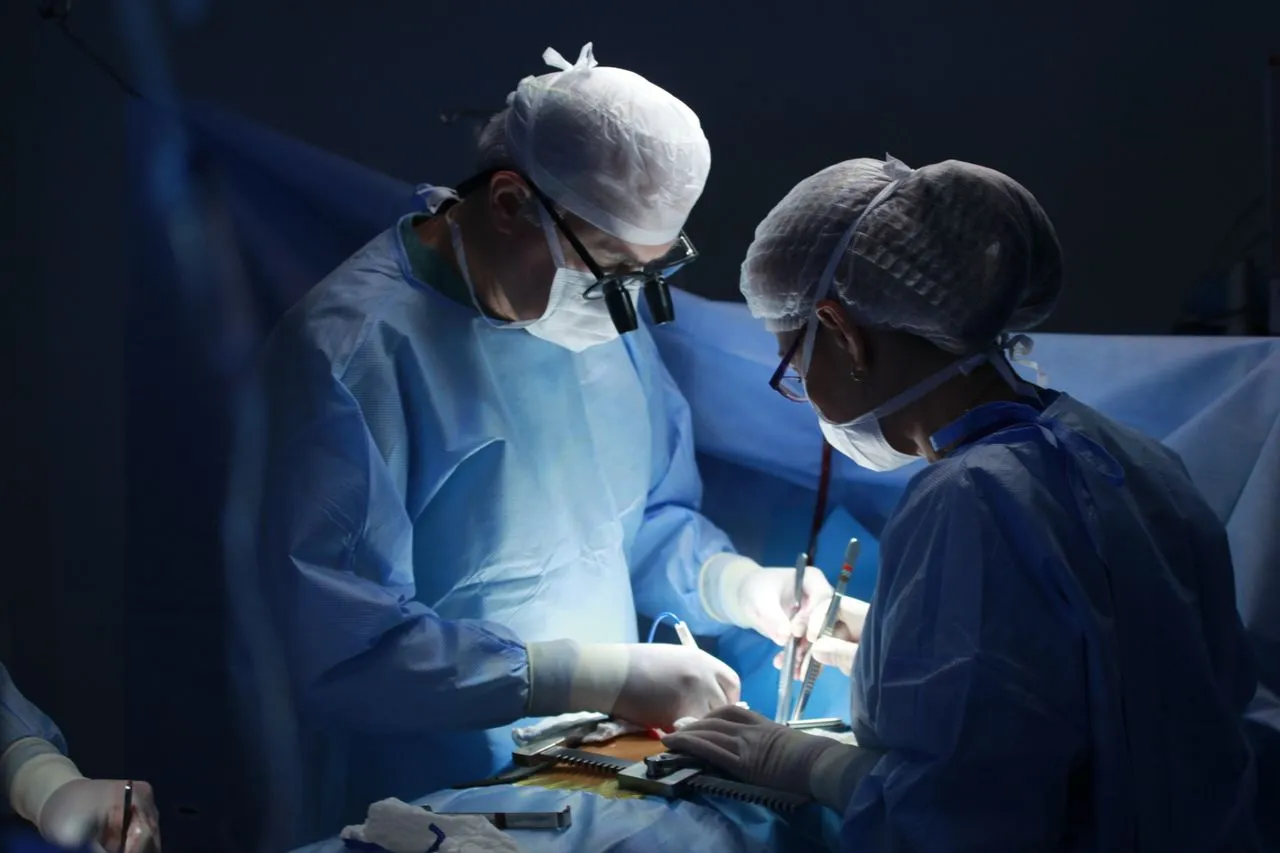
The surgical procedure was performed by the Cardiac Surgery team under the supervision of Dr. Waleed Alayadhi, Consultant Cardiac Surgeon. Dr. Mohamed Ali, Cardiac Surgery Specialist, also participated in the operation, alongside Dr. Adel Al-Jabali, Consultant Cardiac Anesthesiologist.
The high-risk procedure addressed two major consequences of the heart attack.
First, the surgical team closed the ventricular septal defect. The defect had developed as a complication of the myocardial infarction and affected the wall separating the left and right ventricles of the heart.
Second, the team reconstructed the damaged portion of the left ventricle that had been affected by the heart attack.
The left ventricle plays a central role in circulating oxygen-rich blood throughout the body. Damage to this part of the heart can significantly affect cardiac performance. Reconstruction of the affected area was therefore an important component of the surgical strategy.
The team used advanced surgical techniques intended to improve the efficiency of the damaged heart muscle and help restore cardiac function.
Given the patient’s recent history of acute myocardial infarction, cardiogenic shock, pulmonary congestion, and structural heart damage, the procedure represented a complex surgical challenge requiring careful coordination between surgeons, anesthesiologists, intensive care specialists, and other members of the medical team.
Following the operation, the patient demonstrated good improvement in overall health.
The medical team continued to monitor the patient closely during the postoperative recovery period, assessing cardiac function and general condition while supporting the patient through the next phase of treatment.
Approximately one week after surgery, the patient was transferred from the Intensive Care Unit to the inpatient ward in stable condition.
The transfer represented an important milestone in the recovery process, indicating that the patient no longer required the same level of critical care monitoring provided in the ICU.
The patient remained under medical supervision in the inpatient setting to complete the remaining stages of treatment and rehabilitation.
Recovery following major cardiac surgery can require continued monitoring and rehabilitation. The transition from intensive care to an inpatient ward allows medical teams to continue evaluating recovery while gradually preparing patients for discharge and longer-term follow-up.
The successful treatment of this patient demonstrates the importance of collaboration between different medical specialties when managing complicated cardiac emergencies.
The patient’s care involved several stages, each requiring specialized expertise.
The cardiac catheterization team initially focused on restoring blood flow through coronary intervention. When the patient developed severe circulatory instability, mechanical circulatory support was introduced to assist cardiac function.
The Intensive Care team then provided continuous monitoring and medical management over a two-week period, helping stabilize the patient and prepare for definitive surgical treatment.
Once the patient was stable enough for surgery, the cardiac surgery team addressed the structural damage caused by the heart attack. Cardiac anesthesia expertise was also essential during the complex operation and perioperative period.
This sequence demonstrates how advanced cardiac care frequently depends on a coordinated continuum rather than a single intervention.
Each specialty contributed to a different stage of the patient’s treatment, allowing the medical team to address immediate threats while also working toward a long-term solution for the heart damage.
Acute myocardial infarction can sometimes result in serious complications, particularly when significant areas of heart muscle are damaged.
A ventricular septal defect is one such complication. When damage weakens and disrupts the ventricular septum, an abnormal opening can form between the two ventricles. This can interfere with normal blood circulation and place additional strain on the heart.
Cardiogenic shock represents another serious complication. It occurs when the heart cannot pump sufficient blood to maintain adequate circulation throughout the body.
Severe pulmonary congestion can further complicate a patient’s condition by affecting the lungs and making breathing and oxygenation more difficult.
When these conditions occur together, treatment can become especially challenging. Patients may require emergency coronary intervention, mechanical circulatory support, intensive care, and eventually surgical repair.
The patient treated at Mouwasat Hospital required precisely this type of staged, multidisciplinary approach.
The outcome also highlights Mouwasat Medical Services Company’s efforts to provide specialized medical expertise and advanced technologies for complex cases.
By bringing together interventional cardiology, intensive care, cardiac surgery, and cardiac anesthesia services, the hospital is equipped to manage patients across multiple stages of serious cardiovascular illness.
The availability of specialized teams and advanced equipment is particularly important for complex cardiac emergencies, where treatment decisions may need to be made quickly and coordinated across several departments.
The hospital’s approach in this case demonstrates the value of having different cardiac specialties working together within an integrated treatment pathway.
From emergency catheterization through postoperative recovery, the patient’s care involved continuous collaboration among medical professionals with different areas of expertise.
The successful outcome provides an example of how modern cardiac medicine can combine minimally invasive intervention, mechanical circulatory support, intensive care, and advanced surgery to manage complex heart conditions.
The initial catheterization restored blood flow to the coronary arteries, while the intra-aortic balloon pump provided additional circulatory support during a period of severe cardiac instability.
The subsequent intensive care period allowed the patient’s condition to stabilize before the surgical team proceeded with definitive repair.
The cardiac operation then addressed the ventricular septal defect and reconstructed the damaged portion of the left ventricle.
Each stage was an important part of the overall treatment strategy.
Mouwasat Hospital’s successful management of the case underscores the growing importance of specialized healthcare services capable of handling complex and critical medical conditions.
For patients experiencing severe cardiac emergencies, access to appropriately trained specialists, advanced technology, intensive monitoring, and coordinated treatment can be essential.
The case also demonstrates why multidisciplinary care is particularly valuable in cardiac medicine. Conditions involving both coronary arteries and structural heart damage may require several forms of treatment, and the timing of each intervention can influence the patient’s recovery.
In this instance, the coordinated efforts of the cardiac catheterization, intensive care, cardiac surgery, and anesthesia teams contributed to a successful treatment pathway.
The successful treatment of the patient represents an important achievement for Mouwasat Hospital in Riyadh and its cardiac care teams.
The patient arrived with a life-threatening combination of an acute heart attack, ventricular septal defect, cardiogenic shock, and severe pulmonary congestion. Through a staged treatment strategy involving coronary stenting, mechanical circulatory support, intensive care management, and complex cardiac surgery, physicians were able to stabilize the patient and address the underlying structural damage.
The successful operation was followed by continued improvement, with the patient transferred from the ICU to the inpatient ward one week after surgery in stable condition.
The case ultimately highlights the value of integrated cardiac care and the importance of combining specialized medical expertise with advanced technologies when treating critically ill patients.
Mouwasat Medical Services Company’s continued investment in specialized teams, subspecialty services, modern equipment, and coordinated care models strengthens its ability to manage challenging cases. The hospital’s experience in this case demonstrates how collaboration across medical disciplines can provide patients with comprehensive treatment and an opportunity for recovery following severe cardiac complications.
Source link: https://www.mouwasat.com/