
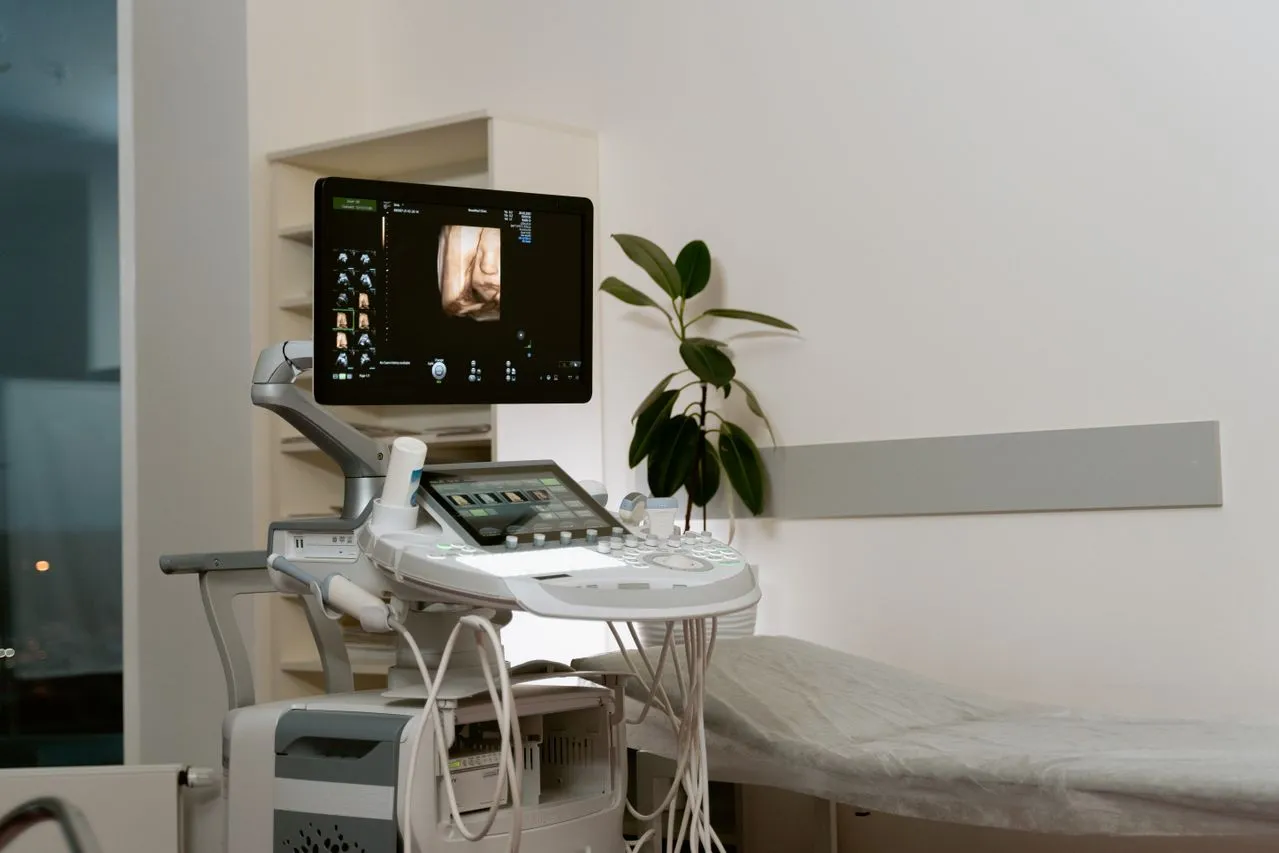
Zoya Technologies has announced the launch of the ZoyeMed 3.0 Resilience Edition, a next-generation clinical AI terminal engineered to operate entirely without internet connectivity while delivering full-spectrum medical evaluation and decision support. The system is designed to ensure uninterrupted clinical functionality in environments where connectivity is unreliable, unavailable, or actively compromised.
In contrast to most modern digital health platforms that rely heavily on cloud infrastructure, the Resilience Edition is built on a fundamentally different architectural principle: clinical intelligence must remain locally available at all times, regardless of external network conditions. By embedding its complete clinical AI stack directly on-device, Zoya Technologies aims to eliminate dependency on remote servers in critical care environments.
Across global healthcare systems, continuity of care is increasingly dependent on stable digital infrastructure. However, real-world conditions often challenge that assumption. Natural disasters, power grid failures, conflict zones, rural healthcare environments, mobile field hospitals, and remote industrial deployments frequently experience partial or complete network outages.
In such scenarios, cloud-dependent clinical systems may degrade precisely when demand for medical services is highest. Patient records become inaccessible, diagnostic tools lose functionality, and decision support systems may fail to operate. This structural vulnerability has long been recognized as a barrier to resilient healthcare delivery.
The ZoyeMed 3.0 Resilience Edition is positioned as a direct response to this gap. It is designed to ensure that clinical workflows—from patient intake and diagnostics to treatment recommendations and reporting—continue without interruption even in complete network isolation.
According to Zoya Technologies, the system represents a shift from “cloud-assisted healthcare” to “locally sovereign clinical intelligence.”
The Resilience Edition is a fully standalone configuration of the ZoyeMed 3.0 platform. Unlike hybrid systems that cache limited functionality offline, this terminal runs the entire clinical intelligence stack locally.
At its core, the system hosts the Longitudinal Multimodal Model, a proprietary AI framework developed by Zoya Technologies to integrate and interpret multiple streams of clinical data over time. This model is paired with the Zoyel.health clinical suite, which provides diagnostic workflows, clinical decision support, patient monitoring tools, and automated reporting capabilities.
Both components operate entirely on-device through Zoya’s proprietary “Amygdala” edge AI engine, which is optimized for high-performance inference in constrained environments without requiring external compute resources.
The company states that once deployed, the terminal can operate indefinitely without network connectivity, provided it has power and access to consumables required for integrated diagnostic modules.
Commenting on the launch, Dr. Syed Sabahat Azim, Chief Executive Officer of Zoya Technologies, emphasized the strategic intent behind the product’s architecture.
“Clinical intelligence should remain available to the patient and the clinician regardless of the state of the network around them,” Dr. Azim said. “We have removed the cloud from the critical path of care—not as a feature, but as an architectural decision. Healthcare cannot assume connectivity. It must be designed to survive without it.”
He further noted that resilience in healthcare is no longer an optional enhancement but a foundational requirement in a world where infrastructure instability is increasingly common.
Despite its extensive diagnostic and computational capabilities, the ZoyeMed 3.0 Resilience Edition is designed for deployment in a compact operational footprint of approximately five square metres. Within this space, the system functions as a fully integrated clinical evaluation station capable of completing a comprehensive medical episode in under 30 minutes.
The platform incorporates a wide range of diagnostic hardware, including:
Together, these components enable the terminal to function as a self-contained diagnostic and triage unit capable of supporting both routine and emergency clinical workflows.
The Resilience Edition is designed to support flexible deployment models depending on clinical environment and staffing availability. It operates in three distinct modes:
Zoya Technologies emphasizes that regardless of operational mode, the system remains a human-in-the-loop platform. Final clinical decision-making authority always resides with a licensed healthcare professional.
The Resilience Edition is specifically engineered for environments where traditional healthcare infrastructure is limited or unstable. These include rural clinics, mobile medical units, disaster relief zones, military field hospitals, offshore installations, and remote industrial sites.
By eliminating reliance on continuous connectivity, the system allows healthcare providers to maintain diagnostic and treatment capabilities even in the absence of external communication infrastructure.
This design approach is particularly relevant in emergency response scenarios where rapid deployment and immediate clinical functionality are critical.
To ensure transparency, accountability, and clinical governance, Zoya Technologies has implemented an immutable audit trail system across the platform.
All clinical actions, including diagnostic inputs, AI-generated outputs, user interactions, and treatment decisions, are recorded in an append-only, hash-chained ledger. This ensures that once recorded, no clinical event can be altered or deleted without detection.
The company highlights that this feature is especially important in disconnected environments, where external oversight may be delayed. Once connectivity is restored, audit logs can be synchronized with central systems for review, compliance verification, and quality assurance.
While the platform incorporates advanced AI-driven decision support capabilities, Zoya Technologies stresses that the system is not intended to replace licensed medical practitioners.
Instead, it is designed as an augmentation layer that enhances diagnostic speed, consistency, and access to clinical intelligence.
All AI outputs are intended to support clinical reasoning rather than override it. Final treatment decisions remain under the control of authorized healthcare professionals, ensuring alignment with regulatory and ethical standards.
The company also notes that the system has been designed with layered safeguards to prevent autonomous escalation beyond defined clinical thresholds.
The ZoyeMed 3.0 Resilience Edition is currently available through Zoya Technologies’ authorized distribution partners. The company is working with select healthcare providers and institutional partners to support deployment in high-need environments where infrastructure resilience is a priority.
Product documentation, technical specifications, and a detailed clinical white paper are available upon request for qualified organizations and stakeholders.
With the launch of the Resilience Edition, Zoya Technologies positions itself at the forefront of a growing movement toward infrastructure-independent healthcare systems. As digital health tools become increasingly sophisticated, their dependence on stable connectivity has emerged as a critical limitation.
By redesigning clinical AI systems to operate fully offline, the company aims to redefine what continuity of care means in the modern healthcare ecosystem.
In doing so, Zoya Technologies is not only introducing a new product but also advancing a broader architectural philosophy: that clinical intelligence should be as resilient and mobile as the patients and providers it serves.
Source link: https://www.businesswire.com/