

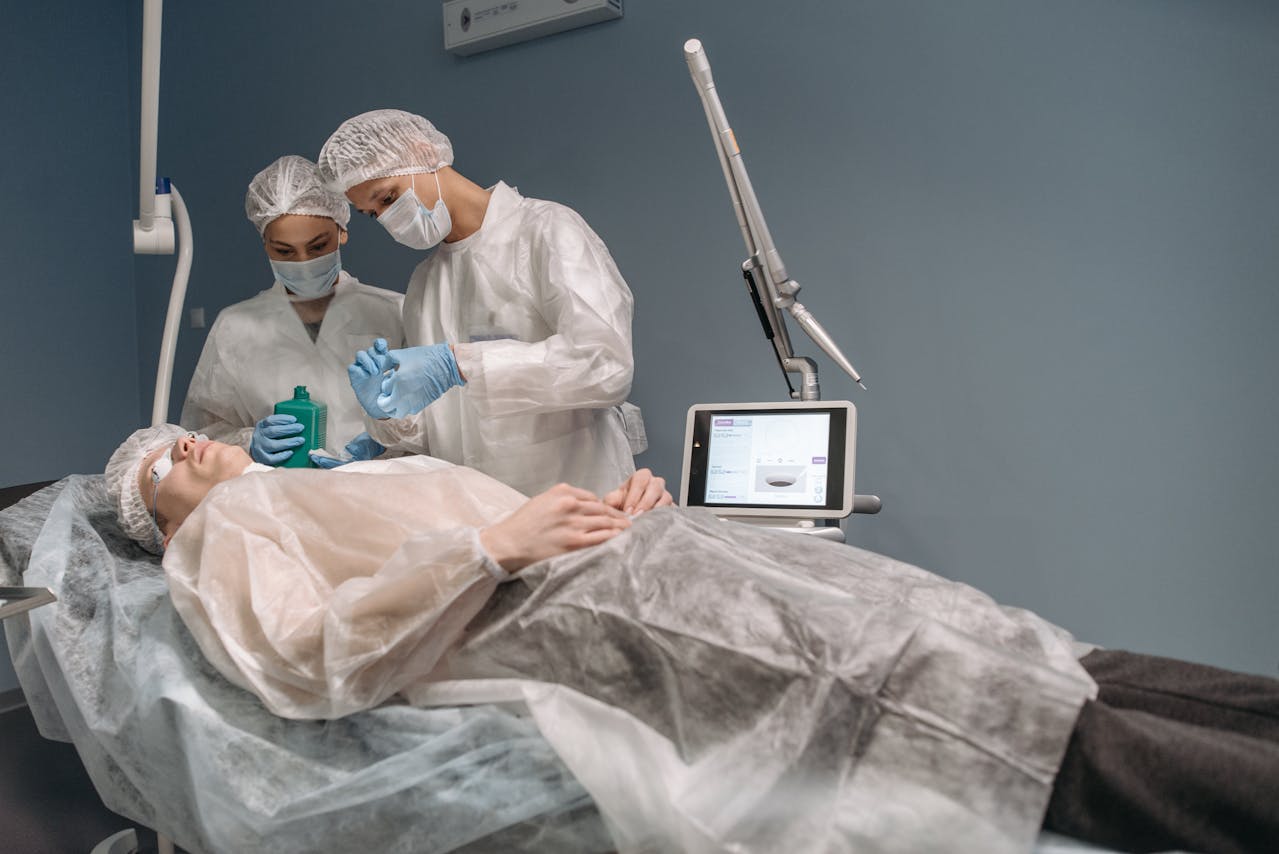
A highly skilled surgical team successfully treats a rare ureteral obstruction using advanced robotic-assisted technology.
In a remarkable medical achievement, the surgical team at Al Mouwasat hospital in Al Khobar has successfully performed a highly delicate robotic-assisted procedure to correct a rare congenital deformity in the renal pelvis. The patient, who had been suffering from continuous and severe pain, underwent a precise and effective surgical intervention that restored proper urinary flow and prevented further complications.
The case involved a particularly rare congenital anomaly affecting the upper part of the right ureter. The patient had been experiencing persistent and sharp renal pain, often accompanied by recurrent episodes of renal colic that significantly impacted daily life. Upon conducting extensive diagnostic assessments, the medical team identified that the root cause of the condition was a congenital abnormality involving an additional renal artery exerting external pressure on the upper section of the ureter. This pressure resulted in a pronounced narrowing of the ureter, obstructing the normal passage of urine from the kidney to the bladder. Over time, the obstruction led to a dilation and swelling of the renal pelvis—a condition medically known as hydronephrosis.
The surgical team explained that the presence of an extra renal artery compressing the ureter is an unusual anatomical variation. Although present from birth, such a condition may not cause symptoms in early life. However, as the kidney functions and urinary flow patterns become more pronounced with age, the pressure may intensify, eventually resulting in obstruction, recurrent pain, and functional impairments. Left untreated, this condition can potentially lead to progressive kidney damage due to the accumulation of urine, chronic inflammation, persistent pain episodes, and repeated infections. For this reason, prompt intervention becomes essential to prevent irreversible complications.
Informative / General
- Advanced robotic technology enables precise surgical correction of a rare renal pelvis deformity, ensuring a safe and successful outcome.
After reviewing the diagnostic imaging results—which included CT scans, ultrasounds, and other specialized tests—the surgical team determined that the best course of action would be to employ robotic-assisted surgery. This advanced technique offers superior precision, enhanced visualization, and greater control compared to traditional open or laparoscopic surgery. The decision reflected not only the team’s medical expertise but also the hospital’s commitment to adopting the latest technological innovations in healthcare.
The procedure itself involved several intricate steps. First, the surgeons used the robotic system to carefully access the affected area with minimal incisions. Through high-definition 3D visualization and robotic arms capable of exceptional precision, they were able to navigate around delicate anatomical structures. The team meticulously removed the narrowed segment of the upper part of the ureter—a process that required precise dissection to avoid damaging surrounding vessels and tissues.
Next, the surgical team addressed the congenital anomaly by repositioning the additional renal artery. This step was crucial, as simply removing the narrowed ureteral portion would not have been sufficient without relieving the pressure exerted by the aberrant artery. By delicately adjusting its position, the surgeons ensured that the artery no longer compressed the ureter.
Following this, the team created a new connection between the ureter and the renal pelvis. This part of the procedure—known as pyeloplasty—was successfully completed using robotic-assisted suturing techniques, which allow for exceptionally fine and accurate stitching. Such precision significantly reduces the risk of leakage, narrowing, or complications at the site of the connection. The robotic system’s stability and accuracy further minimized trauma to the surrounding tissue, helping promote faster healing and better long-term outcomes.
The operation lasted approximately ninety minutes, showcasing the efficiency and advanced capabilities of robotic surgical intervention. According to the medical team, the use of robotic technology contributed to minimal blood loss, increased surgical accuracy, and a notably lower risk of postoperative complications. By the grace of God, the procedure was completed smoothly and without any adverse events.
Following the surgery, the patient was monitored in the recovery unit, where vital signs and kidney function were consistently assessed. To the great satisfaction of the medical team and the patient’s family, the postoperative progress was remarkably positive. The patient experienced rapid relief from pain, and early imaging tests indicated a successful restoration of urinary flow without obstruction. The absence of complications enabled the patient to be discharged in stable and good health shortly after the procedure.
This successful surgery stands as a testament to the high level of expertise available at Al Mouwasat Hospital in Al Khobar. The hospital has established itself as a leading healthcare institution equipped with cutting-edge medical technologies and staffed by highly trained specialists capable of managing complex and rare medical conditions. The adoption of robotic-assisted surgery represents a major advancement in the field of urology and reconstructive renal procedures, offering patients a safer and more effective treatment option.
Robotic surgery provides several benefits compared to traditional surgical methods. Among the most notable are reduced postoperative pain, shorter hospital stays, faster recovery times, and smaller incisions, which lead to fewer cosmetic concerns and faster healing. Additionally, robotic tools enhance the surgeon’s dexterity, allowing for movements that would be difficult or impossible using human hands alone. This level of precision is especially important in surgeries involving delicate structures such as blood vessels, nerves, and urinary organs.
The successful outcome of this case also reflects the broader vision of Al Mouwasat Medical Services Company. The hospital continues to strive toward excellence by attracting top-tier medical specialists and subspecialties from around the world. Its investment in the latest robotic systems and advanced diagnostic equipment ensures that patients receive the highest quality of care in line with international medical standards.
Furthermore, the hospital’s commitment to innovation and continuous improvement aligns with global trends in modern medicine. As robotic surgery becomes increasingly common in advanced medical centers worldwide, institutions like Al Mouwasat play a crucial role in bringing these innovations to the region and making them accessible to local communities. This not only enhances patient outcomes but also contributes to the development of local healthcare expertise and capabilities.
In conclusion, the successful robotic surgery performed at Al Mouwasat Hospital in Al Khobar underscores a significant milestone in the treatment of congenital renal pelvis deformities. The operation showcased exceptional surgical skill, advanced technology, and seamless teamwork, all of which contributed to a positive and lasting result for the patient. This achievement reinforces the hospital’s reputation as a center of medical excellence and highlights the vital role that cutting-edge surgical technologies play in improving patient care and transforming complex procedures into safe and effective experiences.
source link: https://www.mouwasat.com