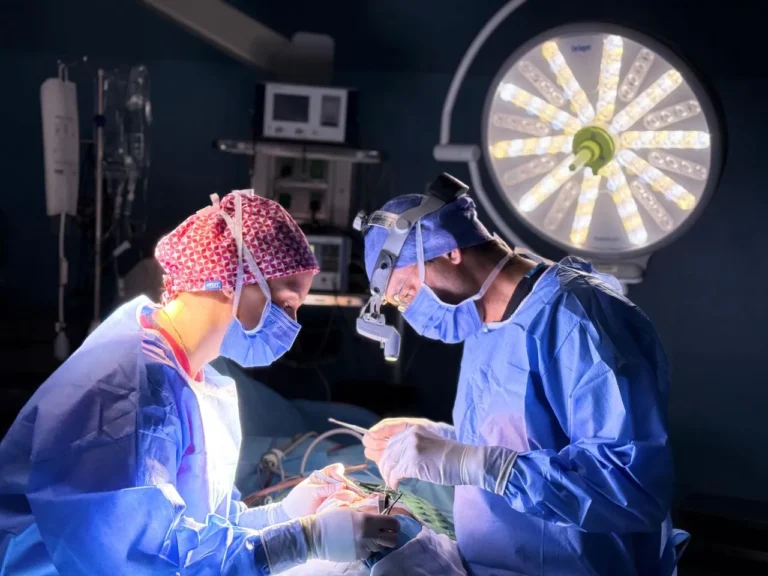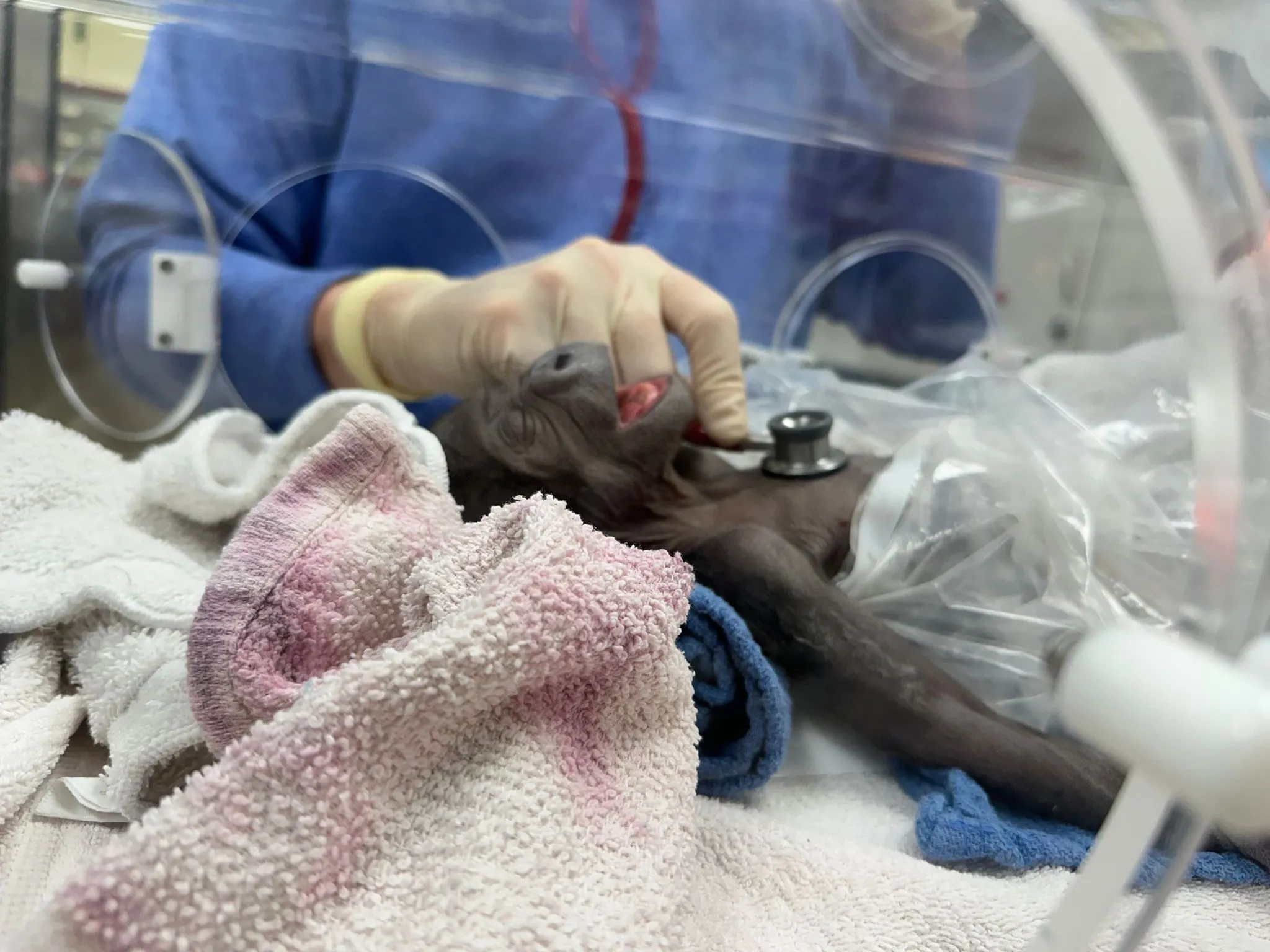
In an extraordinary collaboration that bridged the worlds of human medicine and wildlife conservation, specialists from Pediatrix Medical Group, Obstetrix, Swedish Medical Center, and Woodland Park Zoo joined forces to successfully deliver a baby western lowland gorilla through a rare cesarean section. The historic procedure marked the first gorilla born via C-section in Woodland Park Zoo’s 126-year history and demonstrated how expertise developed in maternal-fetal medicine and neonatal intensive care for humans can also play a critical role in protecting endangered animal species.
The remarkable medical effort centered on Olympia, a pregnant gorilla living at Woodland Park Zoo in Washington state. When concerns arose regarding her pregnancy as she approached her due date, zoo veterinarians sought assistance from specialists who routinely care for high-risk human pregnancies and newborns.
The multidisciplinary team included maternal-fetal medicine physician Dr. Suzanne Peterson, diagnostic medical sonographer Nichole Hamilton, obstetrician-gynecologist Dr. Emily Norland, neonatologist Dr. Andrew Beckstrom, zoo veterinarians led by Dr. Tim Storms, and ultrasound specialist Dr. Sachita Shah. Together, they combined expertise from human obstetrics, neonatology, veterinary medicine, diagnostic imaging, anesthesia, and wildlife care to safely deliver both mother and infant through one of the rarest surgical procedures performed in zoological medicine.
Their collaboration not only resulted in the successful birth of a healthy baby gorilla but also highlighted the growing value of interdisciplinary partnerships that transcend traditional boundaries between human and veterinary healthcare.
High-risk obstetricians are accustomed to monitoring complex human pregnancies, but receiving a request to evaluate an expectant gorilla is an opportunity few clinicians ever encounter.
When Woodland Park Zoo’s veterinary team recognized that Olympia’s pregnancy would benefit from advanced prenatal imaging, they reached out to specialists with extensive experience in maternal-fetal medicine.
Dr. Suzanne Peterson, a maternal-fetal medicine specialist with Maternal-Fetal Medicine Specialists of Puget Sound, immediately recognized both the uniqueness and importance of the opportunity.
Rather than approaching the project solely as a veterinary consultation, the team viewed it as an extension of the same principles that guide human prenatal medicine: careful fetal monitoring, collaborative decision-making, evidence-based care, and preparation for potential complications.
Joining Dr. Peterson was sonographer Nichole Hamilton, whose expertise in detailed fetal ultrasound examinations proved invaluable throughout Olympia’s pregnancy.
Together with zoo veterinarians and additional imaging specialists, they established a comprehensive prenatal monitoring program that closely followed Olympia’s developing pregnancy.
Although gorillas share remarkable biological similarities with humans, performing prenatal ultrasounds on a gorilla presents unique technical challenges.
Unlike human patients who lie comfortably on examination tables, Olympia voluntarily participated in imaging sessions after being trained by zoo keepers.
She would approach a specially designed mesh opening where clinicians could perform ultrasounds while remaining safely separated.
However, this arrangement allowed only a very limited imaging window.
Hamilton often had to kneel or sit on the ground beneath Olympia while attempting to obtain ultrasound images through thick body hair and limited skin contact.
Unlike routine obstetric ultrasound examinations in humans, there was no opportunity to reposition the patient or freely adjust scanning angles.
Every examination required patience, precision, and careful coordination.
Approximately every two weeks, the team evaluated several important indicators of fetal wellbeing, including:
Despite the technical limitations, the clinicians successfully captured remarkable images throughout the pregnancy.
One of the most surprising aspects of the collaboration was the degree of similarity between gorilla and human fetal development.
During favorable imaging sessions, clinicians observed fetal structures nearly identical to those routinely examined during human prenatal ultrasounds.
They identified detailed cardiac anatomy, fetal profiles, bladder development, kidneys, umbilical cord insertion, and even fetal breathing movements.
Dr. Peterson noted that one fetal profile obtained during March looked so remarkably human that most people viewing the image would have assumed it belonged to a human baby.
The use of Butterfly Network’s portable ultrasound technology further enhanced imaging quality during several examinations, allowing the medical team to obtain particularly clear diagnostic views.
For Hamilton, the experience reinforced just how closely related humans and gorillas are biologically.
Although imaging conditions were far more challenging, the developmental milestones appeared strikingly familiar.
Despite these similarities, scanning Olympia required overcoming obstacles never encountered during routine prenatal care.
The gorilla’s thick hair significantly reduced ultrasound penetration.
The depth required to visualize the fetus exceeded that of most human pregnancies.
The brief periods during which the fetus moved into favorable positions often lasted only seconds.
During those fleeting opportunities, Hamilton quickly captured critical anatomical views before the fetus changed position again.
Obtaining high-quality images required exceptional technical skill combined with flexibility and patience.
Each successful examination represented the combined efforts of clinicians, veterinarians, and experienced zoo keepers who had carefully trained Olympia to participate voluntarily in the process.
Gorilla pregnancies typically last approximately 36 weeks, making them somewhat shorter than human pregnancies.
As Olympia approached her expected delivery date, monitoring frequency increased.
Initially, fetal assessments remained reassuring.
However, shortly before Memorial Day weekend, subtle changes began raising concern among the medical team.
During one ultrasound examination, clinicians detected lower-than-expected fetal heart rates.
Although not immediately alarming, the finding prompted closer observation.
A few days later, another ultrasound revealed an even more concerning development.
The normal protective amniotic fluid surrounding the fetus had disappeared.
The combination of reduced fetal heart activity and absent amniotic fluid suggested that Olympia’s membranes had likely ruptured.
The medical team recognized that several possibilities now threatened the pregnancy.
These included:
Because fetal monitoring still demonstrated signs of life, clinicians recognized they had a limited opportunity to intervene before the baby’s condition deteriorated.
Drawing upon principles routinely applied in human obstetrics, the team concluded that immediate evaluation under anesthesia offered the best chance for a successful outcome.
Once Olympia was safely anesthetized, veterinarians and obstetric specialists performed a detailed examination.
The findings closely resembled decision-making encountered during complicated human deliveries.
Olympia’s cervix had dilated only about two centimeters.
Her membranes had ruptured.
Labor was not progressing sufficiently.
Given these findings, vaginal delivery was unlikely to occur quickly enough to protect the baby.
After collaborative discussion among veterinarians and obstetricians, the team agreed that cesarean delivery represented the safest option.
Cesarean delivery in gorillas remains extraordinarily uncommon.
Worldwide, fewer than a dozen gorilla C-sections have been reported.
For Woodland Park Zoo, the procedure represented an unprecedented event.
Remarkably, once surgery began, clinicians found the anatomy astonishingly familiar.
According to Dr. Peterson, the uterus, ovaries, and fallopian tubes closely resembled those encountered during human obstetric surgery.
This similarity reflects the fact that humans and gorillas share more than 98% of their genetic material.
Nevertheless, several important anatomical differences required surgical modifications.
The most noticeable difference involved the gorilla’s skin.
The dermal layer proved substantially thicker than human skin, requiring greater effort during incision.
Pelvic anatomy also differed.
Additionally, the abdominal cavity contained larger sections of bowel that required careful repositioning during surgery.
The uterine incision itself was modified slightly to accommodate differences in uterine shape.
Otherwise, much of the surgical technique closely mirrored modern human cesarean procedures.
Following delivery, surgeons devoted particular attention to wound closure.
Knowing Olympia would quickly resume climbing and normal physical activity after recovery, they reinforced multiple tissue layers and carefully concealed suture knots beneath the skin to discourage postoperative interference.
While surgeons focused on Olympia, another specialized team prepared for the newborn’s arrival.
Dr. Andrew Beckstrom, a neonatologist experienced in managing critically ill human newborns, waited alongside veterinary specialists to receive the infant immediately after delivery.
Because Olympia required general anesthesia throughout the operation, clinicians anticipated that anesthetic medications would temporarily suppress the baby’s breathing.
This expectation allowed the team to prepare appropriate neonatal resuscitation equipment before birth.
Immediately after delivery, the newborn displayed primary apnea, meaning he was not breathing independently.
This response had been anticipated.
Zoo veterinarian Dr. Tim Storms administered medication to reverse some anesthetic effects while Dr. Beckstrom initiated neonatal resuscitation procedures remarkably similar to those used for human infants.
The newborn was:
Rather than immediately inserting a breathing tube, clinicians used bag-mask ventilation because they expected spontaneous breathing would resume as anesthesia wore off.
Approximately ten minutes later, the baby began waking and interacting with caregivers.
A second brief period of respiratory suppression occurred before the infant fully transitioned to independent breathing.
The complete resuscitation process lasted roughly thirty minutes.
For Dr. Beckstrom, caring for the newborn gorilla felt remarkably familiar.
Most neonatal stabilization principles remained identical to those used in human medicine.
Maintaining body temperature, stimulating breathing, providing oxygen support, monitoring vital signs, and carefully observing neurologic responses all followed established neonatal intensive care practices.
However, two important differences stood out.
Human neonatologists commonly assess newborn transition using Apgar scores, which evaluate skin color, muscle tone, reflexes, breathing, and heart rate.
Because the infant gorilla possessed dark skin covered with dense hair, skin coloration could not be evaluated in the traditional manner.
Additionally, crying—normally an important sign of healthy newborn transition—was absent.
Initially, the absence of crying concerned members of the medical team.
However, experienced zoo keepers quickly reassured clinicians that silent newborn behavior is entirely normal for gorillas.
In the wild, crying could attract predators to vulnerable mothers and newborns.
Evolution has therefore favored quiet behavior immediately after birth.
This insight highlighted one of the many advantages of combining veterinary knowledge with human medical expertise.
Each discipline contributed specialized understanding essential to achieving the successful outcome.
Following surgery, Olympia recovered exceptionally well.
Almost immediately after awakening from anesthesia, she resumed climbing within her enclosure.
Although surgeons had anticipated this possibility, seeing such rapid physical activity still tested their confidence in the surgical repair.
Fortunately, the reinforced incision remained intact.
Meanwhile, the newborn continued improving under careful observation.
By the following day, he had recovered sufficiently to reunite with Olympia and the rest of the gorilla troop.
The successful reunion represented the culmination of months of preparation, careful monitoring, and coordinated medical decision-making.
Every member of the medical team emphasized that the success resulted from extraordinary collaboration rather than individual achievement.
The partnership united experts from maternal-fetal medicine, obstetrics, neonatology, diagnostic imaging, veterinary medicine, anesthesia, and animal care.
Long-standing professional relationships among the human healthcare providers also contributed significantly.
Dr. Peterson, Dr. Norland, and Dr. Beckstrom had worked together for many years caring for high-risk human pregnancies and critically ill newborns.
Their familiarity allowed efficient communication during the demanding surgical procedure.
Equally important were Woodland Park Zoo’s veterinary staff and experienced animal keepers.
Their intimate understanding of gorilla behavior, training techniques, and husbandry created the foundation upon which advanced medical care became possible.
Olympia voluntarily participating in repeated ultrasound examinations was itself the product of years of patient behavioral training.
The successful birth extends beyond a remarkable medical story.
Western lowland gorillas remain classified as critically endangered due to habitat destruction, poaching, disease, and declining wild populations.
Every healthy birth within accredited zoological conservation programs contributes to maintaining genetically diverse populations that support long-term species survival.
The collaboration therefore represents not only an achievement in comparative medicine but also an important contribution to global wildlife conservation.
The case demonstrates how innovations and expertise developed within human healthcare can sometimes provide lifesaving benefits for endangered animal species.
The successful cesarean delivery of Olympia’s baby represents one of the most remarkable examples of collaboration between human and veterinary medicine in recent years. By combining expertise in maternal-fetal medicine, obstetrics, neonatal intensive care, diagnostic imaging, and zoological medicine, clinicians from Pediatrix Medical Group, Obstetrix, Swedish Medical Center, Butterfly Network, and Woodland Park Zoo safely managed a highly complex pregnancy and performed the first gorilla cesarean section in the zoo’s 126-year history.
From months of specialized prenatal monitoring through emergency surgical intervention and neonatal resuscitation, the case illustrated the extraordinary biological similarities shared by humans and gorillas while highlighting the unique adaptations required for wildlife care. Most importantly, the collaboration resulted in a healthy mother, a thriving infant, and a meaningful contribution to the conservation of an endangered species.
The historic delivery stands as a powerful example of what interdisciplinary teamwork can accomplish when professionals from different fields unite around a common goal—preserving life through expertise, innovation, and compassionate care.
Source link: https://www.pediatrix.com/