
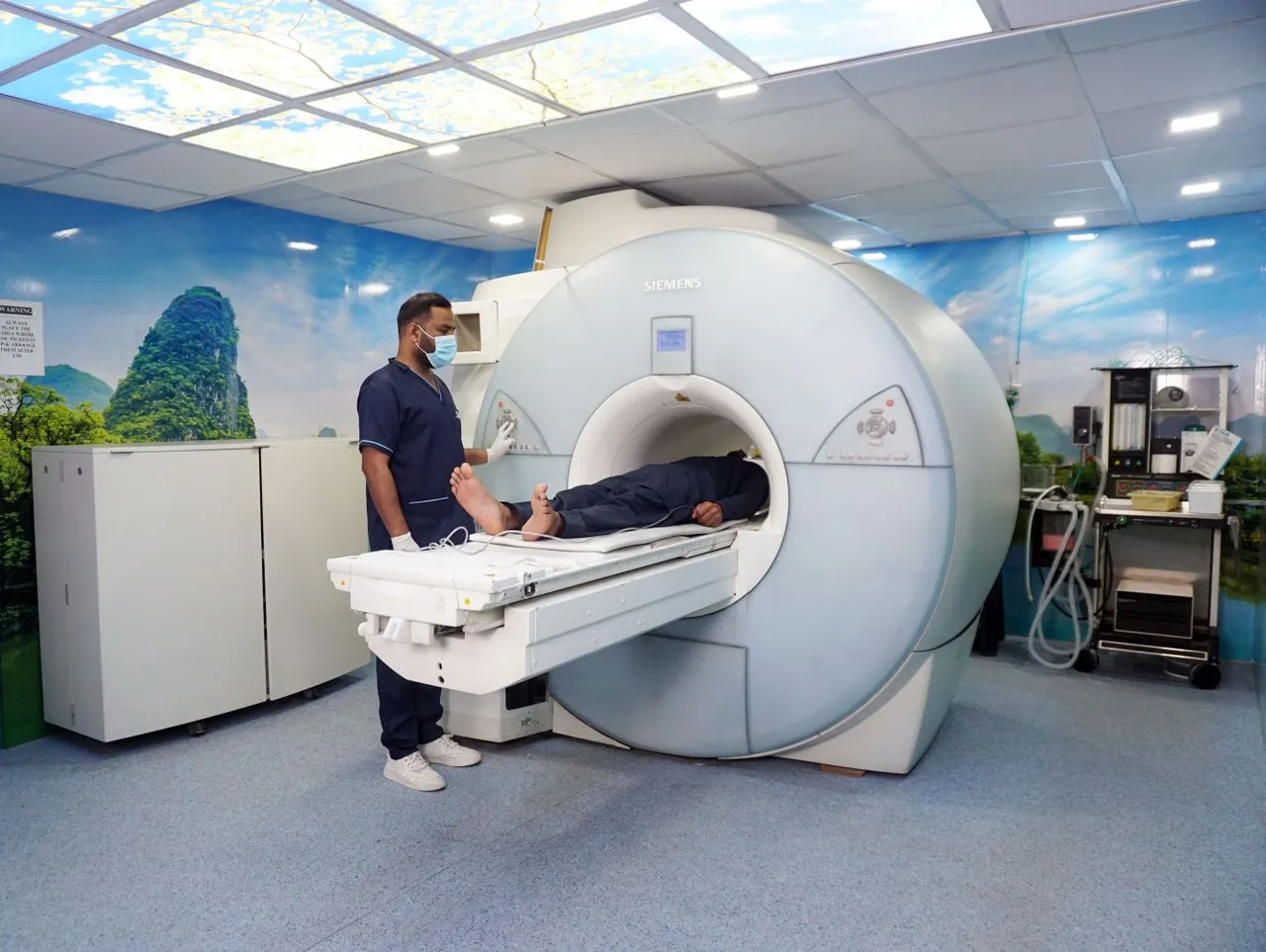
Life Healthcare has taken a significant step forward in improving access to advanced cancer diagnostics in South Africa with the introduction of a new nuclear medicine unit at Life Hilton Private Hospital in the KwaZulu-Natal Midlands. The facility now offers both PET-CT (Positron Emission Tomography-Computed Tomography) and SPECT-CT (Single Photon Emission Computed Tomography-Computed Tomography) imaging services, bringing cutting-edge diagnostic capabilities closer to patients who previously had to travel long distances for specialized care.
The launch of the new unit marks an important milestone for healthcare delivery in the region, particularly for oncology patients who require timely and accurate diagnostic imaging to guide treatment decisions. By making these advanced technologies available locally, Life Healthcare aims to improve patient outcomes, reduce delays in diagnosis, and enhance the overall cancer care experience.
For many years, patients living in the KwaZulu-Natal Midlands and surrounding areas often had to travel to Durban to access PET-CT imaging services. While Durban remains an important healthcare hub, the travel burden placed additional stress on individuals already coping with serious illnesses such as cancer.
Long-distance travel for medical appointments can present several challenges. Patients may face transportation costs, time away from work, accommodation expenses, and physical discomfort associated with travel during treatment. These obstacles can sometimes delay diagnostic procedures and subsequent treatment planning.
The introduction of PET-CT and SPECT-CT services at Life Hilton Private Hospital significantly reduces these barriers. Patients can now access highly specialized imaging closer to home, enabling faster diagnoses and more efficient treatment pathways.
The development reflects a broader effort within South Africa’s healthcare sector to decentralize access to advanced medical technologies and ensure that patients outside major metropolitan areas receive the same standard of care available in larger cities.
Nuclear medicine has become an essential component of modern healthcare, particularly in the diagnosis and management of cancer. Unlike traditional imaging methods that primarily focus on anatomical structures, nuclear medicine allows clinicians to examine how tissues and organs function at a molecular level.
This functional perspective can reveal disease activity before structural changes become visible on conventional imaging scans. As a result, physicians are often able to detect abnormalities earlier, assess disease progression more accurately, and evaluate treatment effectiveness with greater precision.
According to Dr. Nischal Soni, Nuclear Physician at Life Hilton Private Hospital, PET-CT imaging has become one of the most valuable tools available in contemporary oncology.
“Nuclear medicine, and PET-CT in particular, plays a critical role in modern cancer diagnosis,” he explains.
PET-CT combines two powerful imaging technologies into a single examination. The CT component provides detailed anatomical information about the body’s structures, while the PET component measures metabolic activity within tissues.
Cancer cells typically exhibit increased metabolic activity compared to healthy cells. By detecting these metabolic changes, PET imaging can identify cancerous tissue even when structural abnormalities are difficult to detect through conventional imaging alone.
The combination of anatomical and functional imaging provides clinicians with a far more comprehensive understanding of disease.
One of the greatest advantages of PET-CT technology is its ability to provide highly accurate information about the location, size, and activity of tumors.
Traditional imaging methods such as CT or MRI scans may identify masses or structural abnormalities, but they cannot always determine whether those abnormalities are actively cancerous. PET imaging fills this gap by revealing metabolic activity within suspicious areas.
This capability offers several important benefits:
PET-CT can precisely identify the location of cancerous lesions, helping physicians determine the exact extent of disease involvement.
Staging is one of the most important steps in cancer management. Determining how far a cancer has spread directly influences treatment recommendations and prognosis.
PET-CT often detects metastatic disease that may not be visible through conventional imaging, allowing clinicians to stage cancer more accurately.
Accurate diagnostic information enables healthcare teams to develop personalized treatment strategies tailored to each patient’s condition.
This may include decisions regarding surgery, radiation therapy, chemotherapy, immunotherapy, or combinations of treatment modalities.
PET-CT scans can also be used during and after treatment to evaluate how well therapies are working. Changes in metabolic activity often become apparent before structural changes occur, allowing physicians to assess effectiveness earlier.
By providing detailed diagnostic information, PET-CT may reduce the need for exploratory surgeries or additional invasive tests in certain cases.
Dr. Soni emphasizes that these benefits often translate into more targeted and less invasive interventions, ultimately improving patient care and outcomes.
The value of PET-CT imaging is well established within the global medical community. International clinical guidelines, including those developed by the European Association of Nuclear Medicine (EANM), recommend PET-CT for the diagnosis, staging, and management of various cancer types.
Research has consistently demonstrated the significant impact PET-CT can have on clinical decision-making. Studies have shown that appropriate use of PET-CT can alter staging assessments or treatment plans in up to 30 percent of certain cancer cases.
This statistic highlights the technology’s ability to provide critical information that may otherwise remain undetected through conventional imaging techniques.
When physicians gain a more accurate understanding of disease extent, they are better equipped to select the most effective treatment strategies and avoid unnecessary interventions.
Ultimately, these improvements contribute to better patient outcomes, enhanced quality of life, and more efficient use of healthcare resources.
The opening of the nuclear medicine unit at Life Hilton Private Hospital represents another important expansion within Life Healthcare’s growing network of advanced diagnostic facilities.
With the addition of the new unit, Life Healthcare now operates five PET-CT scanners across South Africa. Existing services are already established in Gauteng and the Western Cape, providing advanced imaging access in key healthcare markets.
The organization has indicated that further growth is planned. A second PET-CT facility is expected to open in Durban later this year, increasing the company’s national total to six units.
This expansion demonstrates Life Healthcare’s commitment to increasing access to sophisticated diagnostic technologies while meeting the growing demand for oncology services across the country.
As cancer incidence continues to rise globally and within South Africa, investments in diagnostic infrastructure are becoming increasingly important to support early detection and timely intervention.
Pete Wharton-Hood, Chief Executive of Life Healthcare, believes the launch reflects a broader commitment to addressing healthcare disparities between metropolitan and regional communities.
“Access to advanced oncology diagnostics remains limited in South Africa,” he notes. “Expanding PET-CT services into the Midlands helps close this gap while supporting a more integrated, patient-centred approach to cancer care.”
Historically, advanced medical technologies have been concentrated in major urban centers where healthcare infrastructure is most developed. While this model offers efficiencies, it can leave rural and regional populations underserved.
The expansion into the Midlands signals a strategic effort to ensure that specialized healthcare services are more evenly distributed throughout the country.
By bringing advanced imaging closer to patients, healthcare providers can help reduce inequalities in access while promoting earlier diagnosis and intervention.
The new PET-CT service forms part of Life Healthcare’s broader oncology strategy, which focuses on creating an integrated care model spanning every stage of the cancer journey.
The organization describes this vision as a “molecule-to-recovery” approach.
This model encompasses multiple components of cancer care, including:
By integrating these elements into a coordinated system, Life Healthcare aims to streamline patient experiences and improve continuity of care.
Rather than navigating fragmented healthcare pathways, patients can benefit from a more connected network of services designed to support them from diagnosis through recovery.
While PET-CT has gained widespread recognition for its role in oncology, the nuclear medicine unit at Life Hilton Private Hospital also offers SPECT-CT imaging.
SPECT-CT combines functional imaging with anatomical CT scanning, providing valuable information about organ function and disease processes.
According to Dr. Soni, the addition of SPECT-CT significantly expands the hospital’s diagnostic capabilities.
“Combining CT with SPECT on a single platform allows far greater flexibility in how we diagnose and manage patients,” he explains.
SPECT-CT is commonly used to evaluate a wide range of medical conditions, including:
The technology helps assess blood flow to the heart muscle and can identify areas affected by coronary artery disease.
SPECT-CT can detect bone abnormalities, fractures, infections, and metastatic disease with enhanced accuracy.
The technology provides important information about thyroid function and helps guide treatment decisions for various thyroid conditions.
Certain neurological conditions can also benefit from functional imaging provided by SPECT technology.
The availability of both PET-CT and SPECT-CT within the same facility enables clinicians to select the most appropriate imaging approach based on each patient’s individual clinical needs.
The new nuclear medicine unit offers advantages not only for patients but also for healthcare professionals responsible for diagnosis and treatment planning.
For patients, the benefits include:
For clinicians, the availability of advanced imaging locally provides:
These benefits contribute to a healthcare environment where decisions can be made more efficiently and with greater precision.
The introduction of PET-CT and SPECT-CT services at Life Hilton Private Hospital represents a major advancement for cancer care and nuclear medicine services in the KwaZulu-Natal Midlands.
As healthcare continues to evolve toward more personalized and precision-based approaches, advanced diagnostic technologies will play an increasingly important role in improving outcomes and guiding treatment decisions.
By expanding access to these services beyond major metropolitan centers, Life Healthcare is helping ensure that more South Africans can benefit from world-class diagnostic capabilities regardless of where they live.
Patients considering PET-CT imaging as part of their cancer care journey are encouraged to discuss the potential benefits with their treating specialists and consult their medical aid providers regarding coverage and eligibility. Through earlier diagnosis, more accurate staging, and individualized treatment planning, advanced imaging technologies such as PET-CT and SPECT-CT are helping shape the future of cancer care in South Africa.
Source link: https://www.lifehealthcare.co.za/