

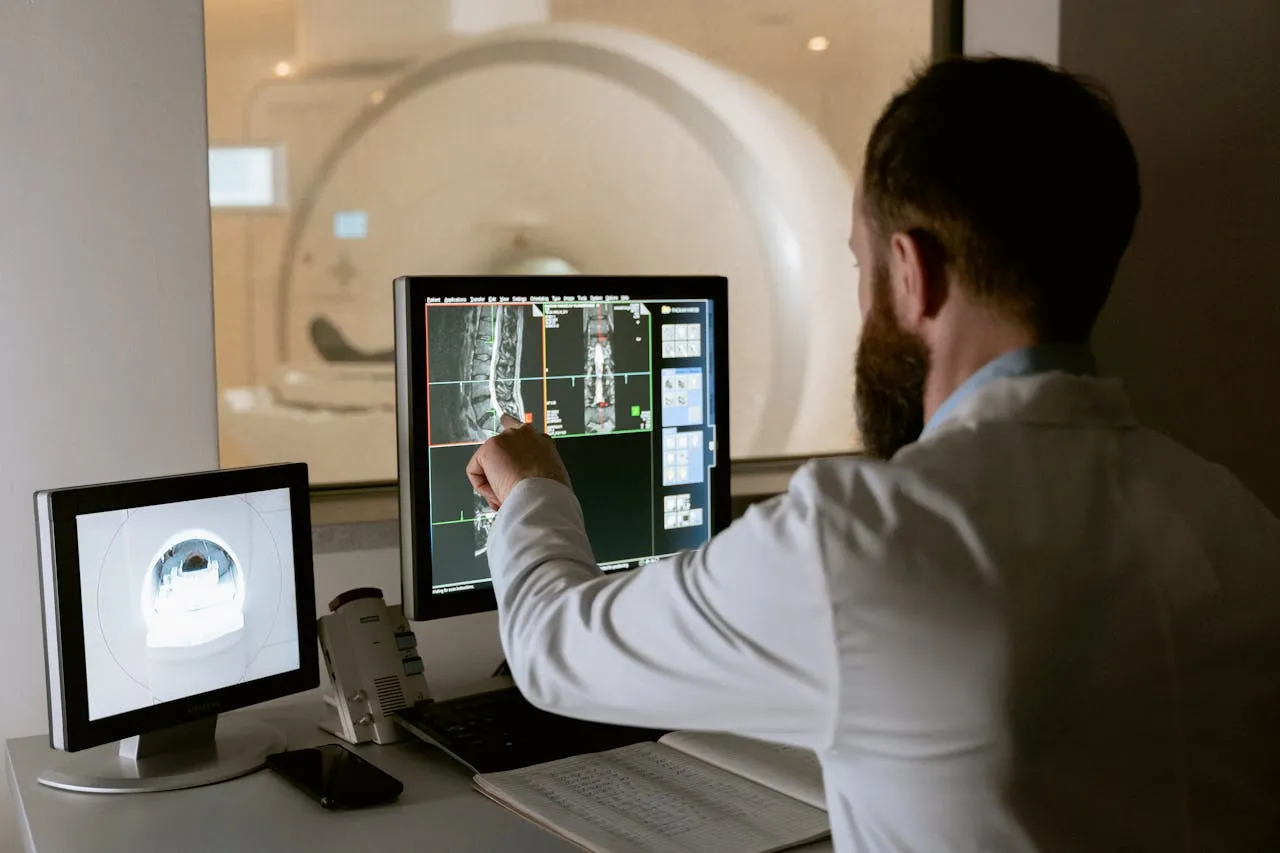
Hinge Health, Inc.today announced the publication of a new peer-reviewed study demonstrating that individuals enrolled in the company’s digital chronic back pain program experienced dramatically fewer imaging visits—such as MRI and X-ray scans—compared with similar patients who pursued traditional, in-person physical therapy. The study, which appears in The Journal of Health Economics and Outcomes Research, evaluated more than 4,300 participants and found that those who engaged with Hinge Health’s program recorded 60% fewer imaging visits for low back pain within three months than their counterparts in the control group.
The findings add important evidence to a growing national conversation about the overuse of diagnostic imaging in musculoskeletal (MSK) medicine, particularly for chronic low back pain. Low back pain remains one of the most common MSK conditions in the United States—and globally—with lifetime prevalence estimated as high as 84%. It is one of the leading causes of disability, functional impairment, and healthcare utilization. Yet despite its ubiquity, clinical guidelines have long emphasized that routine imaging is rarely required for most acute or chronic back pain episodes unless there are specific “red flag” symptoms that might indicate underlying structural disease.
Nevertheless, imaging usage has increased significantly over the past decade. MRI and X-ray scans, while valuable in specific circumstances, are often ordered reflexively, even when clinical evidence suggests little to no benefit for routine back-pain evaluation. Research indicates that nearly one-third of back-related MRIs and X-rays are not clinically indicated. Unnecessary imaging can drive up medical costs and, more importantly, trigger a cascade of follow-up appointments, specialist consultations, and invasive procedures—including surgeries—that may offer minimal improvement for the patient. Such interventions not only increase costs but also expose individuals to potential harm, anxiety, and the risk of overtreatment.
Dr. Jeff Krauss, MD, Chief Medical Officer at Hinge Health, emphasized this point in discussing the new study’s implications. “Overuse of imaging leads to a cascade of interventions that don’t improve outcomes,” he said. “Our latest study reinforces the importance of evidence-based approaches to managing chronic back pain. By reducing unnecessary imaging, we not only cut costs but also deliver higher-quality, more patient-centered care. This is the type of value transformation the healthcare system has been seeking for years.”
The study leveraged data from one of the country’s most comprehensive commercial health plan databases, covering more than 100 million commercially insured individuals across all U.S. states and territories. The research team analyzed data spanning January 1, 2016, through September 30, 2021, ensuring a large and diverse population sample. The study cohort included individuals who enrolled in Hinge Health between January and October of 2020, compared with a control group of similarly matched members who did not enroll in the program but received a physical therapy visit related to low back pain.
To qualify for inclusion, participants needed to have a diagnosis or claims history of back pain and either initiate the Hinge Health program or seek conventional care during the study period. By using strict matching criteria—including age, baseline health status, back-pain history, and utilization patterns—the study ensured that comparisons between the Hinge Health group and the control group reflected meaningful differences tied to the care pathway, not unrelated demographic factors.
The results were striking: Hinge Health participants showed a 60% reduction in imaging visits within three months of starting the program. This reduction aligns with the company’s emphasis on research-backed care pathways that prioritize therapeutic exercise, education, behavior-change support, and personalized clinical oversight from a remote care team rather than routine imaging or early escalation to costly interventions.
The study’s authors noted that this significant decrease in imaging is not merely a utilization trend—it is a marker of improved clinical decision-making. Many individuals with back pain often seek reassurance through imaging, even when scans are unlikely to change treatment strategies. Hinge Health’s digital program combines physical therapists, health coaches, and advanced technology features such as sensor-guided exercise therapy, virtual visits, and behavioral-health support. This integrated approach helps participants understand what symptoms are normal, how to differentiate between discomfort and red-flag warning signs, and how to manage pain effectively without unnecessary diagnostic testing.
Moreover, digital MSK programs like Hinge Health aim to support individuals in consistent, sustainable behavior change. Traditional in-person physical therapy, while highly effective, can be difficult to access due to scheduling limitations, transportation challenges, or inconsistent adherence. A digital-first solution removes many of these barriers and allows participants to complete sessions from home, receive timely coaching support, and track their progress over time. This convenience encourages higher engagement, which may further reduce reliance on imaging as patients gain confidence in self-management strategies.
The newly published findings build on a growing library of claims-based outcomes demonstrating that the Hinge Health platform is associated with reductions in other high-cost or high-risk healthcare services as well. Previous evaluations of commercial-plan data have shown meaningful reductions in spinal surgeries, emergency-department visits, pain-related specialist referrals, and even opioid prescriptions among Hinge Health participants. Together, this body of evidence illustrates the potential for digitally delivered MSK care to not only improve clinical outcomes but also meaningfully lower total cost of care for employers, health plans, and members.
The continued rise of MSK costs in the United States—driven largely by unnecessary imaging, injections, and elective surgeries—has made musculoskeletal care one of the top spending categories for health plans and employers. With chronic back pain alone affecting millions of working-age adults each year, innovative care models that emphasize conservative, evidence-aligned treatment are increasingly essential to improving systemwide efficiency and reducing waste.
Hinge Health’s focus on outcomes and cost savings comes at a time when stakeholders are more than ever looking for validated, scalable solutions to MSK-related challenges. Digital care models have expanded rapidly in recent years, but few have amassed the scale of real-world, claims-based data demonstrated in this study. By showing that digital MSK programs can influence not just symptoms but also clinical decision-making and downstream care utilization, this research reinforces the potential for digital therapeutics to reshape traditional care pathways.
As healthcare systems, employers, and payers continue to evaluate ways to lower costs without compromising quality, the findings from this study provide a compelling argument for integrating digital MSK platforms into standard care models. By reducing unnecessary imaging and steering patients toward evidence-based care, digital programs like Hinge Health may play a critical role in mitigating the clinical and economic burdens of chronic back pain.