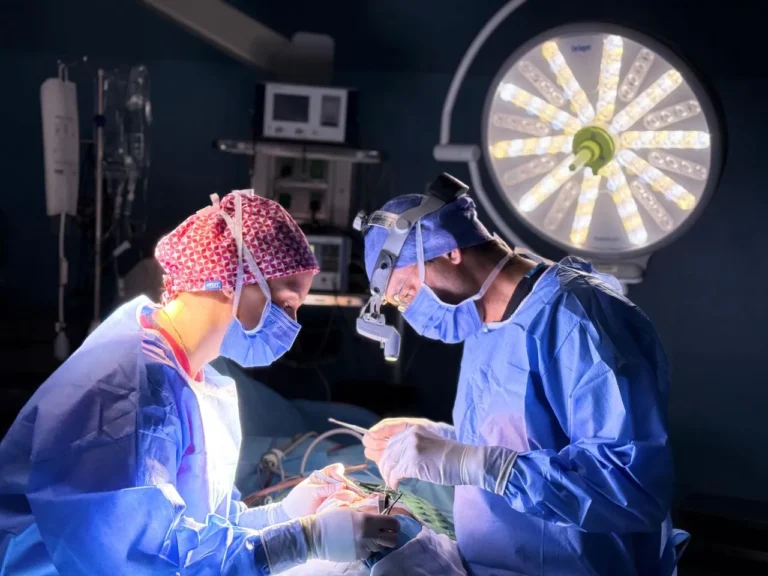

Pulse Biosciences, Inc. (Nasdaq: PLSE), a medical technology company pioneering nonthermal ablation therapies through its proprietary Nanosecond Pulsed Field Ablation™ (nsPFA™) platform, has reached a pivotal milestone in its clinical development strategy. The U.S. Food and Drug Administration (FDA) has granted the company approval of its Investigational Device Exemption (IDE) application, enabling the launch of the company’s first large-scale clinical study of its nsPFA Cardiac Surgery System.
The trial, known as NANOCLAMP AF, is designed to evaluate the safety and effectiveness of nsPFA in patients undergoing cardiac surgery for the treatment of atrial fibrillation (AF), a common but potentially life-threatening cardiac arrhythmia that affects millions of people worldwide.
NANOCLAMP AF is structured as a single-arm, prospective study and will enroll up to 136 patients across as many as 20 clinical sites, including two outside the United States. The trial’s primary objective is to demonstrate the effectiveness of the nsPFA Cardiac Surgery System when used in conjunction with other planned cardiac procedures.
The device under investigation, the nsPFA Cardiac Clamp, has been engineered to deliver continuous, linear, and transmural ablations in a rapid and controlled fashion. By integrating seamlessly into concomitant surgical procedures, the device could provide cardiac surgeons with a more efficient and precise alternative to existing energy sources, particularly radiofrequency ablation.
The company has indicated that full details of the trial will soon be available on clinicaltrials.gov, ensuring transparency and access for clinicians, researchers, and patients.
Atrial fibrillation is one of the most prevalent cardiac arrhythmias, with global incidence and prevalence rising steadily due to aging populations and an increase in cardiovascular risk factors. AF is associated with substantial morbidity, including heightened risks of stroke, heart failure, and overall mortality.
Surgical ablation has long been considered a therapeutic option, particularly when performed alongside other cardiac surgeries such as valve replacement or coronary artery bypass grafting. However, conventional ablation technologies—primarily radiofrequency (RF) or cryoablation—rely on thermal energy. While effective, thermal ablation carries inherent risks of collateral tissue injury, incomplete lesion formation, and procedural inefficiencies.
Pulse Biosciences believes its nsPFA platform offers a solution to these limitations, representing what could be a paradigm shift in the surgical management of AF.
Unlike RF ablation, which uses heat to destroy tissue, nsPFA operates via a nonthermal mechanism. By delivering ultrafast electrical pulses at the nanosecond scale, the technology induces irreversible electroporation in targeted cardiac cells, resulting in precise lesion formation without the collateral thermal damage often seen with RF ablation.
This approach carries several theoretical and early clinical advantages:
Dr. Niv Ad, Chief Science Officer for Cardiac Surgery at Pulse Biosciences, emphasized these advantages in a company statement. “We believe nsPFA’s novel and proprietary nonthermal mechanism of cardiac ablation offers significant safety, effectiveness, and speed improvements over current thermal modalities, such as radiofrequency ablation,” Dr. Ad said. “The first-in-human feasibility data we are generating in Europe gives us confidence in our ability to successfully execute the IDE study, and we look forward to enrolling our first patients.”
Paul LaViolette, Co-Chairman and CEO of Pulse Biosciences, described the FDA’s approval as a transformative milestone for the company and the broader field of cardiac surgery.
“This FDA IDE approval is a major milestone for Pulse Biosciences,” LaViolette stated. “The study approval is a testament to the quality of the preclinical and human clinical data that has been generated in support of this breakthrough technology. Pulse Biosciences is the first company to advance PFA into the cardiac surgical field for the treatment of AF.”
Dr. Gan Dunnington, Chief Medical Officer of Cardiac Surgery at the company, underscored the potential of nsPFA to redefine standards of care. “The nsPFA Cardiac Clamp is designed to be an optimal replacement for conventional radiofrequency ablation devices, offering a faster, more consistent, and safer approach to surgical cardiac ablation,” he said. “The ability to achieve full-thickness, contiguous, durable lesions with reduced ablation times highlights the unique clinical value of the nsPFA technology. We believe the benefits of nsPFA technology for cardiac ablation will increase the overall adoption of surgical cardiac ablation for AF well beyond what radiofrequency ablation has been able to do.”
The FDA IDE approval builds on encouraging first-in-human feasibility data currently being collected in Europe. Since August 2024, Pulse Biosciences has been conducting a feasibility study across three centers in The Netherlands, with over 40 patients treated to date.
Surgeons participating in the trial have reported:
The company plans to expand this feasibility program to additional European sites throughout 2025. This growing body of clinical data will serve not only to support regulatory submissions but also to build a foundation of real-world evidence for broader adoption.
The nsPFA Cardiac Surgical System received FDA Breakthrough Device Designation in July 2024, recognizing its potential to provide more effective treatment for a life-threatening condition. The device has also been included in the FDA’s Total Product Life Cycle (TPLC) Advisory Program (TAP), which offers collaborative engagement with FDA experts to streamline development and expedite patient access to promising medical technologies.
These regulatory designations are particularly significant for a company at Pulse Biosciences’ stage of growth, as they provide structured guidance and potential acceleration pathways toward U.S. commercialization.