
Artesia General Hospital Leverages Ambient AI to Transform Rural Healthcare Delivery
ARTESIA,General Hospital (AGH), a leading healthcare provider serving southeastern New Mexico, is taking a major step forward in modernizing rural healthcare by implementing advanced ambient artificial intelligence technology. In collaboration with TruBridge, Inc., a prominent healthcare technology solutions provider, AGH has successfully integrated Microsoft Dragon Copilot into its electronic health record (EHR) system. This strategic deployment is designed to significantly reduce the administrative burden on clinicians while enhancing the quality of patient care and strengthening the connection between providers and patients.
Microsoft Dragon Copilot is an AI-powered clinical assistant that utilizes ambient listening technology to capture and transcribe conversations between healthcare providers and patients in real time. Fully embedded within the TruBridge EHR system, the platform enables seamless documentation during clinical encounters. By automating note-taking and organizing information instantly, the technology allows clinicians to focus more on patient interaction rather than screen-based data entry.
At its core, the solution combines natural language processing, ambient speech recognition, and advanced AI capabilities to streamline clinical workflows. As conversations occur during patient visits, the system listens passively, identifies relevant medical information, and converts it into structured clinical notes. This process eliminates the need for manual typing or post-visit documentation, which has traditionally been time-consuming and often contributes to physician burnout.
One of the most notable advantages of this integration is its context-aware intelligence. The platform is designed to differentiate between casual conversation and clinically significant information. It automatically extracts key symptoms, medical history, and treatment details while ignoring irrelevant dialogue. This ensures that the resulting documentation is both accurate and comprehensive, capturing the patient’s story in a way that mirrors the natural flow of conversation.
AGH has already begun tracking the impact of this implementation, and early results are promising. Physicians report a reduction of 50% to 75% in documentation time compared to traditional dictation methods that are not integrated into the EHR. This substantial time savings not only improves efficiency but also allows providers to dedicate more attention to patient care.
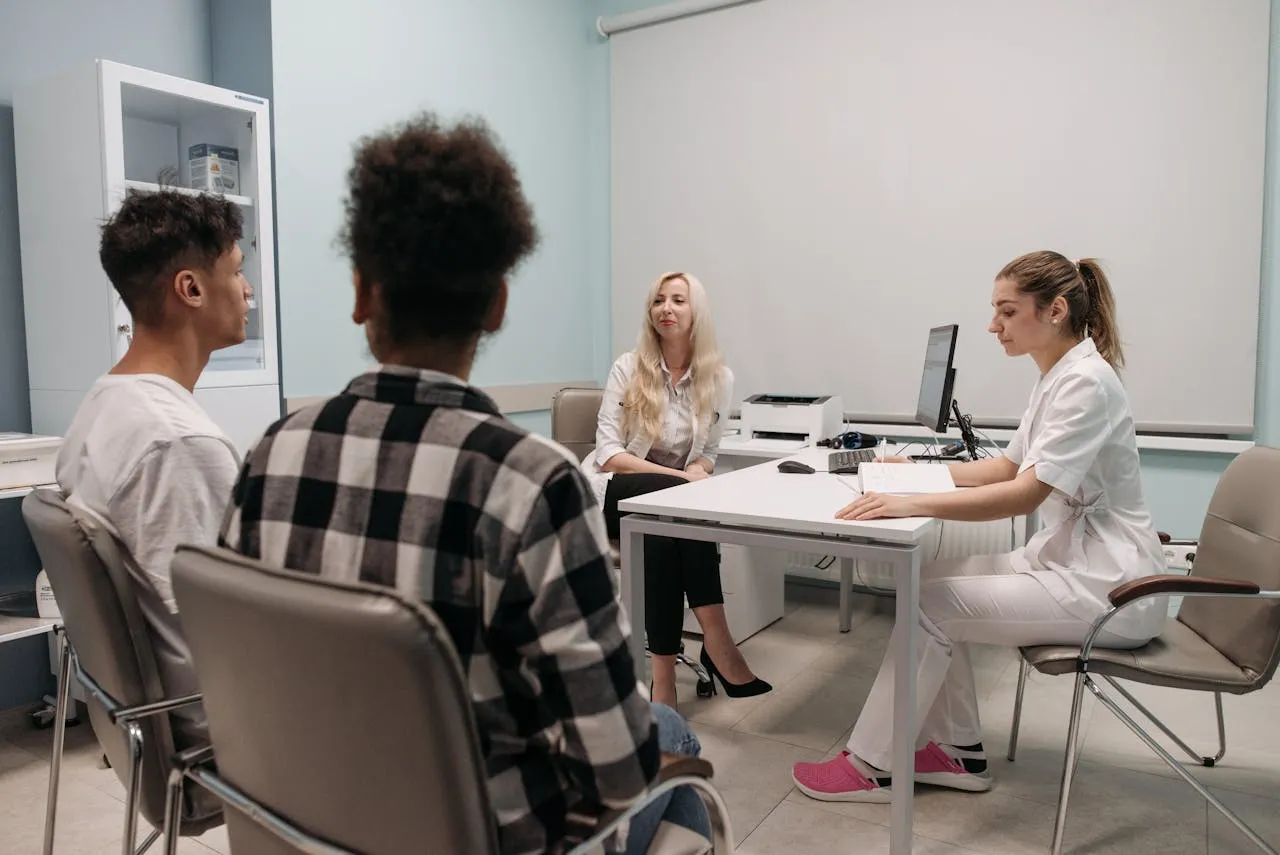
For many clinicians, the introduction of ambient AI represents a return to the foundational principles of medicine. Instead of dividing their attention between patients and computer screens, providers can now engage more fully during consultations. This shift has a meaningful effect on both the quality of care and the patient experience.
Dr. Peter Jewell, a family medicine physician at AGH, emphasized the importance of this transformation. He noted that medical training emphasizes the “80% rule,” where the majority of a physician’s focus should be on the patient to build trust and rapport. According to Dr. Jewell, the new technology finally makes that ideal achievable in everyday practice. Without the need to constantly look at a screen or type notes, physicians can observe subtle cues, such as facial expressions and tone of voice, which are often critical for accurate diagnosis and empathetic care. This renewed ability to connect helps patients feel heard and understood.
Beyond improving provider-patient interaction, the Microsoft Dragon Copilot integration introduces several powerful features that enhance clinical workflows. The system enables full EHR integration, allowing clinicians to capture audio, review AI-generated notes, and finalize documentation without leaving the platform. This streamlined process reduces friction in daily operations and ensures consistency across records.
Another key capability is multi-party recognition. The technology can distinguish between different speakers in the room, including physicians, patients, and caregivers. By accurately attributing statements to the correct individual, the system produces precise and reliable transcripts. This feature is especially valuable in complex consultations involving multiple participants.
The platform also accelerates documentation by eliminating manual data entry altogether. Structured clinical notes are generated automatically and integrated directly into the EHR, reducing delays and minimizing the risk of errors associated with manual input. This efficiency not only benefits clinicians but also improves overall care coordination.
Language translation is another standout feature of the system. In diverse communities, language barriers can pose significant challenges to effective healthcare delivery. Microsoft Dragon Copilot addresses this issue by providing real-time translation during patient interactions. Clinicians can communicate with non-English-speaking patients in their preferred language, while the system simultaneously generates clinical notes in English. This capability ensures that communication is clear, inclusive, and accurately documented.
At AGH, this multilingual support has already demonstrated tangible benefits. Providers working with Spanish-speaking patients, for example, have found that the technology enables more natural and effective communication. Instead of relying on interpreters or struggling with language differences, clinicians can engage directly with patients, fostering a more comfortable and trusting environment. The result is not only improved efficiency but also a more personalized and respectful care experience.
Elizabeth Muñoz, a physician assistant at Memorial Family Practice, highlighted the impact of this feature. She explained that the ability to capture conversations accurately in multiple languages helps ensure that every patient feels acknowledged and understood. For her, the technology goes beyond convenience—it represents a meaningful step toward equitable healthcare.
The implementation of ambient AI at AGH reflects a broader commitment to innovation in rural healthcare. Historically, advanced technologies have been more accessible to large urban medical centers, leaving smaller community hospitals at a disadvantage. By adopting cutting-edge solutions like Microsoft Dragon Copilot, AGH is demonstrating that rural healthcare systems can lead in digital transformation.
This initiative is driven by a shared vision between AGH and TruBridge to improve healthcare delivery in underserved areas. By integrating AI directly into clinical workflows, the partnership aims to reduce administrative strain on providers while enhancing patient outcomes. The technology not only improves efficiency but also supports clinician well-being by addressing one of the primary causes of burnout—excessive documentation.
David Harse, general manager of patient care at TruBridge, emphasized the significance of this collaboration. He noted that hospitals like AGH are proving that innovation is not limited to large health systems. By bringing advanced AI tools into everyday practice, AGH is empowering its clinicians with more time, energy, and focus to dedicate to patient care.
Looking ahead, AGH plans to expand its use of Microsoft Dragon Copilot across additional departments and clinical settings. The hospital continues to explore new ways to leverage AI to support its diverse patient population and improve care delivery. As the technology evolves, it is expected to play an even greater role in enhancing efficiency, accuracy, and patient satisfaction.
Ultimately, AGH’s adoption of ambient AI represents a significant step forward in redefining healthcare in rural communities. By prioritizing both technological innovation and human connection, the hospital is setting a new standard for how care can be delivered effectively and compassionately. Through this initiative, AGH is not only improving workflows but also reaffirming the importance of the patient-physician relationship at the heart of medicine.
About Artesia General Hospital
Artesia General Hospital (AGH) is a leading regional healthcare provider dedicated to delivering compassionate, high-quality medical services to the residents of southeastern New Mexico. Nationally recognized for excellence, AGH is DNV accredited and stands as the only hospital in New Mexico to be certified as a Great Place to Work®. With a commitment to clinical safety and a patient-first philosophy, the hospital offers a wide range of services, including 24-hour emergency care, advanced diagnostic imaging, and specialized surgical procedures. By combining state-of-the-art technology with a culture of excellence, Artesia General Hospital ensures that world-class healthcare remains accessible and close to home
About TruBridge
TruBridge proudly supports rural and community hospitals and providers in their efforts to stay strong, independent, and deeply rooted in the communities they serve. Backed by more than 45 years of healthcare experience and trusted by over 1,500 clients nationwide, TruBridge offers a mix of technology, services, and strategic expertise — including revenue cycle management, electronic health records (EHR) and analytics — all designed singularly for the realities of rural and community healthcare. With a steadfast commitment to keeping care local, TruBridge helps hospitals flourish as the economic heart of their communities, delivering high-quality, personal care close to home