

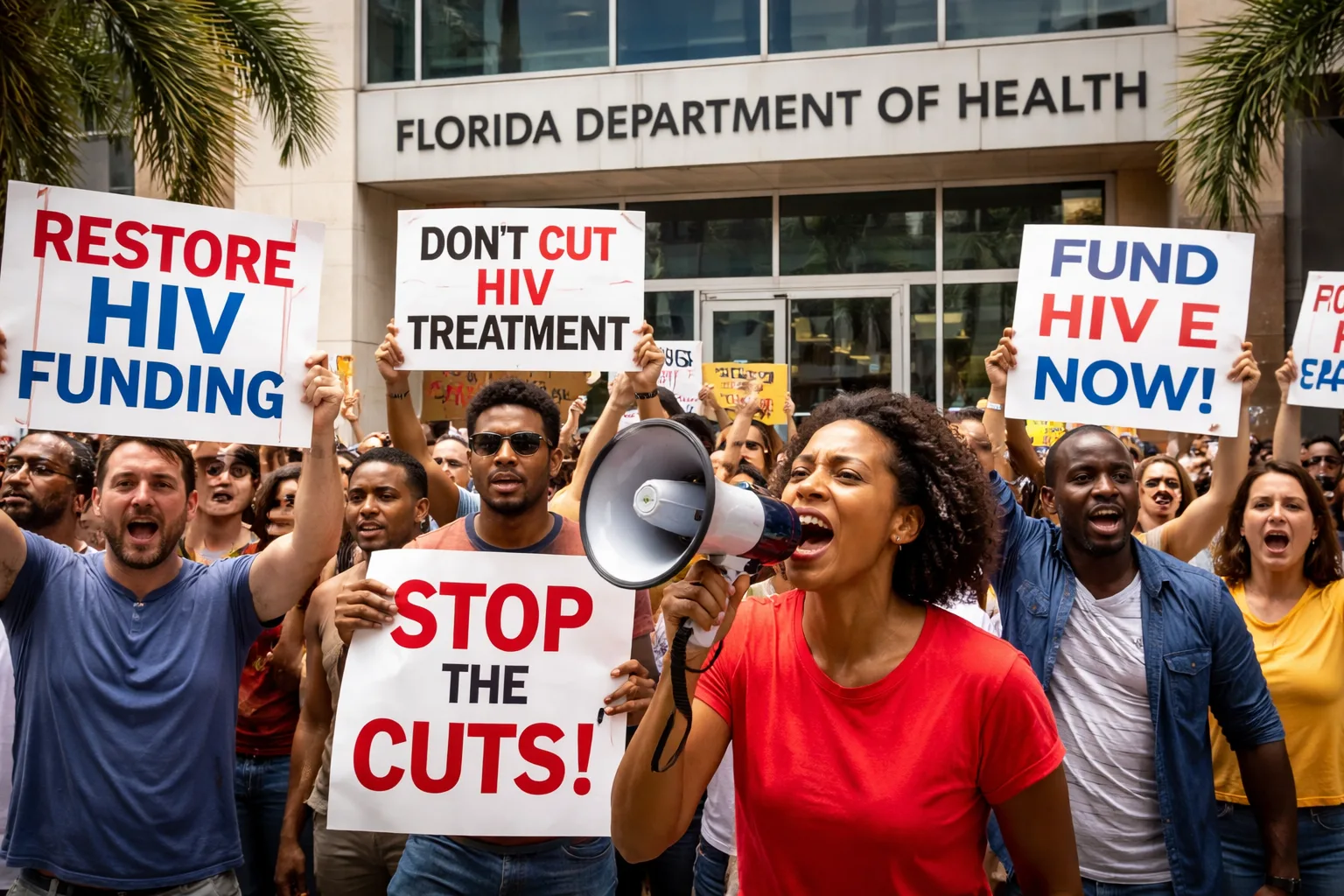
AHF Files Legal Petition Challenging Florida Health Department Over HIV Treatment Rule Changes
A major legal dispute is unfolding in Florida after the AIDS Healthcare Foundation (AHF) filed a petition against the state’s Department of Health (DOH), alleging that newly implemented rules could strip thousands of residents living with HIV/AIDS of access to lifesaving medications. The case, filed with Florida’s Division of Administrative Hearings, seeks an expedited hearing and a ruling to block what AHF describes as unlawful and harmful policy changes affecting the state’s AIDS Drug Assistance Program (ADAP).
According to AHF, the Florida DOH introduced cost-saving eligibility restrictions without following required rulemaking procedures, potentially jeopardizing treatment access for as many as 16,000 Floridians. The legal challenge highlights concerns not only about procedural legality but also about the broader public health impact of limiting HIV medication coverage in a state that continues to report high rates of new HIV infections.
What the Legal Petition Seeks
AHF’s petition requests an accelerated administrative review of the DOH’s recent rule changes. The organization argues that the Department enacted significant policy revisions without adhering to Florida’s statutory rulemaking requirements, which are designed to ensure transparency, public input, and careful consideration before implementing regulations that affect public health.
The petition asserts that the DOH altered income eligibility thresholds for ADAP participants through internal policy changes rather than formal rule adoption. Under Florida law, agencies must undergo a structured rulemaking process when issuing statements or policies that meet the definition of a rule. AHF maintains that this process was bypassed, rendering the changes legally invalid.
By seeking expedited proceedings, AHF aims to prevent interruptions in treatment access while the legal matter is reviewed. Delays, the organization argues, could result in immediate harm to thousands of individuals dependent on consistent medication to manage HIV.
Scope of AHF’s Role in Florida HIV Care
AHF plays a significant role in Florida’s HIV care infrastructure. The organization currently provides services to more than 21,000 individuals in the state, including 17,543 people living with HIV. It also holds multiple Ryan White CARE Act contracts in Florida, including four under Part B, which supports ADAP programs nationwide.
The Ryan White CARE Act is a federal initiative that provides funding for HIV-related medical care and support services to low-income individuals. Nationally, more than half of people diagnosed with HIV receive some form of assistance through Ryan White programs each year. ADAP, a key component of this system, helps eligible individuals obtain essential antiretroviral medications that suppress the virus and prevent disease progression.
AHF argues that Florida’s rule changes undermine this safety net and could disrupt a system that has been instrumental in reducing HIV-related illness and transmission.
Changes to ADAP Eligibility
Central to the dispute are revisions to income eligibility limits for Florida’s ADAP. Previously, the program was open to individuals earning up to 400% of the federal poverty level (FPL). For a single person, that threshold was approximately $62,600 per year.
However, beginning in March, eligibility will reportedly be restricted to those earning no more than 130% of the federal poverty level—about $20,345 annually for an individual. This represents a dramatic reduction in eligibility and could exclude many working individuals who rely on ADAP because they cannot afford the high cost of HIV medications through private insurance or out-of-pocket payments.
Letters informing clients of these changes have already been sent to ADAP recipients, according to reports. Advocacy groups argue that the sudden shift leaves little time for patients to find alternative coverage, increasing the risk of treatment interruptions.
Potential Loss of Access to Key Medications
One of the most concerning aspects of the rule change, according to AHF and other advocates, is the potential loss of access to Biktarvy, a widely prescribed, once-daily antiretroviral medication used to treat HIV. Biktarvy is considered highly effective and convenient, contributing to better adherence among patients.
Treatment consistency is critical in HIV care. Interruptions in medication can lead to viral rebound, increased risk of transmission, and the development of drug resistance. Public health experts emphasize that stable access to antiretroviral therapy not only benefits individuals but also plays a key role in preventing the spread of HIV at the community level.
Legal Arguments Against the DOH
AHF contends that the DOH’s actions violate Florida administrative law. According to Tom Myers, AHF’s Chief of Public Affairs and General Counsel, rulemaking is not optional when agency policies meet the statutory definition of a rule.
He emphasized that the purpose of formal rulemaking procedures is to ensure decisions are deliberate, transparent, and designed to minimize harm. Skipping these steps, AHF argues, leads to arbitrary outcomes with serious consequences for vulnerable populations.
The petition states that by failing to follow required procedures, the DOH effectively denied stakeholders—including patients, providers, and advocacy groups—the opportunity to comment on changes that could reshape HIV treatment access across the state.
Broader Public Health Context
The dispute comes at a time when Florida remains a key battleground in the fight against HIV. The state recorded the third-highest number of new HIV infections in the United States in 2022, accounting for roughly 11% of new diagnoses nationwide. Public health advocates warn that reducing treatment access could undermine progress in controlling the epidemic.
Access to medication is widely recognized as one of the most effective tools in HIV prevention. When individuals achieve viral suppression through consistent treatment, the risk of sexual transmission becomes effectively zero—a concept known as “Undetectable = Untransmittable” (U=U).
Cuts to ADAP eligibility could therefore have ripple effects beyond individual patients, potentially increasing long-term healthcare costs and complicating efforts to reduce new infections.
Representation and Filing Details
AHF’s legal petition was filed in Tallahassee and prepared by the law firm Panza, Maurer & Maynard, P.A. The case will be heard by Florida’s Division of Administrative Hearings, which handles disputes involving state agencies and administrative rules.
An expedited hearing could lead to a temporary or permanent determination on whether the DOH’s rule changes are enforceable. If the administrative judge rules in AHF’s favor, the Department may be required to rescind the changes and undergo proper rulemaking procedures.
About
AIDS Healthcare Foundation is the world’s largest HIV/AIDS healthcare organization, serving more than 2.8 million people across 50 countries. In addition to providing medical care, AHF is known for its advocacy efforts related to treatment access, prevention, and public health policy.
In January 2025, AHF received the MLK Jr. Social Justice Award from The King Center, recognizing its contributions to advancing health equity and social justice initiatives globally.
The outcome of this legal challenge could have significant implications for HIV care in Florida. AHF and other advocates argue that maintaining broad access to ADAP is essential to both individual health and statewide public health goals.
As the case moves through the administrative hearing process, thousands of Floridians living with HIV face uncertainty about continued access to medication. The decision will likely shape how Florida balances budgetary concerns with its responsibility to provide essential healthcare services to vulnerable populations.