

Active Senior Living: A Comprehensive Guide to Staying Strong, Independent, and Engaged
Active senior living is far more than simply incorporating a few exercises into your routine. It is a mindset—a commitment to nurturing your physical, emotional, and cognitive wellbeing so you can continue living life fully, confidently, and independently. By building healthy habits that include regular movement, meaningful social connection, and mental stimulation, older adults can significantly improve their quality of life and better maintain independence well into the future.
What Active Senior Living Really Means
At its core, active senior living focuses on empowering older adults to stay mobile and engaged. As we age, physical and lifestyle changes are inevitable, but adopting the right daily habits can help slow down many age-related declines. Regular activity helps maintain muscle strength, improve balance, support cardiovascular health, and keep the mind sharp—all of which contribute to long-term independence.
Active living extends beyond the physical. Participating in social groups, learning new skills, joining community programs, and staying mentally stimulated play equally important roles in enhancing wellbeing. Whether through reading, puzzles, learning technology, taking classes, or connecting with peers, these activities help support cognitive health and emotional resilience.
Why Staying Active Is Essential for Seniors
Staying active is one of the most powerful, evidence-backed ways to support healthy ageing. While exercise is known for strengthening muscles and improving heart health, its benefits go much deeper for seniors. Regular physical activity can:
- Boost mood and reduce feelings of stress or anxiety
- Improve mobility and increase energy levels
- Enhance balance, which reduces the risk of falls
- Maintain the strength needed for everyday tasks like getting out of a chair, climbing stairs, or carrying groceries
- Promote better sleep and overall mental clarity
In Ryman villages, these benefits are seen firsthand. Many residents who participate in walking groups, fitness classes, and social wellness activities report feeling more energetic, confident, and socially connected. These positive changes contribute to a greater sense of independence and overall happiness.
Staying Active to Stay Biologically Younger
Ryman resident Leigh Elder, now in his 80s, is a testament to the power of consistent movement. Leigh dedicates a couple of hours most days to exercise—whether it’s walking, playing golf, stretching, or weight training. His active lifestyle, he believes, has helped reduce his biological age and inspired many fellow residents to begin stretching, strengthening, and resistance training alongside him.
While our genes shape around 20% of the ageing process, Leigh reminds us that the remaining 80% is influenced by lifestyle factors. Simple, sustainable changes can help reverse some cellular decline and contribute to feeling—and functioning—like a younger version of yourself.
“The good news is that it is never too late to reverse some of that cell damage and make yourself biologically younger by making a few permanent lifestyle changes,” he says.
Why Resistance Band Exercises Are Ideal for Seniors
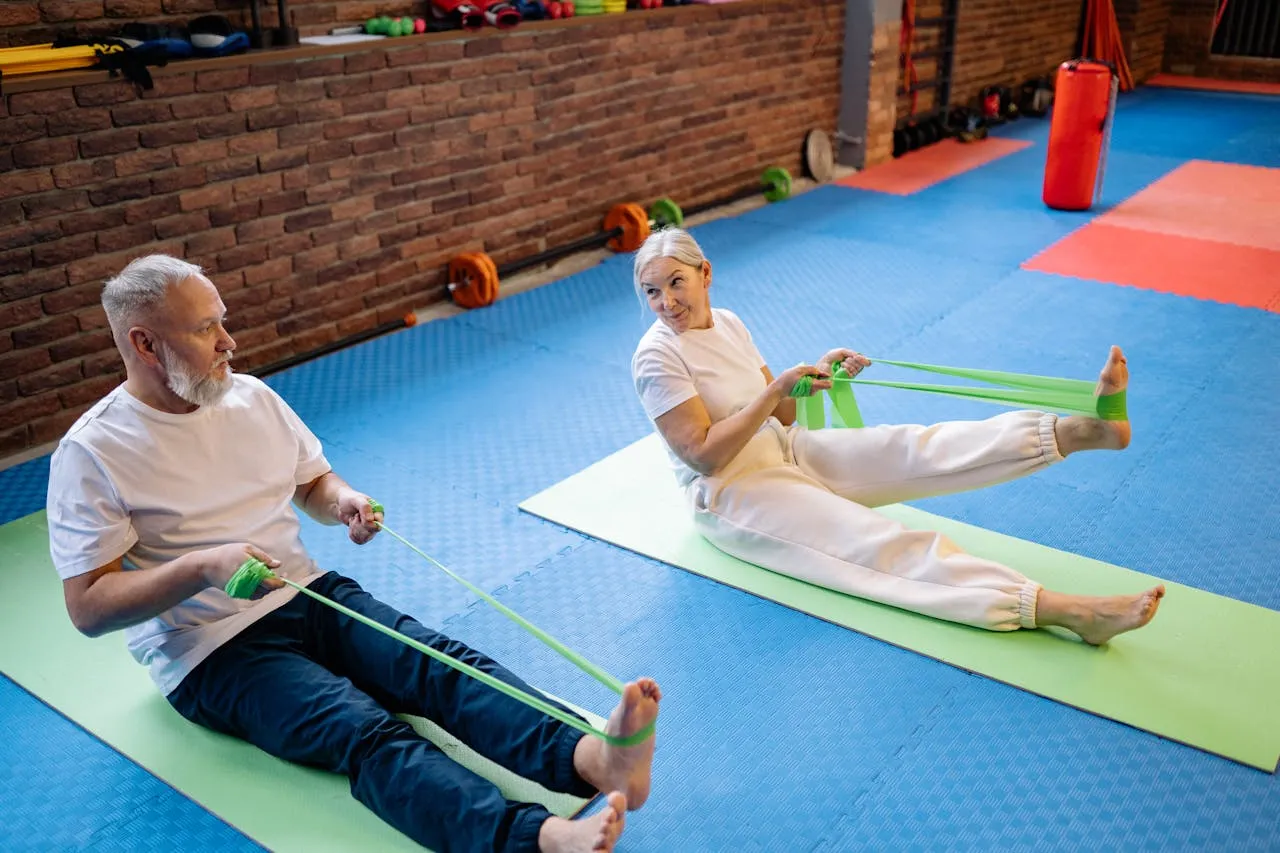
One of the most effective and accessible ways for seniors to stay active is through resistance band training. Resistance bands provide controlled tension that is gentle on the joints yet powerful for strengthening muscles, enhancing flexibility, and improving balance. These are key components in maintaining independence as you age.
Because resistance bands are lightweight, inexpensive, and adaptable to nearly any fitness level, they are well-suited for home workouts, travel, or group classes such as those offered in Ryman villages.
Key Benefits of Resistance Band Training for Seniors
- Joint-friendly: Unlike traditional weights, bands offer smooth resistance without placing excess strain on joints or tendons.
- Strengthens major muscle groups: Helps support everyday activities such as standing up, bending, lifting, and reaching.
- Improves balance: Essential for preventing falls and maintaining mobility.
- Portable and versatile: Perfect for home use, parks, or group fitness sessions.
- Fun and social: Group band classes build connection and make exercise more enjoyable.
Getting Started with Resistance Bands in New Zealand
Before beginning any new exercise routine, especially if you have pre-existing medical conditions, it is important to consult with a healthcare professional or qualified fitness trainer. Their guidance ensures you are performing exercises safely and effectively.
Beginner Tips for Safe, Sustainable Progress
- Start with light resistance and gradually increase as you become stronger.
- Focus on slow, controlled movement—this maximises muscle engagement and reduces injury risk.
- Combine resistance training with walking, stretching, or balance classes for a well-rounded routine.
- Aim for consistency rather than intensity; even small, regular sessions provide meaningful benefits.
Types of Resistance Bands and How to Use Them
There are several types of resistance bands suited for different exercises and mobility levels:
- Loop bands: Excellent for lower-body work, such as side leg lifts or glute strengthening.
- Tube bands with handles: Ideal for upper-body exercises like shoulder presses or bicep curls.
- Flat bands: Perfect for stretching, core work, or gentle strengthening.
When choosing a band, begin with light to medium resistance until you feel comfortable with your form and strength level.
Safety Guidelines
- Inspect your band regularly for tears or weak spots.
- Ensure the band is securely anchored before pulling on it.
- Stop exercising if you feel dizziness, pain, or instability.
- Always work within your comfort level and modify movements as needed.
Simple and Safe Resistance Band Exercises for Seniors
Disclaimer: You complete these exercises at your own risk. Ensure you have a safe, clear area and use a steady chair or bench for support if needed. If you feel unwell or experience discomfort, stop immediately and consult a medical professional.
Upper Body Exercises (Sitting or Standing)
- Bicep Curls:
Place the band under your feet and hold the ends in your hands. Curl your hands toward your shoulders. Strengthens arms for carrying and lifting. - Shoulder Press:
Stand or sit on the band, holding each end at shoulder height. Press your arms overhead to improve shoulder mobility for reaching. - Tricep Extension:
Hold one end of the band behind your back and the other overhead. Extend your arm upward to strengthen the triceps and aid in pushing movements.
Lower Body Exercises
- Seated Leg Press:
Sit in a sturdy chair and loop a band around your feet. Push your legs outward to strengthen your thighs and glutes. - Side Leg Lifts:
Place the band around your ankles and hold onto a stable surface. Lift one leg to the side to support hip stability and balance.
Core and Balance Exercises
- Seated Twists:
Hold the band between your hands and gently rotate your torso side to side to strengthen your core for better posture. - Standing Balance Holds:
Stand on one leg while holding the band anchored under your opposite foot. Hold for several seconds to improve coordination and balance. Use support as needed or skip if balance is a concern.
Group Workouts in Senior Living Communities
Group exercise is not only beneficial for physical health but also enhances social wellbeing. Staying active is easier when shared with others, and group classes create a sense of community, motivation, and accountability.
Ryman’s Triple A (Ageless, Active, Aware) programme is a complimentary, ACC-accredited exercise programme designed specifically for older adults. It focuses on functional movement, balance, and strength, and encourages everyone to participate at their own pace.