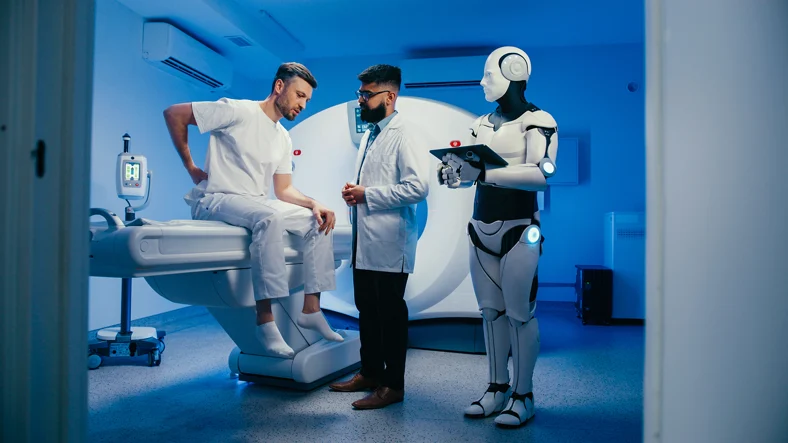
Ardent Health has reached a significant milestone in its digital healthcare transformation strategy, announcing that its physicians and advanced practice providers have completed more than 1 million patient encounters supported by Ambience Healthcare’s ambient artificial intelligence platform.
The achievement highlights the growing role of ambient AI in clinical workflows and reflects Ardent Health’s efforts to reduce administrative burdens, support clinicians and improve the overall patient experience. The technology is being used across the organization’s ambulatory network to help automate clinical documentation and allow healthcare professionals to spend more time focusing on patients.
According to Ardent Health, affiliated clinicians use the Ambience platform in 87% of ambulatory patient encounters across specialties. This adoption rate is significantly higher than industry benchmarks, which independent and peer-reviewed studies have placed at approximately 40% to 45%.
The milestone therefore represents more than the number of encounters supported by artificial intelligence. It demonstrates how ambient AI is becoming integrated into routine clinical care and everyday workflows across a large healthcare organization.
Ardent Health says providers using the technology save an average of more than three hours each week on documentation, based on electronic health record data.
Administrative workload has become one of the most significant challenges facing physicians and advanced practice providers.
Healthcare professionals often spend substantial amounts of time documenting patient visits, completing electronic health record requirements and managing clinical notes. In many cases, documentation can extend beyond scheduled working hours, contributing to fatigue and dissatisfaction.
The growing burden has also been linked to clinician burnout.
Ambient AI platforms are designed to address this challenge by listening to clinical conversations during patient visits and automatically generating documentation that can then be reviewed and finalized by the provider.
Rather than requiring clinicians to manually type extensive notes during or after each encounter, the technology helps create a draft of the clinical documentation.
This can reduce the amount of time providers spend looking at screens and completing administrative tasks.
For healthcare organizations, the potential benefits extend beyond efficiency. Reducing documentation requirements may help improve the provider experience and allow clinicians to focus more closely on patient communication.
“Reaching a million encounters is a testament to our physicians and advanced practice providers who have embraced this technology as a way to spend less time documenting and more time connecting with patients,” said Brad Hoyt, MD, chief medical information officer for Ardent Health.
According to Hoyt, the technology helps reduce administrative burden and combat clinician burnout while allowing providers to be more present during patient visits.
The widespread use of the Ambience platform across Ardent’s ambulatory network demonstrates how ambient AI is moving beyond pilot programs.
Many healthcare organizations have explored artificial intelligence as a way to improve clinical efficiency. However, the long-term value of these technologies depends largely on whether clinicians actually use them consistently as part of their daily workflows.
Ardent’s reported 87% utilization rate suggests that ambient AI has become an important part of routine clinical practice for many of its providers.
The technology is being used across specialties, allowing physicians and advanced practice providers to benefit from automated documentation support in different clinical environments.
The platform is designed to work within the existing care process rather than requiring providers to completely change how they interact with patients.
During an encounter, the system captures relevant clinical information and helps generate documentation. The provider can then review the information and make any necessary edits before finalizing the note.
This workflow can help reduce the time required to complete documentation while maintaining clinician oversight.
The growing use of ambient AI reflects a broader trend in healthcare technology.
Healthcare providers are increasingly seeking solutions that can reduce repetitive administrative work and allow clinicians to focus on tasks that require human expertise.
Documentation is one area where artificial intelligence may provide meaningful support.
Physicians and advanced practice providers still remain responsible for reviewing and approving clinical notes. However, AI can help reduce the manual work involved in creating an initial draft.
This can allow clinicians to dedicate more time to listening to patients, discussing treatment options and building relationships.
For healthcare organizations, supporting clinicians has become increasingly important as workforce challenges continue to affect the industry.
Burnout can contribute to reduced job satisfaction, workforce turnover and challenges in maintaining adequate staffing levels.
Technologies that reduce administrative workload may therefore play a role in creating a more sustainable working environment.
The one-millionth Ambience-supported encounter was completed by Jennie Zheng, MD, a family medicine physician with UT Health East Texas in Tyler, Texas.
Dr. Zheng uses the Ambience platform for 83% of her patient encounters.
According to Ardent Health, her use of the technology has reduced her electronic health record documentation time by 53%, from 135 minutes to 64 minutes per eight hours of scheduled appointments.
The results demonstrate the potential impact that ambient AI can have on individual provider workflows.
Reducing documentation time can provide clinicians with greater flexibility in managing their daily schedules.
It may also help reduce the amount of work that must be completed after scheduled patient appointments.
For primary care physicians, who often manage large patient panels and extensive documentation requirements, these time savings can be particularly meaningful.
Dr. Zheng said that listening is one of the most important responsibilities of a physician.
“Technology often creates barriers between providers and patients because so much of our attention is focused on documentation,” she said.
According to Zheng, the use of Ambience allows her to spend more time listening carefully and engaging with patients and their families.
She also emphasized the importance of strong relationships and trust in communities such as East Texas.
One of the key arguments for ambient AI technology is that it can help improve the interaction between patients and clinicians.
Electronic health records have transformed healthcare documentation, but they have also introduced new challenges.
During many medical visits, providers may need to divide their attention between the patient and a computer screen.
Typing notes during a conversation can make it more difficult for clinicians to maintain eye contact and engage fully with patients.
Ambient AI is designed to reduce the need for manual documentation during the visit.
By automatically capturing information from the clinical conversation, the technology may allow providers to remain more focused on the patient.
This can be especially important in primary care, where communication and trust are central to the relationship between the clinician and the patient.
A more engaged conversation may also help providers better understand patient concerns, symptoms and personal circumstances.
While ambient AI does not replace the clinical judgment of healthcare professionals, it can help reduce the administrative distractions that may interfere with patient interactions.
Since Ardent Health announced the enterprise-wide deployment of Ambience in September 2025, the platform has supported more than 418,000 unique patients across the organization’s ambulatory network.
The scale of adoption indicates that the technology is being used across a broad range of clinical encounters.
The milestone also reflects Ardent Health’s broader strategy of investing in digital solutions that support caregivers and improve healthcare delivery.
Rather than focusing exclusively on technologies designed for patients, the organization is also investing in tools intended to improve the working environment for clinicians.
This approach recognizes that improving the provider experience can have an important impact on the overall healthcare system.
When clinicians spend less time on administrative work, they may have more capacity to focus on patient care.
Artificial intelligence is becoming increasingly important across healthcare.
AI technologies are being developed for clinical decision support, medical imaging, drug discovery, patient engagement, predictive analytics and administrative automation.
Ambient documentation represents one of the more immediate applications of AI in clinical practice.
The technology addresses a specific and widely recognized problem: the time required to document patient encounters.
Unlike some emerging AI applications that are still in early development, ambient documentation tools are already being deployed across healthcare organizations.
The success of these systems depends on several factors, including accuracy, integration with electronic health records, ease of use and clinician trust.
High adoption rates can indicate that providers find the technology useful and that it fits effectively into their existing workflows.
Ardent Health’s reported utilization rate suggests that ambient AI has become an established component of clinical operations for many of its providers.
Healthcare organizations are under increasing pressure to improve efficiency while also addressing workforce challenges.
Clinician burnout remains a significant concern across the healthcare industry.
Although no single technology can solve the causes of burnout, reducing unnecessary administrative work may help improve the daily experience of healthcare professionals.
Ambient AI can potentially reduce the time clinicians spend completing documentation and allow them to focus more on patient care.
The time saved may also help providers maintain a healthier balance between clinical responsibilities and administrative tasks.
For healthcare systems, these improvements could support employee satisfaction and retention.
As more organizations evaluate artificial intelligence solutions, technologies that deliver measurable improvements in workflow efficiency may become increasingly important.
Although ambient AI can automate parts of the documentation process, human oversight remains essential.
Healthcare providers must review and approve clinical documentation to ensure that it accurately reflects the patient encounter.
This process allows clinicians to correct errors, add relevant information and ensure that the final medical record is appropriate.
The role of AI is therefore primarily to assist with the creation of documentation rather than replace clinical responsibility.
This distinction is important as healthcare organizations continue to adopt artificial intelligence.
Successful implementation requires technology to support healthcare professionals while maintaining appropriate safeguards and oversight.
Ardent Health’s experience demonstrates how an organization can move from implementing an AI platform to integrating it into everyday care.
The enterprise-wide rollout began in 2025, and the organization has now reached more than 1 million supported encounters.
This rapid expansion illustrates the growing demand for tools that can help reduce administrative workload.
As the healthcare industry continues to explore artificial intelligence, adoption rates and measurable workflow improvements will likely become important indicators of success.
Healthcare organizations may increasingly evaluate AI platforms based on how effectively they improve clinician efficiency, patient engagement and operational performance.
Ardent Health’s achievement of more than 1 million patient encounters supported by ambient AI represents a significant milestone in the adoption of artificial intelligence within clinical care.
The organization’s use of Ambience Healthcare’s platform across 87% of ambulatory encounters demonstrates the potential for ambient AI to become part of routine clinical workflows.
Providers are reportedly saving more than three hours per week in documentation time, while individual clinicians such as Dr. Jennie Zheng have achieved substantial reductions in electronic health record documentation time.
The technology is designed to reduce administrative burden, support clinicians and improve the patient experience.
As Ardent Health continues to expand its use of digital healthcare solutions, ambient AI may play an increasingly important role in its strategy to build a more sustainable healthcare workforce.
The broader significance of the milestone extends beyond the technology itself. It highlights a shift in how healthcare organizations are approaching artificial intelligence.
Rather than viewing AI solely as a tool for advanced research or complex analytics, healthcare systems are increasingly applying it to everyday operational challenges.
Clinical documentation is one of the most time-consuming responsibilities for many providers, and AI-powered automation may help address that burden.
By allowing clinicians to spend less time typing and more time engaging with patients, ambient AI has the potential to improve both the provider and patient experience.
As adoption continues to grow, the technology may become an increasingly common part of modern healthcare delivery.
For Ardent Health, surpassing 1 million AI-supported patient encounters marks an important step in its digital transformation journey and demonstrates how artificial intelligence can be integrated at scale to support clinicians, improve efficiency and strengthen patient-centered care.
Source link: https://ardenthealth.com/