
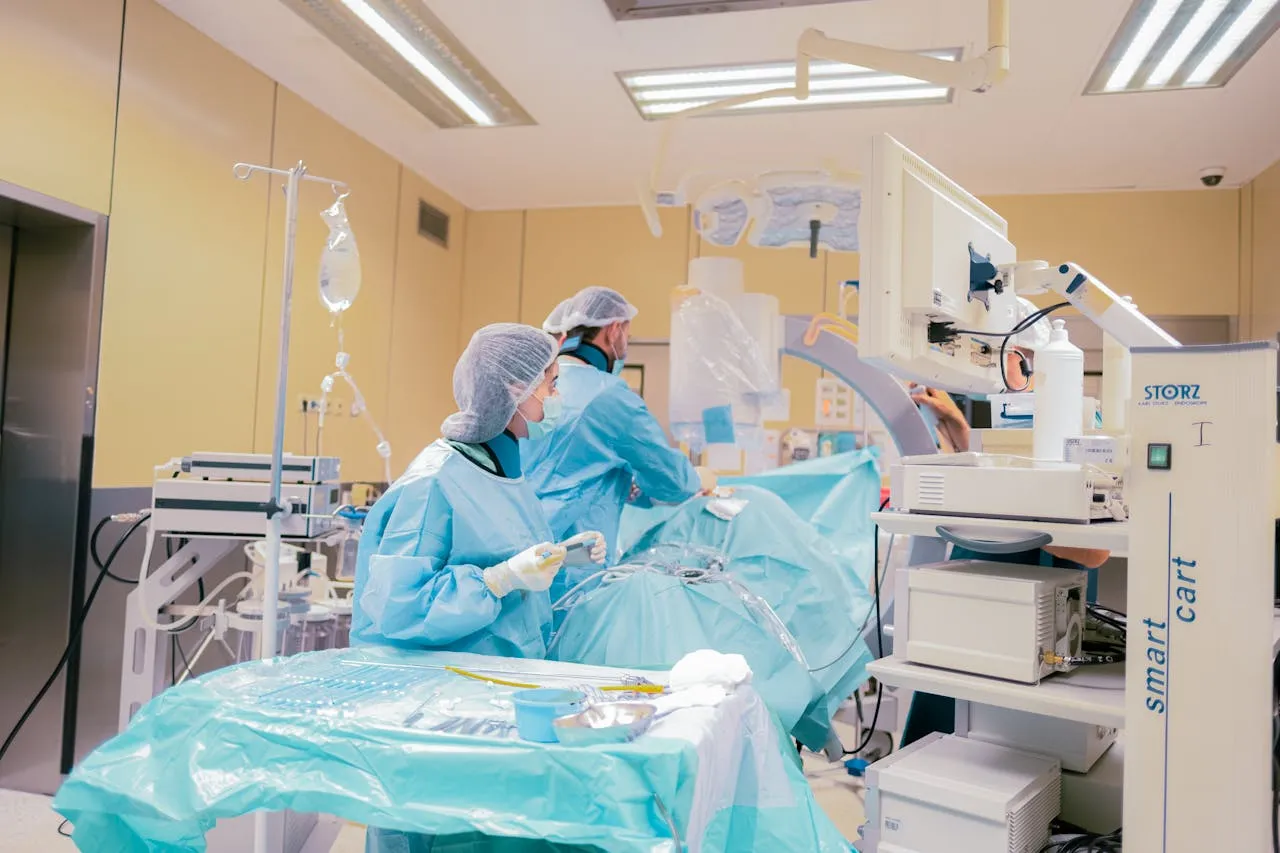
Stryker has reached a major milestone in the advancement of cardiovascular treatment technology following the enrollment of the first patient in the POWER CAD I clinical study, a first-in-human trial evaluating the company’s innovative Pulse IVL™ System for coronary artery disease. The study marks an important step forward in the development of Pulsatile Intravascular Lithotripsy (PIVL) therapy, a next-generation approach designed to treat patients suffering from moderate to severely calcified coronary arterial disease.
The announcement comes shortly after Stryker completed its acquisition of Amplitude Vascular Systems (AVS), a Boston-based medical device company focused on developing advanced therapies for heavily calcified arterial conditions. The acquisition officially closed on May 7, 2026, strengthening Stryker’s presence in the rapidly evolving intravascular lithotripsy market.
Calcified coronary artery disease remains one of the most challenging conditions for interventional cardiologists worldwide. Calcium buildup inside the coronary arteries can make procedures such as angioplasty and stent placement more difficult, increasing the risk of complications and limiting the effectiveness of treatment. Physicians have long sought safer and more efficient ways to modify hardened calcium deposits while preserving surrounding healthy tissue. The Pulse IVL System developed by AVS aims to address these challenges through a unique hydraulic mechanism designed to fracture calcium and improve vessel preparation before stent implantation.
The POWER CAD I study will examine the feasibility and early safety profile of the Pulse IVL System in patients with complex calcified coronary lesions. Up to 15 patients are expected to participate in the study across as many as four clinical sites located in Australia and New Zealand. Researchers will assess primary endpoints over a 30-day follow-up period to better understand the device’s performance and potential benefits in real-world clinical settings.
The first patient enrolled in the study was treated by Dr. Jithendra Somaratne, an interventional cardiologist affiliated with Auckland City Hospital and The Heart Group in Auckland, New Zealand. According to Dr. Somaratne, the initial procedure demonstrated encouraging procedural efficiency and device deliverability, two important characteristics for technologies used in complex coronary interventions.
Dr. Somaratne stated that Auckland City Hospital is proud to become the first institution to treat a patient with coronary calcific disease using this innovative intravascular lithotripsy approach. He noted that the system appeared highly deliverable during the procedure and effectively modified calcium deposits, ultimately supporting optimal stent expansion. Successful stent expansion is critical in coronary interventions because inadequate expansion may increase the risk of restenosis, thrombosis, or future cardiovascular complications.
Stryker executives also emphasized the significance of the milestone as the company continues expanding its cardiovascular portfolio. Tim Lanier, President of Stryker’s Peripheral Vascular division, explained that AVS represents the only intravascular lithotripsy company currently utilizing this specific hydraulic-based mechanism of action. He described the first patient enrollment as a key step toward understanding which patient populations may benefit most from the company’s innovative therapy platform.
Lanier further highlighted the company’s confidence in the Pulse IVL System’s design, which focuses on easy navigation through complex arterial anatomy and efficient treatment of heavily calcified lesions. He added that the technology could help elevate standards of care within the growing IVL sector by offering physicians another tool to manage difficult coronary artery disease cases more effectively.
Intravascular lithotripsy technology has emerged as one of the most promising advancements in cardiovascular medicine over the past several years. The technique uses sonic pressure waves to disrupt calcium deposits within arteries, allowing blood vessels to expand more naturally and enabling physicians to place stents more effectively. Compared with some traditional plaque-modification methods, IVL therapies are often viewed as less traumatic to vessel walls and easier to use during procedures.
The Pulse IVL System developed by AVS introduces a pulsatile hydraulic approach that differentiates it from existing technologies currently available or under development. By delivering controlled pulsatile energy, the system is designed to crack calcified plaque while maintaining procedural efficiency and minimizing unnecessary trauma to surrounding tissues. Researchers hope this mechanism may improve outcomes in particularly difficult coronary cases where severe calcification can complicate standard interventional approaches.
Associate Professor Robert Gooley, Deputy Director and Head of Interventional Cardiac Services at Monash Health in Melbourne, Australia, serves as the Principal Investigator for the POWER CAD I study. According to Dr. Gooley, innovative therapies targeting calcified coronary artery disease have the potential to significantly improve patient outcomes and quality of life.
Dr. Gooley explained that the field of intravascular lithotripsy is rapidly evolving and generating substantial excitement among cardiovascular specialists globally. He expressed hope that findings from the first-in-human study will contribute to the development of a new treatment option capable of addressing unmet clinical needs in coronary interventions. Positive early results could also support broader clinical trials and future regulatory submissions in additional global markets.
Coronary artery disease continues to represent one of the leading causes of death worldwide. As populations age and cardiovascular risk factors such as diabetes, hypertension, and obesity increase, physicians are seeing higher rates of complex calcified lesions that are difficult to treat using conventional techniques alone. Technologies capable of improving procedural success in these challenging patients are therefore attracting considerable attention from both clinicians and the medical device industry.
The acquisition of AVS by Stryker signals the company’s strategic interest in expanding beyond its established strengths in orthopaedics, neurotechnology, and MedSurg products into advanced vascular intervention technologies. Stryker has built a reputation as a global leader in medical technologies, with products and services used to improve outcomes for more than 150 million patients annually around the world.
By integrating AVS into its operations, Stryker gains access to innovative cardiovascular technology at an early stage of development while leveraging its global infrastructure, research capabilities, and commercialization expertise. Industry observers believe this combination could accelerate future development and adoption of the Pulse IVL platform if clinical data continues to show positive outcomes.
Although the Pulse Coronary IVL System remains investigational and has not yet received regulatory clearance for commercial use inside or outside the United States, the initiation of the POWER CAD I study represents an important early validation step. First-in-human studies are designed to provide critical insights into safety, procedural feasibility, and device functionality before larger clinical investigations are launched.
If successful, the technology may eventually provide physicians with an additional minimally invasive treatment option for patients with severe coronary calcification, potentially improving procedural success rates and long-term cardiovascular outcomes. The study’s progress will likely be closely watched by cardiologists, investors, and the broader medical technology industry as interest in advanced calcium-modification therapies continues to grow.
For now, the enrollment of the first patient marks the beginning of what could become an important new chapter in coronary intervention therapy, combining Stryker’s global medical technology expertise with AVS’s specialized innovation in pulsatile intravascular lithotripsy.
Amplitude Vascular Systems (AVS) is a medical device company based in Boston, MA, focused on treating severely calcified arterial disease. AVS was recently acquired by Stryker, with the deal officially closing on May 7, 2026. To learn more about pulsatile intravascular lithotripsy, visit www.avspulse.com.The Pulse Coronary Intravascular Lithotripsy (IVL) System is an investigational device and not yet cleared for commercial distribution within or outside the United States.
Stryker is a global leader in medical technologies and, together with our customers, we are driven to make healthcare better. We offer innovative products and services in MedSurg, Neurotechnology and Orthopaedics that help improve patient and healthcare outcomes. Alongside our customers around the world, we impact more than 150 million patients annually.