
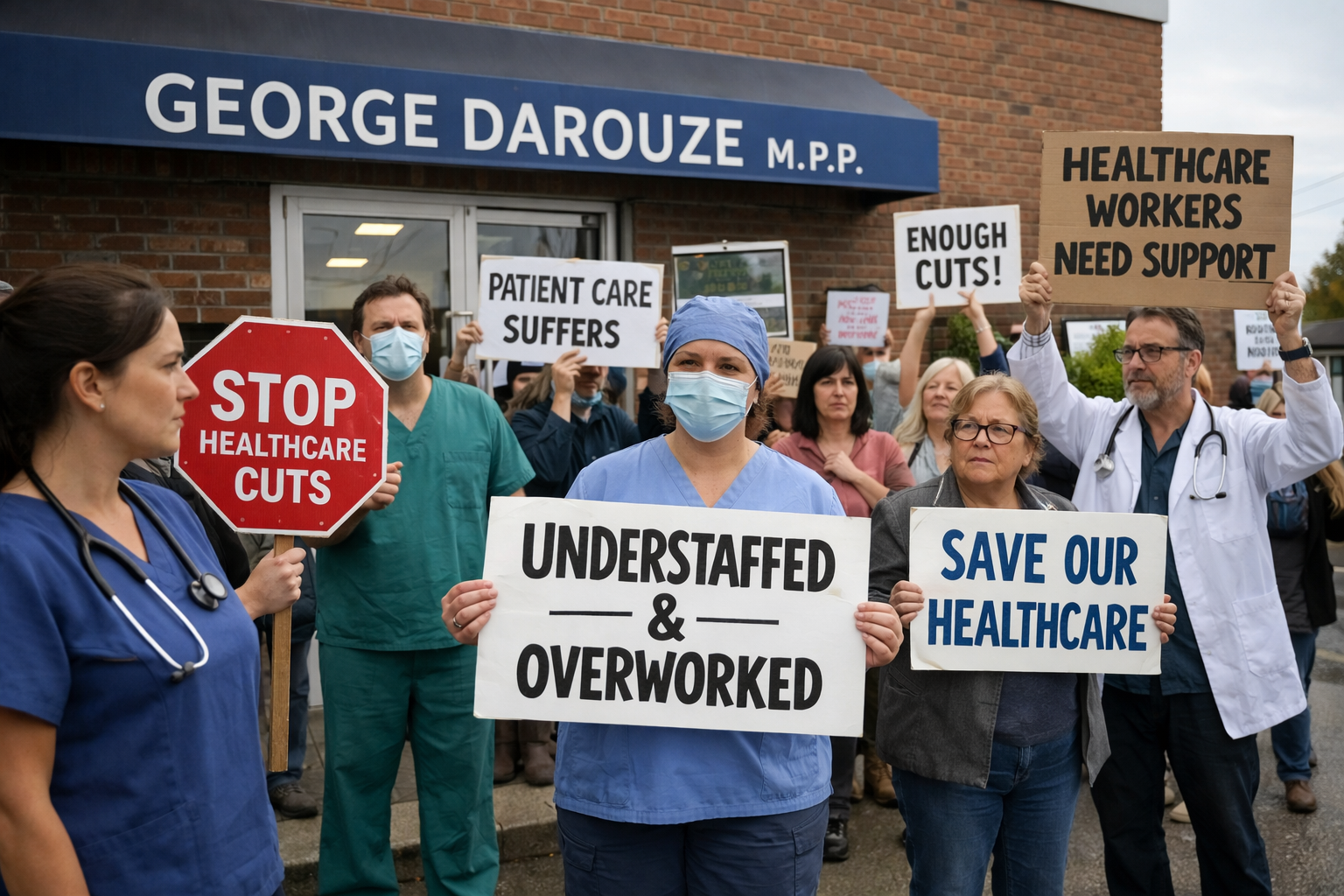
Why are health care workers in Ottawa taking to the streets? The Canadian Union of Public Employees (CUPE) is leading a rally outside Ontario PC MPP George Darouze’s office to protest funding cuts by the provincial government. These cuts are projected to result in the loss of 700 nursing and personal support worker (PSW) jobs in Ottawa by 2027-28, exacerbating an already strained health care system.
According to CUPE, the government’s fall economic statement outlines a plan to cut hospital funding by 10% in real terms over three years. This reduction in funding will fail to cover the 6% annual cost inflation for hospitals, leading to significant job cuts and reduced patient care. “This government promised to clear surgical waiting lists and to end hallway medicine,” said Michael Hurley, president of CUPE’s Ontario Council of Hospital Unions (OCHU-CUPE). “200,000 people are waiting for surgeries, and 73,000 patients are waiting longer than clinically recommended. 2,000 are on hallway stretchers waiting for beds, and the government has now announced it will no longer report those numbers.”
The consequences of the government’s fiscal restraint are already being felt across Ontario. Hospitals and long-term care homes are cutting hundreds of jobs in cities like North Bay, Hamilton, Ottawa, Niagara, and the Greater Toronto Area (GTA). Most hospitals are facing deficits and are forced to reduce patient care. The Financial Accountability Office of Ontario projects that about 200 hospital beds could be lost in the Ottawa valley, further straining an already overburdened system. This situation is not just a numbers game; it directly affects the quality of care patients receive and the well-being of health care workers.
Just as a ticking time bomb creates an urgent need for action, the impending cuts to hospital funding are a critical threat to patient safety. The current state of health care in Ontario is dire, with ER patients waiting between 16 to 23 hours for admission, far exceeding the target time of eight hours. “Patients are not receiving the care they deserve in our hospitals,” said Sharon Richer, secretary-treasurer of OCHU-CUPE. “Health care workers are stretched to their limits trying to provide the best care possible, but they need more support in the form of safe staffing levels, manageable workloads, and a properly funded hospital system.” The situation demands immediate attention and action to prevent further deterioration.
CUPE is advocating for several concrete actions to address the crisis. In the short term, the union recommends adding 6,200 staffed beds to alleviate the backlog of patients waiting for surgeries and to clear hallway stretchers. They also call for an increase in core hospital funding by $3.2 billion to clear deficits and hire additional staff. Additionally, CUPE urges the government to fund hospitals at their real costs, which are projected to rise by 6% annually, with a multi-year funding commitment. These actions are essential to stabilize the health care system and ensure that patients receive the care they need.
The future of health care in Ontario hangs in the balance. The union’s recommendations provide a clear path forward, but the government’s response will be crucial. The coming months will reveal whether these urgent calls for action will be heeded, and whether the health care system can be restored to a state where patients and workers are both supported and safe. The next steps will determine the health and well-being of thousands of Ontarians.
The rally in Ottawa highlights the critical state of health care in Ontario. For health care workers and patients, the stakes are high. How will your organization respond to these challenges and ensure the well-being of your community? Join the conversation in the comments below.
Source link: https://www.businesswire.com/